







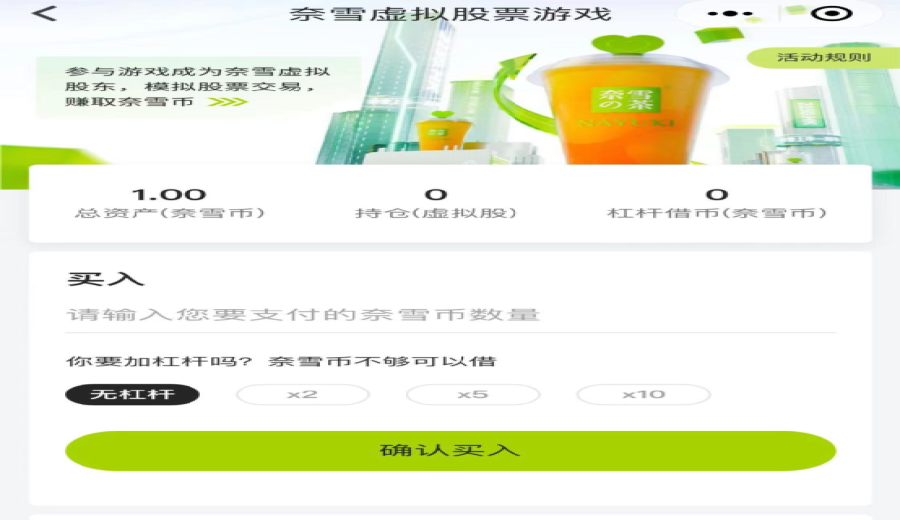
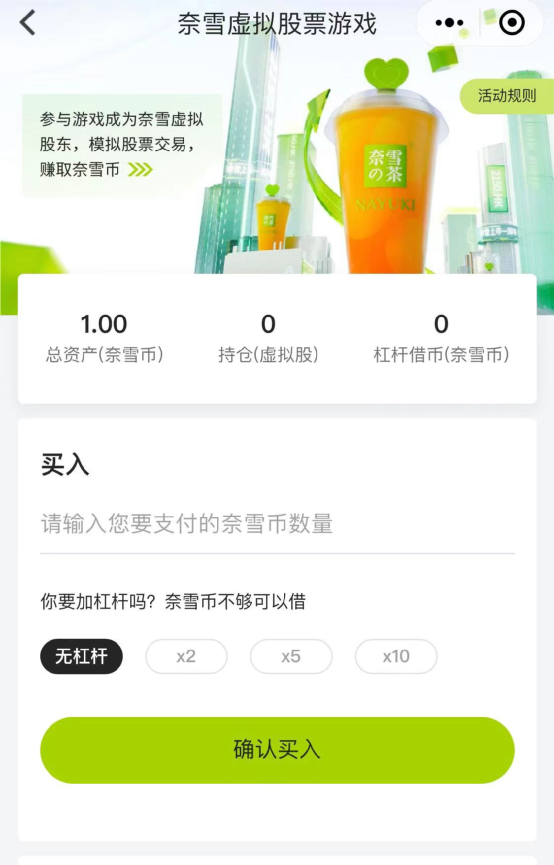
Introduction:On the first anniversary of Nayuki’s tea brand listing on the Hong Kong Stock Exchange, it launched a virtual stock game called “Nayuki Coins” that combines consumer points with real Hong Kong stock market performance and supports leverage of up to 2 to 10 times, sparking widespread market discussion and legal risk debates. This article delves into the mechanics of the activity, its potential risks, and Nayuki’s stock performance since its IPO, helping you understand the pros and cons of virtual financial gameplay and market reactions.
At this important milestone of one year since entering the Hong Kong stock market, the well-known tea brand Nayuki launched a virtual stock game called “Nayuki Coins” to its over 50 million members, immediately drawing high attention and controversy from both consumers and the investment community. According to the official event rules, consumers earn 1 Nayuki Coin for every 1 RMB spent, and these virtual coins can be used to buy or sell virtual stocks linked to the actual share price of Nayuki’s Hong Kong-listed stock, effectively making users “virtual shareholders.”
Notably, the price of these virtual stocks is not arbitrarily set but is calculated based on Nayuki’s actual closing share price on the Hong Kong Stock Exchange on the trading day, multiplied by the daily exchange rate of the Hong Kong dollar to the RMB, ensuring some correlation with real market trends. Additionally, the platform offers leverage options of 2x, 5x, and even 10x, allowing users to amplify investment returns (or risks). However, such a mechanism has led many experts to question its compliance.
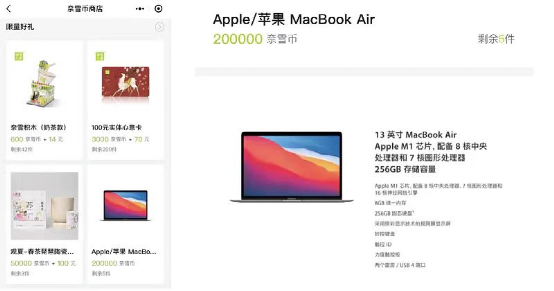
Besides participating in the virtual stock market, users can also accumulate Nayuki Coins through daily tasks or games and redeem them for cash discount coupons, product vouchers, or even branded merchandise. According to the Nayuki WeChat Mini Program page, redeeming a 13-inch Apple MacBook Air requires as many as 200,000 Nayuki Coins, while the actual retail price of that model on Apple’s official website is only about 7,999 RMB, indicating a very high threshold for exchanging virtual coins for physical goods.
Once launched, the activity quickly sparked heated discussions on social platforms, with many netizens exclaiming: “Nayuki should just focus on making tea,” or “Is this a tea shop or a securities trading platform?” reflecting divided public opinion on the brand’s foray into financial activities. Meanwhile, legal experts pointed out that although Nayuki Coins are called “coins,” they are essentially non-circulating tokens that have not directly violated financial regulatory laws. However, their combination with stock trading mechanisms and leverage gameplay may carry hidden financial risks such as illegal fundraising.
Lawyer Zhu Yonghong, a partner at Wan Shang Tian Qin (Shanghai) Law Firm, stated in a media interview that given the large number of participants, if the platform encourages increased consumption through virtual stocks, indirectly absorbing social funds, and conducts transactions via virtual coins, there is indeed a possibility of violating the law—especially when offering securities-like trading functions without the appropriate financial licenses, which could cross regulatory red lines.
In fact, Nayki’s tea officially went public on the Hong Kong Stock Exchange on June 30, 2021, becoming the then much-watched “first new-style tea drink stock,” with an initial public offering price of HK$19.8 per share. At that time, the industry had high hopes for its development. However, its debut performance was less than ideal, with the share price closing down 13.54% on the first day, already showing signs of weakness. Over the following year, its stock price continued to decline, and by the first anniversary of its listing on June 30, 2022, the closing price had fallen to just HK$6.65, a drop of over 60%. It even hit a low of HK$3.65 per share on March 15 of this year, causing significant losses for many investors.
Market analysis points out that Nayuki’s tea faces challenges including intensified competition, slowing growth in per-store revenue, and the impact of the pandemic on physical store operations. Against this backdrop, the brand is attempting to attract user participation through innovative marketing methods such as the Nayuki Coins game. While this may boost user engagement and platform activity in the short term, involvement in sensitive financial operations and inappropriate promotion could instead trigger a greater crisis of brand trust.
In summary, while the launch of Nayuki Coins represents an innovative marketing approach combining consumption and entertainment, its integration with virtual stock markets and leverage operations not only raises legal controversies but also easily leads to consumer misunderstandings and investment risks in practice. General users should fully understand the rules and potential risks before participating in such activities, to avoid neglecting their actual rights and interests in pursuit of virtual returns.


The above content is compiled by CoffeeHunters, a coffee news website.


