







Introduction:The resale prices of coffee shops in Singapore have repeatedly hit new highs, with one coffee shop in Yishun sold for 40 million SGD and another in Tampines reaching an even higher price of 41.68 million SGD. However, after these high-priced transactions, rents have doubled, putting stallholders under pressure from losses. This article takes an in-depth look at the current state of Singapore’s coffee shop market, explores the operational challenges behind high costs, and provides practical insights to help readers understand the risks and realities of investing in coffee shops.
The global coffee boom has spread to Asia, with the market continuously expanding and the number of coffee shops and coffee trucks surging. However, the impact of the COVID-19 pandemic has made it difficult for many cafés to operate, leading to numerous closures and transfers.
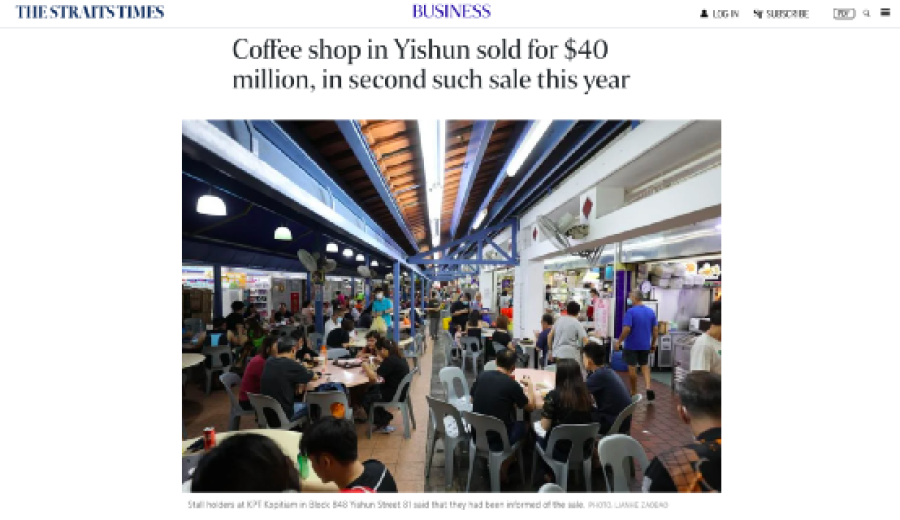
Many assumed that the cost of taking over a coffee shop would decrease after the pandemic, but reality turned out to be unexpected. According to The Straits Times, a coffee shop in Yishun Street 81, Block 848, was sold for as much as 40 million SGD (approximately 860 million TWD), setting a surprising record in the market.
The investment logic behind ultra-high resale prices
This KPT coffee shop, located at Block 848, Yishun Street 81, has 14 stalls with a total area of about 397 square meters and a remaining lease of 78 years. The resale price per square foot reached as high as 9,361 SGD, indicating investors’ high expectations for future market recovery.
Even earlier, another coffee shop on Tampines Street 21 was sold for an even higher price of 41.682168 million SGD. The shop covers an area of 604 square meters, includes 18 stalls, and has a remaining lease of 76 years.
Soaring rents put immense pressure on stallholders
After the change in ownership of the Tampines coffee shop, the rent immediately increased from the original 6,000 SGD to 12,000 SGD,a jump of 100%.A stallholder revealed to the media that the rent hike has made operations even more difficult for businesses already struggling due to the pandemic, with some considering downsizing or even exiting.
Stallholders at the Yishun coffee shop stated that they have not yet received any notice of rent adjustments, but are uncertain whether price hikes will follow in the future.
Investors are optimistic about post-pandemic consumption recovery, but challenges remain
Real estate agency ERA pointed out that these two high-price transactions reflect investors’ expectation that consumer traffic will return to coffee shops after pandemic restrictions ease, driving a rebound in commercial activity. However, with global interest rates rising, enthusiasm for future bidding may be dampened.
The COVID-19 pandemic not only drove up operating costs but also led to a sharp decline in customer traffic, with many coffee shops struggling through prolonged lockdowns and anti-epidemic measures. Even as the pandemic eases, high rents and labor costs remain a heavy burden for operators.
The real challenges behind coffee dreams
From Australia to Asia, many young people dream of opening their own coffee shops, but the reality is often full of challenges. Beyond rent, fixed expenses such as utilities, supplies, and labor cannot be ignored. During the pandemic, many coffee shops closed due to unsustainable revenues, and even those with years of experience were not spared.
On social platforms such as Xiaohongshu, while there are success stories of coffee shops earning over 10,000 RMB per month, these are often the exception. More entrepreneurs face the struggle of operating at a loss.
Industry experts caution that before entering the coffee business, it is essential to thoroughly assess the cost structure and market risks, and to develop a realistic business plan in order to stand firm in a highly competitive market.
The above content is compiled by CoffeeHunters, a coffee news website.


