







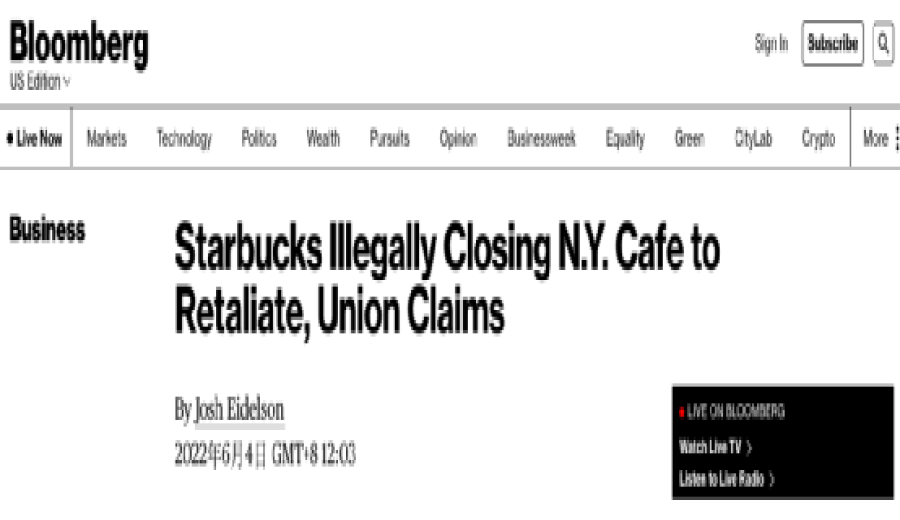
Introduction:Recently, U.S. Starbucks closed a unionized store in Ithaca, New York, escalating labor disputes. The union accused the move of being retaliatory against unionization efforts, while Starbucks officially claimed the closure was due to practical issues such as facility conditions and staff management. Behind this incident lies the intensified challenges in manpower and equipment in the coffee industry post-pandemic, as well as rising labor-management tensions amid the growing power of unions. This article takes you through the full story, the statements from both sides, and the potential impact of such actions on the broader unionization wave.
As global pandemic conditions gradually ease, coffee consumption demand has significantly rebounded. However, many Starbucks locations across the U.S. are facing serious operational challenges. In the post-pandemic period, employees have commonly reported surging workloads, insufficient staffing, and aging equipment, leading to declines in both service quality and staff morale. Against this backdrop, over a hundred Starbucks stores nationwide have initiated unionization efforts, with one location in Ithaca, New York, even facing rumored closure shortly after forming a union.
According to the latest news, Starbucks plans to officially close the Ithaca store on June 10 local time. This move quickly triggered strong backlash from the union, which formally filed a lawsuit accusing Starbucks of violating federal labor laws and argued that the decision is essentially retaliatory against the employees' union organizing activities. However, Starbucks denied these claims, emphasizing that the closure is mainly due to actual operational issues such as facility conditions, staff management, and ongoing "attendance discipline" problems, rather than retaliation against union actions.
The National Labor Relations Board (NLRB) received relevant complaint documents on May 27, filed by the workers' alliance, alleging that Starbucks’ decision to permanently shut down the Ithaca store is retaliatory and clearly violates federal labor regulations. The document points out that this move will have a chilling effect on the local union movement and exacerbate tensions between labor and management.
In response to the union’s accusations, a Starbucks spokesperson stated that the closure is purely a routine business decision. The company remains committed to providing a safe and comfortable environment for customers and employees with a responsible attitude. Starbucks emphasized that the decision was based on the actual conditions of the store, including aging facilities, staffing issues, and ongoing challenges related to "attendance discipline," and is not an act of retaliation.
However, according to local Ithaca media outlet 14850 Magazine, quoting current baristas, the store's operational conditions have noticeably deteriorated since the union vote passed this spring. Due to a lack of sufficient shift supervisors, employee scheduling hours have been drastically reduced. Some staff members are now working only 4 to 12 hours per week, not only resulting in significant income loss but also failing to meet the 20-hour threshold required to qualify for full health insurance benefits. The store’s operating hours have also been reduced from normal hours to just 7 a.m. to 2 p.m., significantly impacting community customers.
This Starbucks, located near Cornell University campus, had already experienced a collective staff strike in April this year. At that time, employees temporarily suspended operations for a day, citing a "grease trap overflow causing a waste emergency," to protest safety hazards in the working environment. It was reported that wastewater and grease from the store’s grease trap had overflowed onto the floor, posing threats to hygiene and safety.
Regarding the upcoming closure decision, the union is actively seeking legal avenues to prevent it, including considering filing for an emergency injunction in federal court to try to reverse or delay the closure process. A union spokesperson stated via email that Starbucks’ retaliatory actions will not succeed and pledged to continue the fight, saying, “No matter what it takes or how long it takes, we will persist.”
Starbucks’ legal team, in turn, notified the union via email that they are willing to discuss the impact of the closure on employees. However, Starbucks attorney Alan Moad also stated in the letter: “As you know, this store has many issues, such as the grease trap, and continuing to operate it no longer makes practical sense.” This statement has once again raised questions about the motives behind the closure.
This incident occurs at the height of the unionization wave within U.S. Starbucks. Since December 2021, when the first Starbucks store in Buffalo, New York, successfully formed a union, over 100 stores nationwide have unionized with the assistance of the Workers United organization. This group has also established a $1 million fund to compensate baristas who lose wages due to strike actions and has filed at least 175 complaints against Starbucks for unfair labor practices. However, Starbucks continues to deny any violations or misconduct.
The closure controversy at the Ithaca store is not just an operational issue of a single outlet but symbolizes the deeper challenges faced by the overall U.S. dining and retail industry in the post-pandemic era. These include shifting labor structures, rising employee rights awareness, and adjustments in corporate management strategies. Future developments of similar events will continue to shape the labor-management dynamics of the coffee industry both in the U.S. and globally.
The above content is compiled by CoffeeHunters, a coffee news website.


