







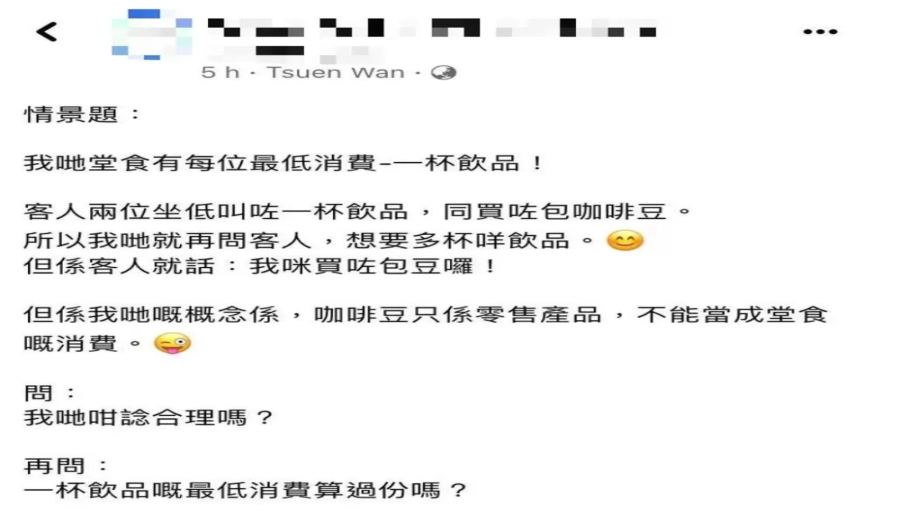
Introduction:Recently, a coffee shop sparked discussion by requiring dine-in customers to order at least one drink. When a customer who purchased coffee beans and ordered a drink was still asked to order another drink, the shop posted online seeking opinions, which led to a polarized debate on the internet. This incident not only involves the rationale behind minimum spend policies but also reflects the delicate balance between business needs and customer experience. This article will delve into the flexibility in enforcing minimum spend rules, the core issues behind the controversy, and how to maintain humanized service while upholding principles.
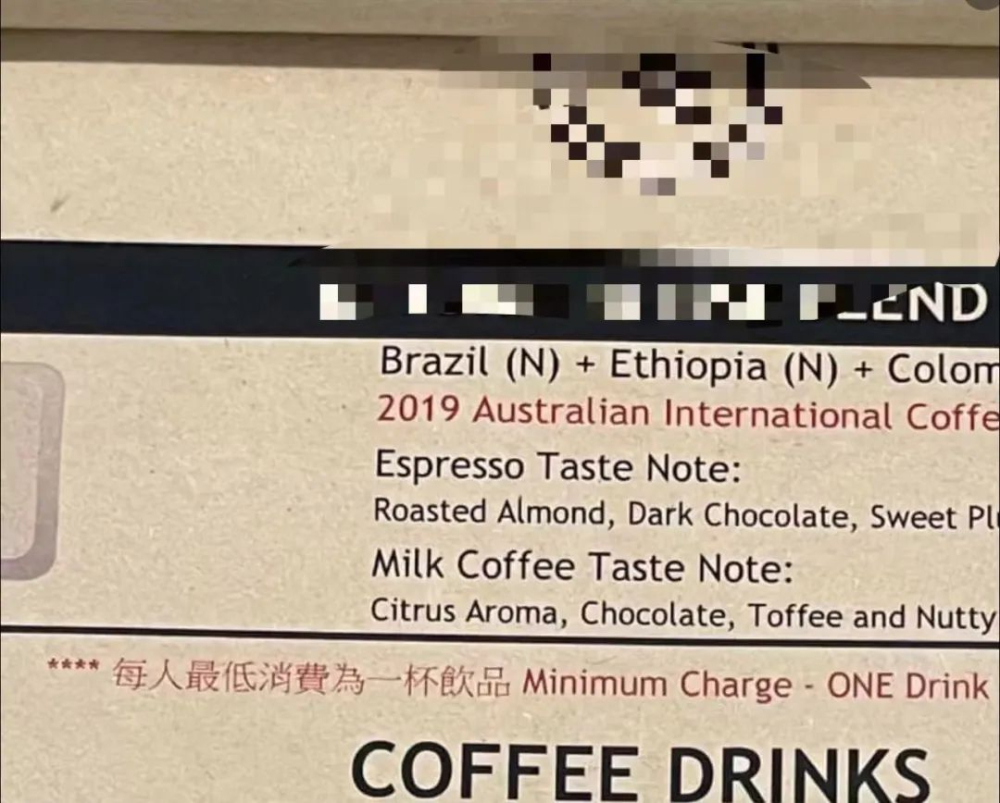
Recently, a certain coffee shop has become a hot topic due to its strict enforcement of a minimum spend policy for dine-in customers. The shop stipulates that every customer dining in must order at least one drink (The menu clearly states this requirement). When two customers ordered a bag of coffee beans and one drink, the shop, citing that the coffee beans were retail merchandise, asked the customers to order another drink. The shop later posted on social media seeking public opinion, which unexpectedly triggered intense discussion.
Supporters argue that since the minimum spend is clearly stated on the menu, customers should comply. One comment pointed out: "Running a business requires paying rent and operational costs—the shop is not a charity." Others mentioned that many coffee shops in other regions have similar rules, calling it a common industry practice. They emphasized,the core of the minimum spend policy is to ensure that dine-in customers pay for the space and service they occupy.
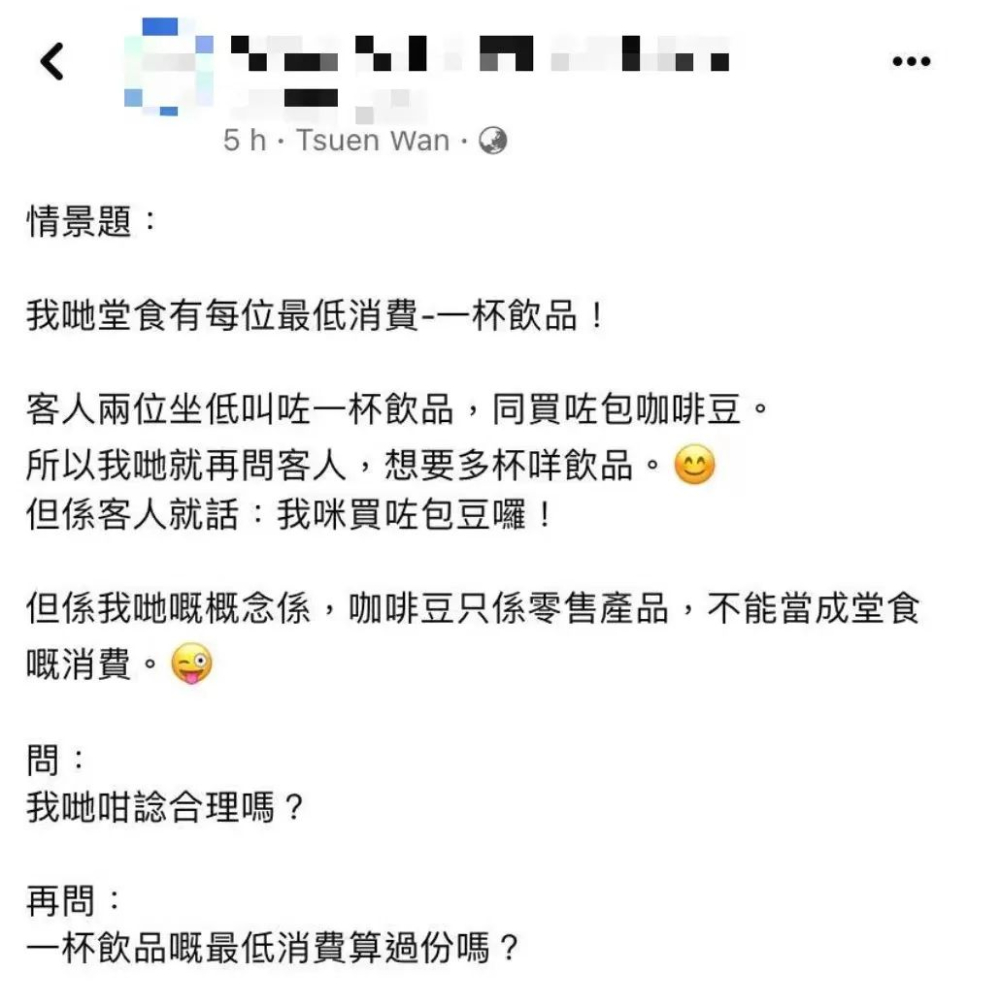
However, opponents criticized the approach as lacking empathy. One netizen commented: "Buying a bag of coffee beans and a drink is already a reasonable level of consumption, and customers shouldn't be forced to buy more." They believe,retail products and dine-in consumption are fundamentally different and should not be equated simplistically. Some consumers worry that overly strict policies may drive away potential repeat customers, especially those who purchase high-value coffee beans but occasionally don’t order drinks.
The crux of the controversy lies in how to balance the business needs of the shop with the reasonable expectations of customers. Some relatively neutral views suggest that a minimum spend policy can exist, but its enforcement should be more flexible. "The customer bought coffee beans and also ordered a drink—they’ve already made a substantial contribution to the shop. The shop could handle such situations more flexibly," wrote one commenter. They suggested,businesses could consider making reasonable judgments based on the actual consumption situation of customers, rather than mechanically enforcing the rules.
On the other hand, some netizens analyzed the issue from a business perspective, arguing that retail purchases cannot simply "offset" dine-in consumption. "Buying a bag of coffee beans may involve a relatively high amount, butit is not equivalent to the space occupation and time cost brought by dine-in consumption. The cost of providing air conditioning, seating, and service needs to be considered." However, they also admitted that the way policies are enforced should be handled carefully to avoid leaving a negative impression on customers.
The turning point of the incident came when the shop posted the situation as a "scenario question" on social media. Although the shop claimed it was merely seeking consumers’ opinions on the minimum spend policy, many netizens saw this public discussion as a sign of "pettiness." One commenter wrote: "The shop could have clearly communicated the policy at the time of ordering, rather than discussing it online afterward, which comes across as unprofessional and inhospitable."
Faced with the intense online reaction, the shop eventually deleted the post and issued a public apology. The shop explained that the deletion was due to the disharmonious tone of the online discussion, and they hoped to prevent further escalation. In their apology statement, they said the original intention of the post was to understand whether the rule had flaws or needed improvement, but they did not expect such a strong negative response. They expressed regret to those who were upset by the incident.
This incident reflects a common challenge in running a coffee shop: how to find a balance between ensuring business income and maintaining customer experience. For coffee shop operators, formulating a reasonable minimum spend policy requires considering multiple factors: shop location, rental costs, average order value, customer traffic, and more.A good policy should ensure the basic operational needs of the shop while providing customers with a reasonable degree of flexibility and respect.
For consumers, understanding the consumption policies of different coffee shops is also important. Some shops may have different requirements for dine-in and takeout, while others may have special policies for customers who bring their own cups or purchase retail products. A simple inquiry or observation of the menu’s notes before entering the shop can help avoid unnecessary misunderstandings. After all, good customer relationships are built on mutual understanding and respect.
The above content is compiled by CoffeeHunters, a coffee news website.


