







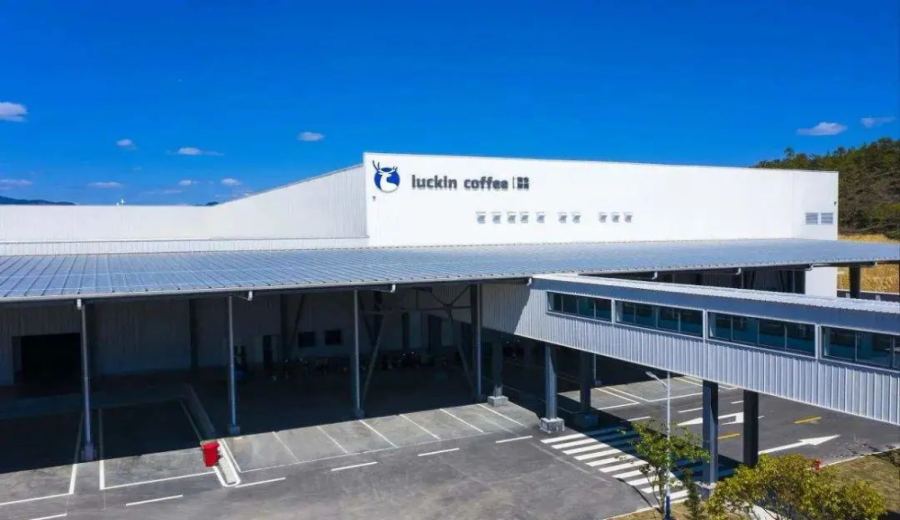
Introduction:Following its roasting facility in Pingnan, Fujian, Luckin Coffee is building its second roasting base in Kunshan, Jiangsu, with an annual production capacity of 30,000 tons and a total investment of approximately 1 billion yuan. This full-chain factory, encompassing R&D, production, and sales, will not only alleviate the pressure on raw material supply for its best-selling products but also reveals the brand's strategic ambition to enter the international market. This article provides an in-depth analysis of the key factors behind the choice of Kunshan and how the new factory will support Luckin’s global expansion over the next three years.
While domestic coffee brands are competing for the lower-tier market, Luckin has quietly completed a deep layout of its supply chain. Two years after the stable operation of its 15,000-ton-capacity roasting plant in Pingnan, Fujian — the brand that once exploded onto the market with its Coconut Latte — it has once again made a major investment in the Yangtze River Delta region.Kunshan Economic and Technological Development Zone, Jiangsuis about to welcome its wholly-owned second coffee roasting base.
The selection of the new factory site underwent rigorous screening. According to insiders, the Luckin team spent a year comparing multiple cities in the Yangtze River Delta before ultimately choosing Kunshan, primarily considering itsmature maritime logistics network and the agglomeration effect of the coffee industry chain.Currently, the Kunshan Development Zone has gathered upstream and downstream enterprises such as coffee equipment manufacturers and packaging material suppliers, forming industrial synergies with Starbucks China’s 'Coffee Innovation Industrial Park' established two years ago.
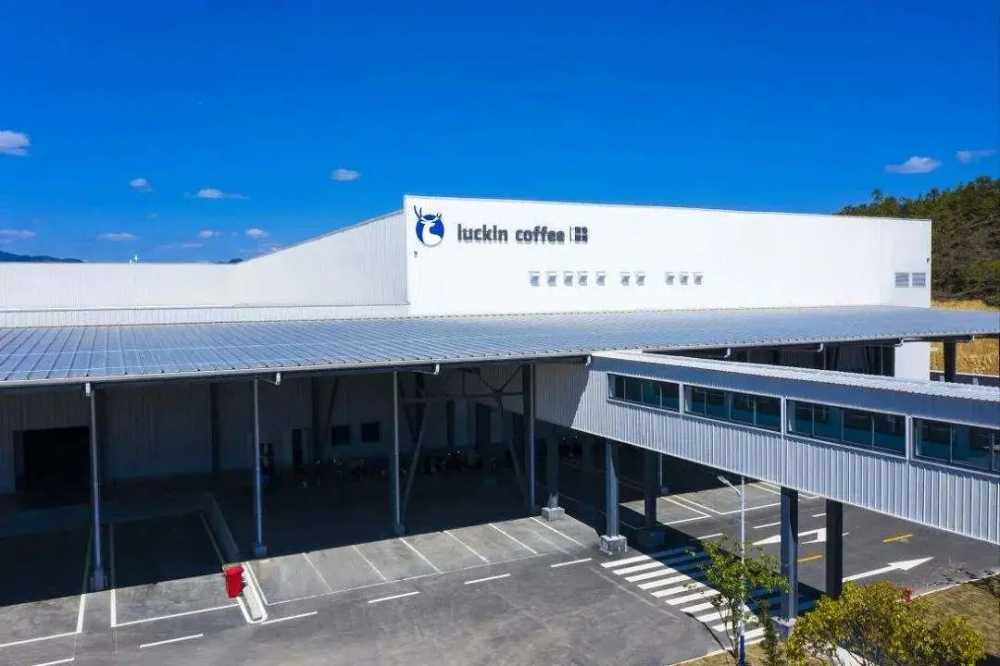
According to registration information dated May 27,Luckin Coffee Food (Jiangsu) Co., Ltd. has a registered capital of 40 million US dollarsand is wholly owned by Luckin’s Hong Kong-registered roasting plant company. Unlike the Pingnan project, which was previously a joint venture with Louis Dreyfus, the Kunshan factory adopts a fully self-operated model, with the total investment scale increased toapproximately 1 billion yuan (RMB), and the planned area is expected to be 1.5 to 2 times that of the Pingnan factory.
The factory is designed with an annual production capacity of30,000 tons of coffee bean roasting— exactly double that of the Pingnan factory. In addition to basic roasting functions, the facility will also integratea product R&D laboratory and a brand sales center, forming a closed-loop process from green bean selection to end-consumer delivery.After officially commencing production in 2024,it is expected to ensure fresher roasted beans for stores by shortening the transportation radius — professional roasters point out that the optimal flavor window for roasted coffee beans is typically within 7 to 21 days after roasting.
The choice of Kunshan also carries implicit global ambitions. The local government is focusing on building a comprehensive base integrating coffee roasting, brand incubation, and international logistics, and has already attracted several international roasting equipment suppliers to set up exhibition centers.Luckin plans to use this as a springboardto build a supply chain network radiating to Southeast Asia and European and American markets within the next one to three years. Industry observers have noted that its parent company’s latest financial report has explicitly listed a 'technology-driven global supply system' as one of its three strategic directions.
For consumers, the significance of this invisible factory goes far beyond just production capacity figures. The Kunshan project may draw inspiration from the transparent design of Starbucks’ Shanghai Roastery, and may open certain areas in the future to allow the public to directly observe the entire process from green beans to the cup.Notably, as the SOE (Single Origin Exclusive) premium single-origin series continues to expand,the precise roasting capabilities of the new factory will directly impact the flavor expression of beans with special processing methods — for example, Ethiopian Yirgacheffe washed beans require adjustments to the roasting curve to highlight their citrus notes.
From turning things around to aiming for the global stage, every step of Luckin’s expansion is accompanied by synchronized upgrades to its supply chain. As the 30,000-ton roasting plant forms a complementary echelon with existing production lines, this young brand is attempting to find a better balance between scale efficiency and quality stability.
The above content is compiled by CoffeeHunters, a coffee news website.


