







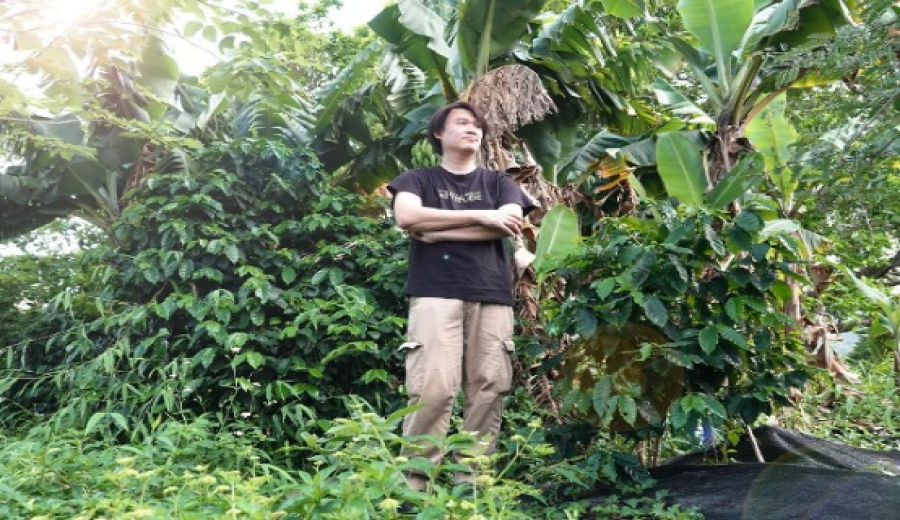
Introduction:From programmer to coffee farm owner, 42-year-old Mike gave up a stable career to grow Arabica Catuai variety on Hong Kong’s limited land. Instead of relying on conventional farming, he used his IT skills to build an environmental monitoring system and boldly experimented with diverse anaerobic fermentation processes—like using perilla leaves and beer. Even with an annual yield of just a few kilograms, he strives to uncover a uniquely Hong Kong coffee flavor. This article reveals how a tech expert breaks geographical limitations with innovative thinking to create the impossible: locally produced specialty coffee.
In Hong Kong, where land prices can exceed HK$1 million per square foot, 42-year-old IT engineer Mike made a startling decision in 2019—he quit his high-paying job to grow vegetables and take over a coffee farm. His goal was clear: to cultivate Catuai coffee with a distinct Hong Kong identity.Despite challenges like elevations below 1,000 meters and limited arable land, he persists in exploring the possibilities of local coffee through technology and innovative processing methods.
For many coffee enthusiasts on a budget, growing their own beans might seem like a fantasy. But more and more people, driven by the pursuit of ideal coffee flavors, are starting from the source. Mike’s story is a microcosm of this trend—he doesn’t just want to drink satisfying coffee; he wants to create it himself.
Challenges Within the Coffee Belt Though Hong Kong lies within the tropical zone suitable for coffee cultivation, the actual conditions are far from ideal.Arabica varieties typically require environments above 1,000 meters in elevation, yet Hong Kong’s highest peak, Tai Mo Shan, stands at only 958 meters. The Catuai variety Mike chose is relatively adaptable but still demands meticulous management to reach its potential.
2020 was his peak planting year, with 20 coffee trees in the garden, yet the first harvest yielded just 3 kilograms of green beans, with only a slight increase the following year.Such yields are barely profitable in the commercial market, so Mike focused from the start on researching processing methods rather than selling the beans themselves.
Innovative Farming by a Tech Mind Leveraging his IT background, Mike designed a DIY device capable of continuously monitoring temperature and humidity changes.This data helped him precisely manage the growing environment for his coffee trees, especially in water management and pest prevention. The riverside shaded location he chose was also deliberate—surrounding tall trees provide natural shade, preventing fruits from over-ripening under intense sunlight.
Flavor Experiments with Anaerobic Fermentation Beyond traditional washed and natural processes, Mike boldly tried various anaerobic fermentation methods:including innovative combinations like perilla leaves, cilantro, beer, and plum wine, even adding salt to regulate fermentation. While these experiments may not directly translate to the taste of the ingredients used, they effectively highlight unique flavor layers. Notably, many assume perilla fermentation imparts strong herbal notes, but the actual effect is often subtler and more complex.
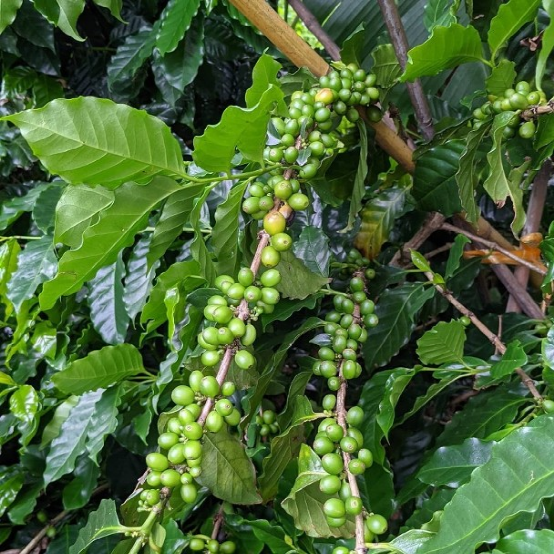
Underrated Coffee Byproducts Beyond coffee beans, the fruit peel and coffee leaves also hold development potential. These parts can be used to make specialty teas or cocktail ingredients, offering additional revenue streams for small-scale growers. Although Hong Kong’s geography limits large-scale production, Mike’s case proves—even with scarce yields, scientific methods and flavor experimentation can still create a locally distinctive specialty coffee experience.
The above content is compiled by CoffeeHunters, a coffee news website.


