







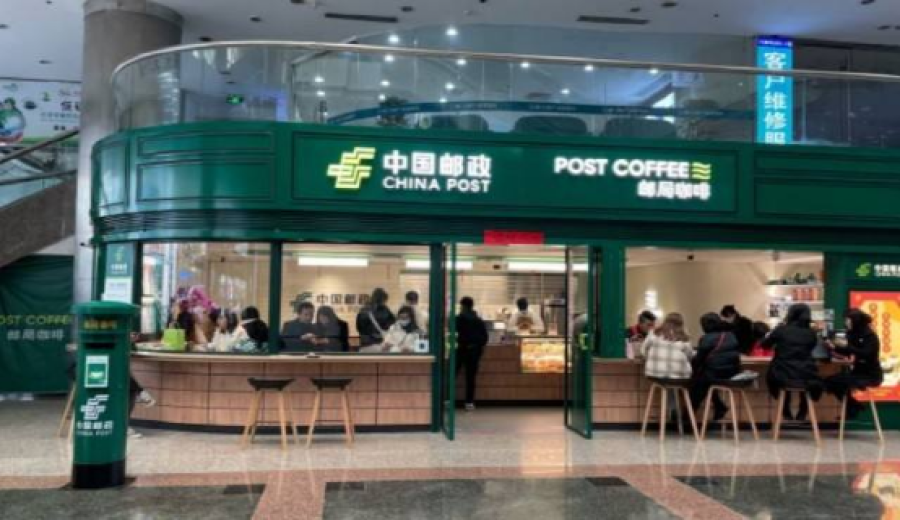
Introduction:The second post office café operated by China Post has officially opened in Xiamen’s Cat Street, combining local culture with animal-friendly elements. It has also collaborated with oat milk brand OATLY to launch a hidden eco-friendly special drink. This article delves into the store’s features, the recipe of the collaborative beverage, as well as OATLY’s sales performance and product strategy in the Asian market, uncovering the highlights behind this cross-industry collaboration.
Following the opening of the first post office café in Xiamen’s International Trade Zone on February 14 this year, China Post has once again expanded its coffee footprint by announcing in late April that its second branch will be located in Xiamen’s Cat Street (No. 12, Ding’aozi, Siming District). The new location continues the postal-themed design while incorporating the unique street atmosphere of Cat Street. The interior decoration features multiple cat-themed elements, creating a relaxing space ideal for cat lovers to gather and socialize.
The first post office café, located in the International Trade Zone, attracted large crowds after its opening, with numerous online discussions about long queues and a sudden surge in orders. However, due to pandemic lockdown measures, the store was temporarily closed. On April 29, the official Weibo and WeChat accounts released information about the new store, signaling a gradual return to normal operations.
During its trial operation period (May 1 to May 14), the second post office café specially collaborated with OATLY to launch a hidden menu drink that could only be ordered using a specific password. The official hint was “unknown, green, celestial,” guiding customers to guess the keyword “what is a green planet,” successfully adding an interactive and fun element.
According to multiple netizens who tried the drink, this eco-friendly special is coffee-based, mixed with oat milk, coconut juice, and grape jelly. It not only showcases a creative combination but also aligns with environmental sustainability concepts.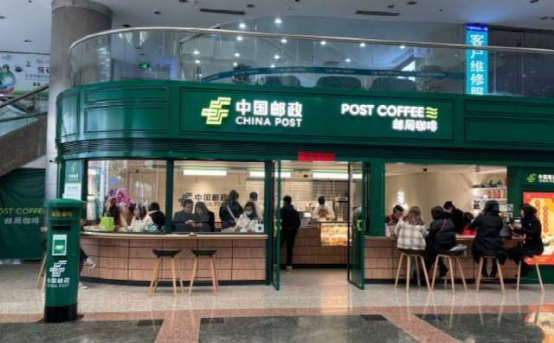
As a key partner in this collaboration, OATLY’s recently released Q1 2022 financial report shows global revenue of $166.2 million, a year-on-year increase of 18.6%. Despite the temporary suspension of some foodservice operations in parts of Asia due to the pandemic, the brand still achieved $28.7 million in revenue in the Asian market, a 15.3% growth compared to the same period last year.
Data indicates that OATLY has successfully penetrated over 21,500 retail outlets and 37,000 foodservice locations in the Asian market, with foodservice accounting for 75% of total sales. The “Coffee Master” series makes up 80% of sales in the Asian market. Even in the face of challenges such as over 17,000 stores in China being temporarily closed due to lockdowns, the brand continues to expand its diverse product lines.
In addition to focusing on the coffee market, OATLY is also actively expanding into the new-style tea beverage sector. It collaborated with ShuYi Herbal Jelly to launch the “Orange Blossom Camellia” plant-based tea drink, which exceeded one million sales in just 10 days after its launch. Moreover, the brand introduced the “Tea Master” oat milk, officially marking its entry into the new-style tea beverage market. In the ice cream market, OATLY partnered with Chinese new retail platform Hema to launch a co-branded plant-based ice cream, catering to the needs of different consumer groups.
To cater to Chinese consumers’ preference for portable packaging, OATLY has also adjusted its product specifications, offering oat milk in sizes of approximately 200 to 350 milliliters for easy purchase and carrying at retail outlets. This popular plant-based drink, often mistakenly referred to as “oat milk,” is actually correctly called “oat beverage,” made entirely from plant-based ingredients.
OATLY’s rapid market penetration is not only due to collaborations with well-known coffee brands such as Starbucks and MANNER to boost visibility, but also because its product characteristics meet the needs of lactose-intolerant consumers. With global environmental awareness on the rise, whether this plant milk giant can continue to attract more consumers remains to be seen.
The above content is compiled by CoffeeHunters, a coffee news website.


