







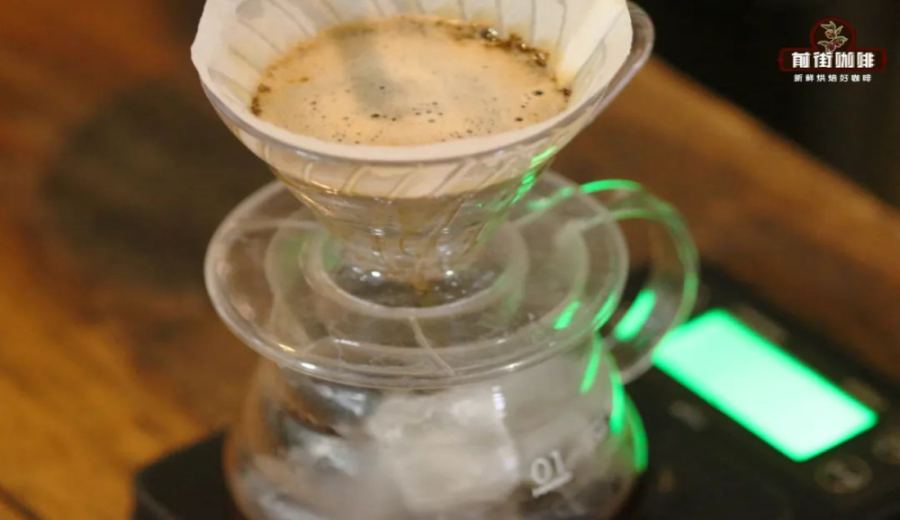
Introduction:Mastering the extraction time of pour over coffee is a key step in adjusting flavor. Many coffee enthusiasts have questions about whether the blooming stage should be included in the total time, and this detail directly affects the accuracy of coffee extraction. This article delves into the scientific setup of extraction time, explores the truth behind the timing start debate, and provides a segmented pouring model along with practical suggestions to help you optimize coffee extraction through time management and stabilize the quality of your brews.
During the pour over extraction process, the timing function of an electronic scale is often overlooked, but it is actually an important tool for assessing extraction performance. Many professional baristas recommend keeping the total extraction time around two minutes, with the ideal range falling between 1 minute 50 seconds and 2 minutes 10 seconds. However, there is a clear divergence in the industry on when to start the timer: should it begin with the first pour or only after all the water has been poured? One viewpoint suggests that once the coffee grounds come into contact with water, the extraction process has already begun, so timing should start from the very first second of pouring.
An electronic scale is not just a tool for measuring coffee grounds or water volume—its timing function is crucial for developing a scientific brewing recipe. By recording the time of each step, we can better control the entire brewing process and also provide an objective basis for review when the coffee doesn’t perform as expected. Many coffee packages indicate suggested brewing times, which also serve as important reference data for adjusting flavor.
For beginners new to pour over coffee, facing multiple variables such as coffee-to-water ratio, water temperature, and grind size can often feel overwhelming. By quantifying parameters like time, not only can you improve the controllability of the process, but you can also more easily identify the root causes affecting flavor. Following common brewing parameters, the final total extraction time usually stabilizes between 1 minute 50 seconds and 2 minutes 10 seconds. If the extraction time is too long, the coffee may easily turn bitter or astringent; conversely, if it’s too short, it may result in a weak or overly acidic flavor.
To use time as a diagnostic tool for extraction, you first need to establish a unified timing standard. The most common point of contention currently is: should you start the timer when pouring begins, or only after pouring is complete? Those who advocate starting the timer at the moment of pouring believe that extraction begins the instant water contacts the coffee grounds. If you insist on starting the timer only after all the water has been poured, you’re essentially ignoring the impact of the pouring phase on extraction, and the calculated blooming time may far exceed the recommended 30 seconds.
A practical tip is to manage the extraction process by establishing a pouring time model. Assuming a total extraction time of two minutes, you can plan the first pour to start at the 1-second mark, the second pour to begin around the 30-second mark and finish around the 55-second mark, the third pour to start at 1 minute 10 seconds and finish pouring around 1 minute 35 seconds, and finally complete the dripping process by the 2-minute mark. With time nodes like these, it becomes easier to estimate and control the overall extraction rhythm.
In actual practice, if you find that a certain pouring stage takes longer than expected—for example, if the second pour takes more than 55 seconds—it usually means the pouring speed is too slow, and you may need to adjust the flow rate. If subsequent pouring stages maintain the same speed, the total extraction time is likely to exceed two minutes. In this case, you should consider increasing the flow rate of later pours to ensure the total time stays within the ideal range.
When summarizing after extraction, time records can also provide valuable clues. If all the pouring time points align with the planned schedule but the total extraction time still deviates from the target, the issue is likely related to the grind size of the coffee: grinding too fine increases water resistance and extends extraction time, while grinding too coarse allows water to pass through too quickly, shortening extraction time. By comparing time points with the total time, you can more accurately pinpoint the source of the problem.
Additionally, if all the time points are accurate but the coffee’s flavor is still unsatisfactory, you can rule out time-related factors and further examine other variables such as water temperature, water quality, or pouring technique. Gradually narrowing down the possibilities will help you identify the true factor affecting the coffee’s performance. By systematically applying time management, the pour over extraction process becomes more controllable, and the flavor performance more stable and outstanding.
The above content is compiled by CoffeeHunters, a coffee news website.


