







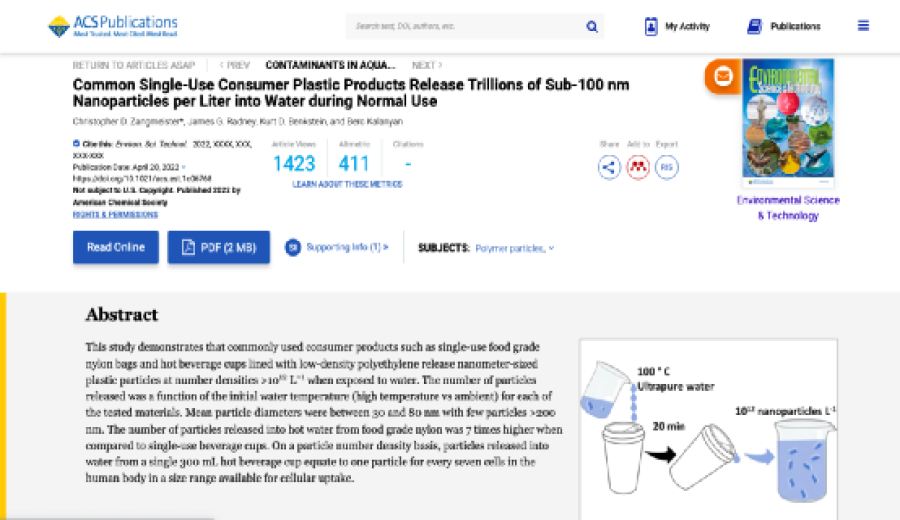
Introduction:Do you habitually grab a hot cup of coffee to go every day? This seemingly ordinary act may be causing you to unknowingly ingest large amounts of microplastics. Recent research has found that common disposable paper cups can release an astonishing number of microplastics and nanoplastics within just 20 minutes of contact with hot beverages. These tiny, nearly invisible particles not only make their way into human blood and lungs but may also penetrate cell membranes, posing potential health risks. This article will explore the hidden dangers of materials used in hot drink containers and offer simple yet effective ways to protect yourself.
For many office workers, grabbing a steaming cup of coffee on the go is a daily ritual. Yet few pay attention to the fact that the very paper cups holding these delicious drinks may be quietly releasing large amounts of plastic particles when exposed to heat. Experiments by the U.S. National Institute of Standards and Technology (NIST) reveal that when these commonly used takeaway cups come into contact with hot water for just 20 minutes, they can release trillions of tiny plastic particles.
In reality, concerns about human exposure to microplastic pollution have been around for some time. As early as 2018, a research team in Austria reported the presence of microplastics in the human body; the following year, they found an average of 20 microplastic particles per 10 grams of stool samples. More recent studies have confirmed that these tiny pollutants are not only found in the bloodstream but can also be detected in lung tissue.
Microplastics generally refer to plastic particles smaller than 5 millimeters, some of which can even be seen with the naked eye; while the more dangerous nanoplastics are smaller than 1 micrometer (one-millionth of a meter), making them difficult to observe even under standard microscopes. These extremely small particles can easily penetrate biological barriers and potentially affect human cells.
NIST researchers tested two commonly used food packaging materials: the LDPE (low-density polyethylene) film lining disposable hot drink cups, and the food-grade nylon anti-grease layer used in baking applications. The experiment found that these materials released an alarming number of microplastics when exposed to hot water, with the nylon material releasing nanoparticle concentrations seven times higher than those of LDPE.
Under scanning electron microscopy, these plastic particles were mostly found to be in the size range of 30 to 80 nanometers, with only a few exceeding 200 nanometers. This means that even if vendors strictly control food hygiene, the hot drink in your hand could still contain billions of undetectable microplastics.
Even more concerning is that nanoplastic particles can penetrate cell membranes and enter the interior of cells, disrupting normal physiological functions. Although the U.S. FDA has set safety standards for plastics used in food packaging—for instance, food-grade nylon must not exceed a 1% mass loss at high temperatures—NIST research shows that actual measured losses can reach up to 10%, clearly exceeding safe limits.
It’s worth noting that current routine testing methods primarily focus on nylon materials, and there are no standardized approaches to accurately assess the dissolution of LDPE in hot drink cups. This makes it even more difficult for consumers to judge the safety of the disposable cups they use daily.
Faced with these hidden threats, the simplest and most effective protective measure is to bring your own reusable drinking cup. Not only does this reduce the use of single-use plastics and avoid unknown health risks, but it also ensures the cleanliness of your beverage container. Next time you buy a hot coffee, remember to carry your travel mug—this small action can build a line of defense for your health.
The above content is compiled by CoffeeHunters, a coffee news website.


