








Introduction:Procrastination in writing or creative work is a common struggle for many, but “The Manuscript Writing Café” in Tokyo’s Kōenji district offers a unique solution: customers must make a reservation and write down their work goals upon entry, with staff checking progress hourly. Those who fail to meet their targets aren’t allowed to leave, and they can even choose from mild to intense supervision modes. The café is equipped with power outlets, high-speed Wi-Fi, offers self-service coffee, and allows outside food, all for a per-hour fee of 300 Japanese yen. This article explores how it works and the practical details, providing a new option for creators in need of a focused environment.
Procrastination is a common challenge in the modern workplace, especially for those in text-based professions, where the efficiency bottleneck just before a deadline can be particularly anxiety-inducing. Since opening on April 7, 2022, “The Manuscript Writing Café (原稿執筆カフェ)” in Tokyo’s Kōenji has drawn attention for its distinctive business model — this café is designed specifically for people who need a focused space for creation, using a system-based approach to help customers overcome procrastination habits.
Unlike typical cafés, this one operates by reservation only. Before entering, customers must fill out a card provided by the shop, clearly stating their “work goal” and “planned start time.” Seating is limited, and not all visitors are guaranteed entry, reflecting its targeted service approach.
The management has established three core rules: first, customers must commit in writing to specific work goals and time slots; second, staff will patrol and check progress every hour; and most crucially, customers are not permitted to leave until their preset goals are met. Interestingly, the system allows customers to customize their “pressure intensity” — the card offers three options: mild, normal, and intense, enabling staff to adjust the level of reminders based on individual needs, ranging from gentle nudges to active encouragement.
Despite the pressure-inducing mechanism, the café’s physical setup is quite creator-friendly: each seat is equipped with independent power outlets and USB charging ports to ensure laptops and other devices stay powered, along with high-speed and stable Wi-Fi connectivity. For food and drinks, the café offers self-service coffee that customers can freely help themselves to, and outside food is also allowed, though a per-seat hourly fee of 300 yen applies.This pricing model directly ties into time cost, creating an economic incentive that subtly drives efficiency.
For the kind of procrastination where one “sits around consuming time without producing,” the hourly rate of 300 yen (approximately 70 New Taiwan dollars) becomes a key balancing factor — prolonged lack of progress leads to mounting costs, motivating customers to focus and achieve their goals.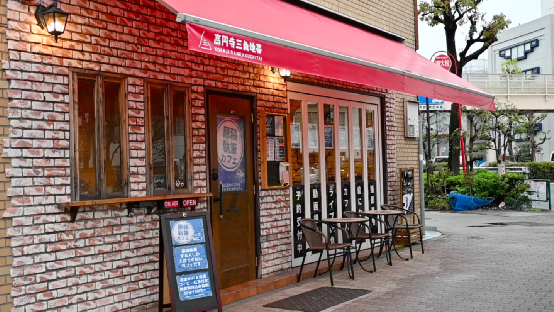
This isn’t the first time the café has experimented with themed operations. As early as November 2022, the same location launched a “Video Editing Café,” offering similar services tailored to editors facing tight deadlines, also under the same management. Familiar customers describe this “same old wine in a new bottle” style of supervision as akin to switching classrooms but still encountering a strict teacher — “there’s always a pair of eyes watching you work by the window.”
Actual visitor feedback points out that while there are no overtly coercive measures, the combination of regular progress checks, cost considerations, and optional pressure levels creates a unique “comfortable tension.” The stable supply of power and internet ensures smooth operation of tools, and the allowance of outside food helps avoid hunger disrupting the creative flow.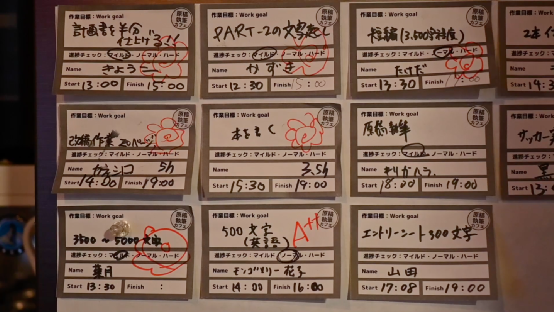
For creators accustomed to working from home but often distracted by miscellaneous tasks, this type of paid, supervision-based space provides a balanced alternative: it offers the flexibility of home while enhancing focus through institutional design. Experts suggest that before using such spaces, one should break tasks down into quantifiable smaller goals (such as “complete a 2000-word first draft” or “edit a 3-minute rough cut”) and choose a supervision level suited to one’s own stress tolerance, in order to maximize the return on time investment.
The above content is compiled by CoffeeHunters, a coffee news website.


