







Introduction:When cilantro and scallions make their way into your coffee cup, are you also surprised? In recent years, cross-industry combinations of coffee and flavored vegetables have frequently made appearances—from garlic latte to cilantro lemon tea. These “dark horse” beverages have sparked heated discussions online. This article delves into the origins and market reactions of these innovative drinks, and explores whether they are fleeting gimmicks or harbingers of future beverage trends, helping you better understand the motivations behind the innovation and the market phenomena.
In recent years, the pace of innovation in the coffee and milk tea markets has accelerated, with many unconventional combinations emerging one after another. From garlic latte to cilantro latte, and then to scallion milk tea, these seemingly mismatched pairings are constantly testing the limits of consumers’ taste buds. In an increasingly competitive F&B environment, such innovations are not only aimed at grabbing attention but also reflect brands’ efforts in differentiation.
People’s imagination when it comes to food seems boundless. While the garlic latte is still at the center of conversation, two common flavored vegetables—cilantro and scallions—have quietly stepped onto the beverage stage. Especially in spring, green elements become a source of inspiration, and some restaurants have launched scallion-flavored milk tea, sparking lively discussions. This drink is typically based on black tea, paired with matcha powder and scallion segments, and some versions even add ice cream to create a double surprise for both sight and taste.
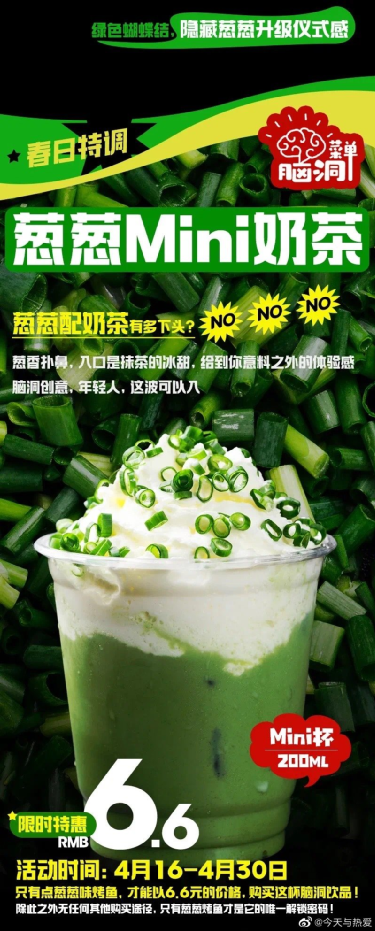
However, feedback from consumers who have actually tried it is polarized. One netizen recreated the scallion milk tea at home by mixing hot black tea, matcha powder, and scallion segments, then topping it with ice cream. Although it looked eye-catching, the overpowering scallion flavor left drinkers with awkward expressions. Even so, these creative combinations still garner widespread attention due to their novelty, becoming a marketing tactic for many shops to attract younger customers.
Speaking of cilantro, this controversial herb already has a large fan base and just as many detractors in the food industry. Earlier this year, McDonald’s cilantro sundae sold out quickly, with many saying they could only taste strong lemon. The combination of cilantro and coffee is no less bold—some netizens have shared how to make homemade cilantro lattes: crushing cilantro and salt to extract the juice, then mixing it with milk and coffee. Visually, this drink may not be appealing, but some who tried it felt that if prepared well, the flavor can actually be quite unique.

Compared to the intense reactions stirred up by the garlic latte, the cilantro latte seems to have slightly higher acceptance. Some netizens say that seeing the combination of cilantro and coffee actually gives them an urge to try it—especially when the cilantro flavor is subtly balanced. However, there are also die-hard “pure love” cilantro fans who find this combination unacceptable, believing it ruins the original layers of coffee flavor.

Behind these unusual drinks lies the reflection of an overall trend of intense competition within the F&B industry. From breakfast shops selling pour over coffee to cheung fun stalls offering milk tea options, cross-category operations have become a trend. For many small businesses, launching creative combinations not only boosts brand visibility but also gains more exposure on social media. However, while innovation is important, balancing taste acceptance with customer repurchase rates is key to long-term success.
When these unusual drinks were first introduced, they indeed sparked curiosity and discussion in the market. But as similar combinations become more common, consumers’ sensitivity is gradually decreasing. In the future, without more convincing flavor pairings or compelling storytelling, relying solely on “novelty” may struggle to sustain market interest.
In summary, innovative beverages like cilantro coffee and scallion milk tea, whether receiving praise or criticism, have successfully sparked public discourse on beverage diversity. They may not become everyday choices, but as reflections of market trends, they are worthy of attention from both industry players and consumers. While pursuing novelty, how to balance fundamental flavors and customer experience will be the true challenge for future beverage innovation.
The above content is compiled by CoffeeHunters, a coffee news website.


