








Introduction:A common question among many coffee enthusiasts is why their pour over coffee tastes overly acidic, especially when using light roast beans. This article analyzes real-life cases to explain how water temperature affects the balance of acidity and sweetness in coffee, and delves into whether the acidity of freshly roasted coffee beans is normal. It also provides detailed suggestions for adjusting extraction parameters to help you find the most suitable pour over settings for your personal taste.
Many coffee lovers often encounter overly acidic pour over coffee during brewing, which is indeed one of the common challenges at the beginner stage. One customer once shared his confusion: he bought the same Yirgacheffe coffee beans, but why did they taste sharply acidic when brewed at home, while they presented a balanced and smooth flavor at a professional café? Upon further inquiry, it was found that he used 86°C water for brewing, which he mentioned was already an intentional adjustment after learning that light roast beans require slightly higher temperatures.
In fact, water temperature has a critical impact on coffee extraction.The higher the water temperature, the more types of compounds can be extracted—these substances often bring more sweetness and bitterness, resulting in a rounder overall flavor. Conversely,if the water temperature is too low, fewer compounds are extracted, causing the acidic components in the coffee to stand out more, leading to a distinctly sharp taste.

Taking light roast beans like Yirgacheffe as an example, the recommended brewing water temperature is usually around91°C, which is also the temperature range commonly used by many professional baristas when handling light roast beans. Going back to the aforementioned case, if all other brewing parameters were the same as those used by the café, simply lowering the water temperature to 86°C could easily result in under-extraction, amplifying the acidity in the coffee and throwing off the overall flavor balance.

To address this issue, it is recommended that coffee enthusiasts gradually adjust the water temperature and observe its impact on the coffee’s flavor. For example, starting at 88°C and increasing by 1°C each time until finding the temperature point that best highlights the balanced flavor of the coffee. In addition, other parameters such as brewing time, grind size, and coffee-to-water ratio can also significantly affect the final flavor, so it is advisable to fine-tune these simultaneously to achieve optimal extraction.
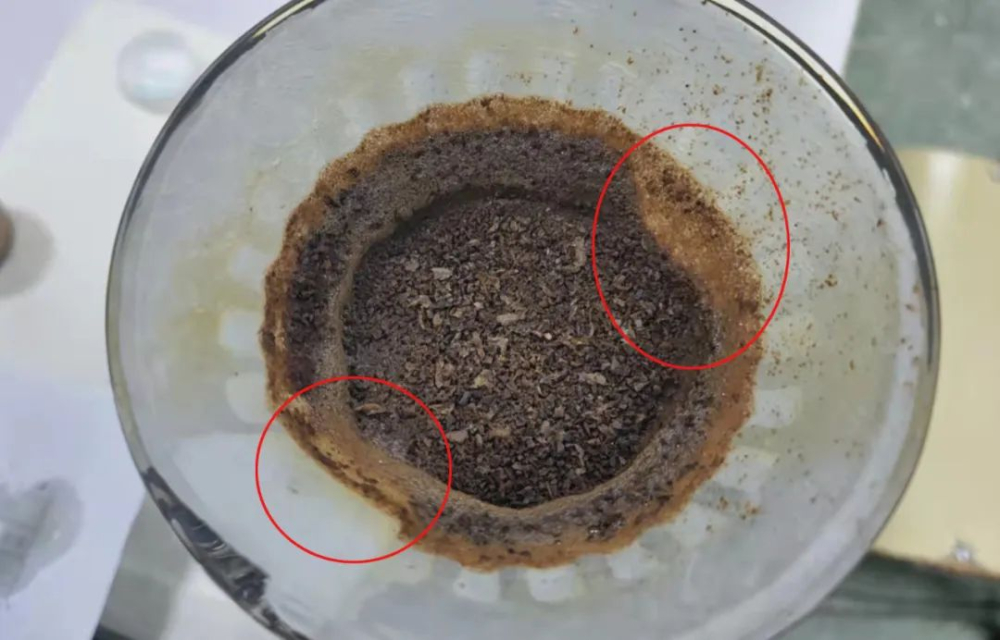
Additionally, regarding whether freshly roasted coffee beans have an acidic taste—this is actually a common question among many beginners. The answer is: yes. Freshly roasted coffee beans, especially light roast ones, often have a more pronounced fruity acidity right after opening, and this is normal. This acidity typically comes from organic acids in the beans, such as citric acid, malic acid, and acetic acid. These not only add a refreshing note to the coffee but also enhance the overall flavor complexity.
However, if the acidity is too sharp or unpleasant, it may be due to improper brewing parameters or the coffee beans being past their optimal freshness period. It is recommended to choose beans with a recent production date when purchasing, and store them properly in a dark, airtight, and cool environment to extend their freshness and flavor performance.

In summary, to improve the overly acidic taste in pour over coffee, start by adjusting the water temperature, and then fine-tune other parameters such as grind size, brewing time, and coffee-to-water ratio. Through continuous experimentation and record-keeping, every coffee enthusiast can find the brewing method that best suits their taste, and enjoy a well-balanced and satisfying cup of pour over coffee.
The above content is compiled by CoffeeHunters, a coffee news website.


