







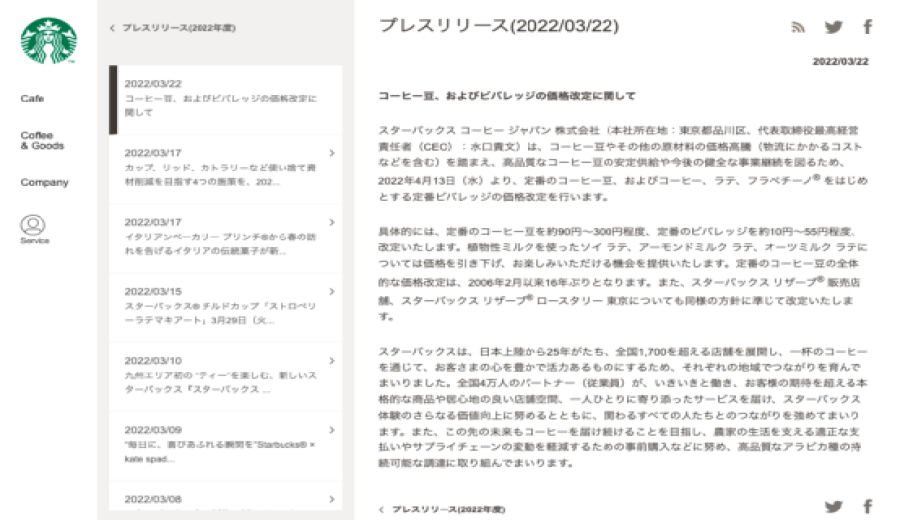
Introduction:Japanese Starbucks announced price adjustments starting April 13, 2024, with increases on both coffee beans and various beverages, but paradoxically, plant-based milk lattes saw a price drop. This marks the first coffee bean price adjustment in 16 years and the first beverage price change in 3 years for Starbucks Japan. This article will delve into the reasons behind the price hikes, including global coffee futures trends, inflation, and geopolitical impacts, while also exploring market reactions in Japan and competitive brand movements to help readers grasp the latest market trends and purchasing advice.
Starting April 13, 2024, Japanese Starbucks officially adjusted the prices of some products. The price of coffee beans increased by approximately 90 to 300 yen, while coffee beverages saw price hikes ranging from 10 to 55 yen. Notably, within the overall trend of price increases, the plant-based milk latte series—including soy milk latte, almond milk latte, and oat milk latte—saw their prices decrease instead, with each cup dropping by more than 10 yen. This adjustment is significant for Starbucks in the Japanese market, marking the first coffee bean price revision since February 2006 and the first beverage price adjustment since February 2019.
Starbucks Japan officially announced the price changes as early as February 22, citing the main reasons as significantly higher costs for coffee bean raw materials and logistics fees. With the ongoing impact of the global pandemic, coupled with inflationary pressures and uncertainties such as the Russia-Ukraine conflict, overall supply chain costs remain high, forcing the brand to adjust prices to maintain operations. However, for consumers, although tea-based beverages like milk tea remain relatively affordable, the notion of “coffee freedom” seems increasingly out of reach, sparking widespread market discussion.
Observing the global coffee market, coffee bean futures prices rose noticeably over the past year, reflecting international market expectations of tightened supply. However, recent impacts from the Russia-Ukraine war have led to more conservative expectations for coffee consumption, resulting in a decline in futures prices. Even so, demand in major consuming countries such as the U.S., Europe, and Asia continues to rise, and the global maritime order has not yet fully recovered, leaving a persistent supply gap. As a result, the medium- to long-term price trend of coffee beans still faces pressure.
Regarding brand movements, South Korean Starbucks raised the prices of certain beverages earlier than Japan, particularly iced Americanos, drawing local consumer attention and prompting other domestic coffee brands to follow suit with price adjustments, further narrowing consumers' choices. Starbucks in the Chinese market also adjusted prices around the same time, but the move came amid the brand facing multiple negative news reports, challenging its premium image and leading to a more complex market response.
Compared to South Korea and China, the price hike effect in the Japanese market has also drawn attention, especially given the strong competition from the domestic brand Doutor Coffee. Doutor has long maintained a good reputation for affordability and product accessibility, becoming the daily coffee choice for many consumers. Meanwhile, Starbucks in Japan operates over 1,550 stores across all 47 prefectures, and since its entry in 1996, it has become an important part of the local coffee culture. It is now also Starbucks’ fourth-largest market globally.
In an official statement from June 2020, Starbucks mentioned that it employs over 42,000 staff (partners) in Japan and continues to expand service locations and enhance customer experience, including opening Japan’s first sign language-friendly store. However, with intensifying market competition and rising price sensitivity, whether this price hike will affect its market share and brand loyalty remains to be seen.
Overall, the recent price adjustments by Starbucks Japan reflect the challenges and transformations faced by the global coffee industry under the combined influence of the pandemic, inflation, and geopolitical factors. For consumers, understanding each brand’s pricing strategies and market trends can help make smarter purchasing decisions and better grasp the balance between specialty coffee and affordable options.
The above content is compiled by CoffeeHunters, a coffee news website.


