







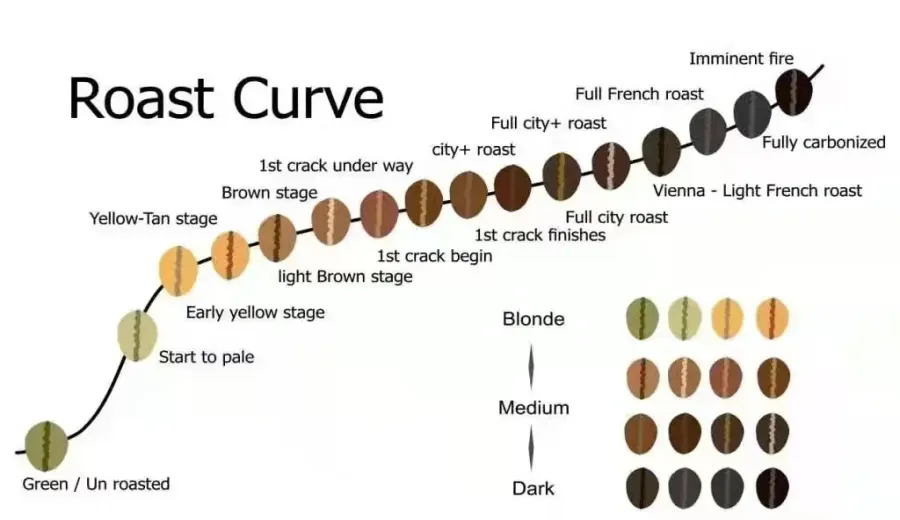
Introduction:Coffee roasting beginners often struggle with judging the yellowing point and first crack, which can significantly impact the final flavor. This guide delves into practical tips for mastering these two critical stages—from visual and auditory misconceptions to temperature and aroma cues—to help you accurately determine the drop time, avoid common issues like underdevelopment and astringency, and provide useful advice for crafting your personalized roasting path.
When learning coffee roasting, many beginners face a common challenge: a noticeable gap between theory and practice. Especially when identifying the yellowing point and first crack—two crucial stages—a slight misjudgment can lead to underdeveloped or astringent coffee. This article will detail how to correctly judge these stages and offer practical auxiliary indicators to help you improve your roasting feel and avoid common mistakes.
Many beginners, even after grasping the basic theory, still encounter various practical challenges during their first hands-on sessions. For example, unstable temperature control, improper adjustments to heat and airflow, or even being too flustered to adjust parameters. These are common issues for roasting novices, and even experienced roasters need time to adapt when switching to a new machine. Therefore, the top priority is to familiarize yourself with your roaster and learn to precisely control the heating curve by adjusting the heat—especially noting that it usually takes about 30 seconds for the temperature to noticeably change after adjusting the heat, so anticipating in advance is crucial.
Once you’ve initially mastered the machine operation, the next challenge is accurately identifying key moments in the roasting process. Judging the yellowing point and first crack often confuses beginners, especially when you start doubting your visual and auditory judgment. It’s recommended that beginners follow common judgment standards so that discussions with other roasters are aligned. Here, common misjudgments are detailed to help you more accurately grasp these critical moments.
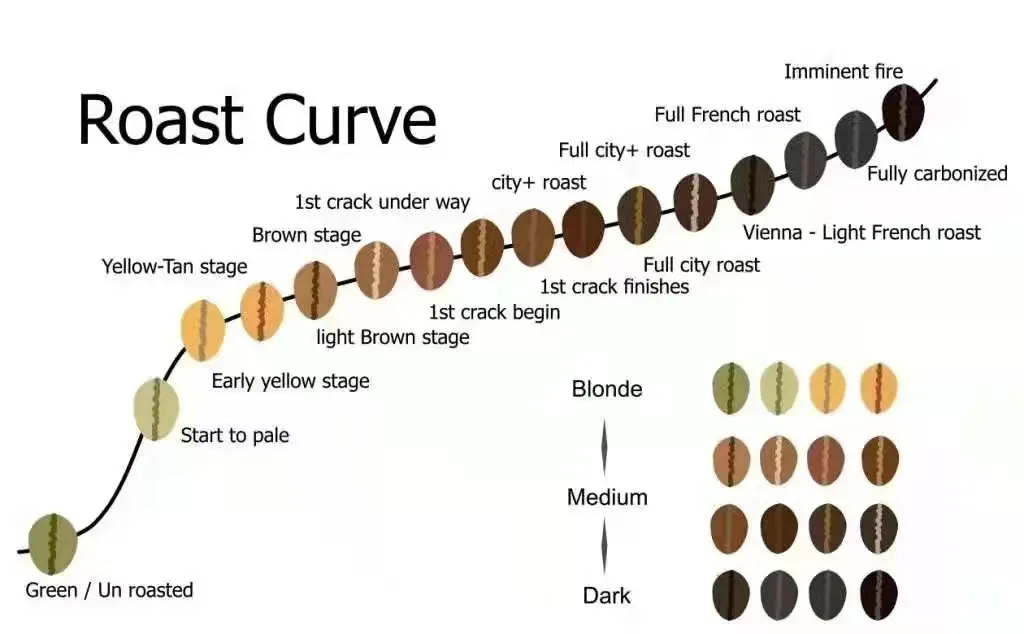
When judging the yellowing point, washed-processed coffee beans are usually easier to identify because their color changes distinctly from light green to yellow. However, natural or anaerobic natural-processed beans, which are already light yellow in their raw state, show less noticeable color differences during yellowing, making judgment more challenging. In addition to visual judgment, it’s recommended to also refer to temperature and aroma changes: typically, when the temperature rises to around 150°C, the yellowing process begins, and the grassy and wheat-like aromas of the beans gradually fade, replaced by a sweet corn-like fragrance—these are important auxiliary indicators of the approach of the yellowing point.
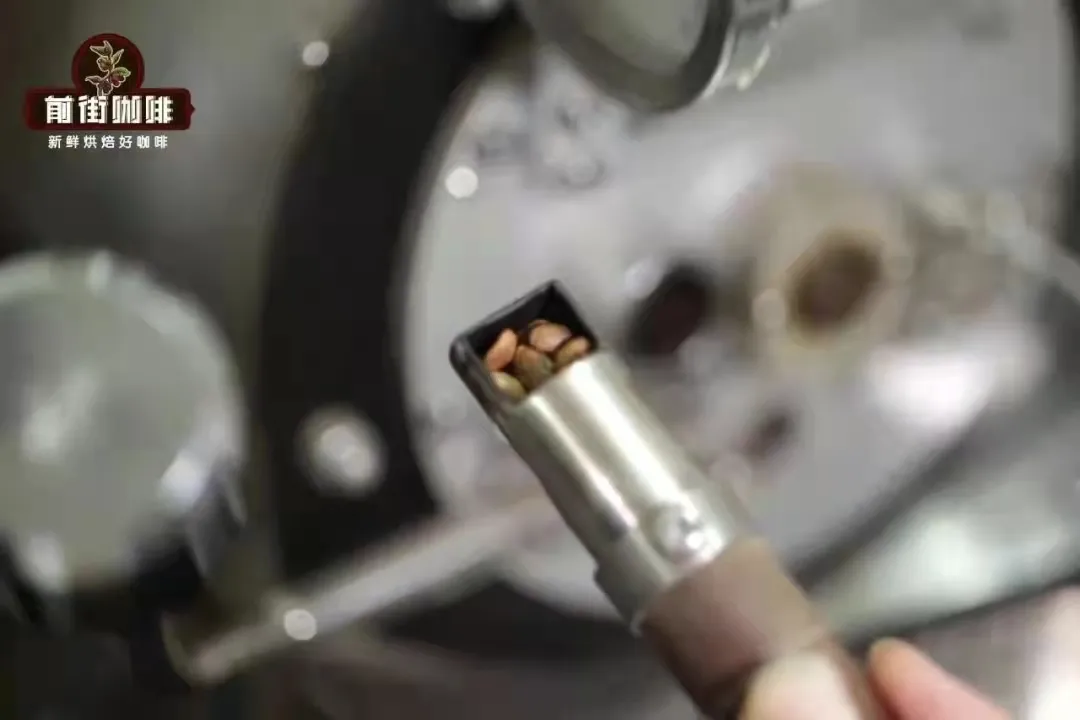
Judging the first crack has a decisive impact on the final flavor of the coffee, as it directly determines the drop time and development level. The first crack is generally divided into two phases, and the judgment standard is the occurrence of the second clear popping sound, which resembles the crisp “crack” of an electric mosquito swatter hitting a mosquito. However, in practice, so-called “false cracks” often interfere—these sounds are duller and usually caused by defective beans or individual beans that absorb heat faster and pop ahead of others. Additionally, some beans may emit a crisp sound earlier due to their position in the drum and absorbing more heat, but if the second sound does not follow consistently, it should not be considered the official start of the first crack.
The difficulty in judging the first crack lies in the fact that even a tiny time discrepancy can lead to noticeable flavor differences. If you judge the first crack to occur later than it actually does, the coffee will roast darker within the same development time; conversely, if you judge it too early, the coffee may be under-roasted and taste raw. In fact, just a 20-second difference in development time can significantly alter the coffee’s flavor profile.
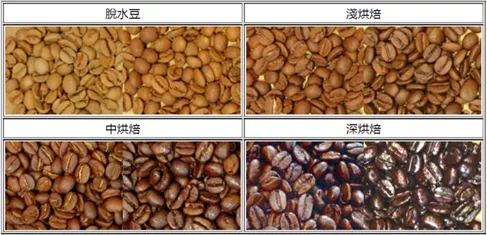
Many beginners experience this frustration: they follow the roasting curve, the beans look good in color, but the final brewed coffee is undrinkable. This situation is indeed discouraging, but remember, a roasting curve that works for others may not work for you. Roasting curve data shared online can be referenced, but more importantly, understand the logic behind the data. Every roasting failure is a learning opportunity—by analyzing the issues and making gradual adjustments, you’ll be able to find a roasting path that truly suits your equipment and taste preferences, and that’s the key to becoming an excellent roaster.
The above content is compiled by CoffeeHunters, a coffee news website.


