







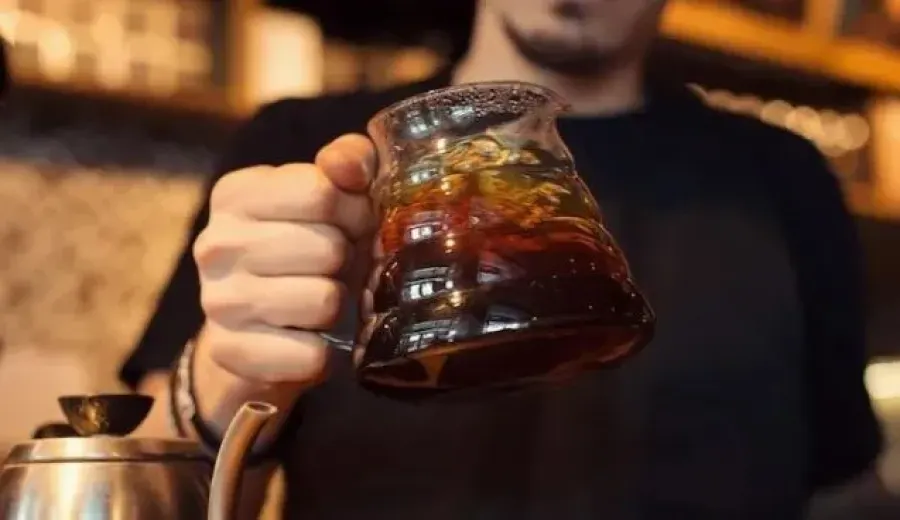
Introduction:An in-depth analysis of the scientific causes behind the aftertaste sweetness (known as "huigan" or 回甘) in black coffee, distinguishing between true huigan and false sweetness. From the perspective of flavor chemistry, we reveal the formation mechanism of the lingering finish in high-quality coffee, along with a list of pour-over beans that have been proven to highlight huigan, including recommended roast levels and brewing parameters to help you precisely capture the layered changes in a coffee’s aftertaste.
When tasting black coffee, many people notice a gradually emerging sweet sensation in the mouth after swallowing. This phenomenon, known as "huigan," is actually an important flavor indicator of high-quality coffee. Unlike direct sweet stimulation, huigan is a delicate sweetness created by aromatic compounds and residual flavor substances after the dissipation of bitter compounds, often requiring appropriate brewing techniques to be fully presented.
Professional coffee evaluation systems often refer to the overall mouthfeel after drinking as "aftertaste," but huigan represents a more nuanced and premium expression within it. Typically, dark or medium-dark roasted coffees, which contain more caramelized compounds, are more likely to exhibit noticeable huigan characteristics—when the intense bitterness gradually fades, a honey-like sweet finish emerges slowly. A similar phenomenon can also be observed in traditional herbal teas, where the initial herbal bitterness fades, often accompanied by a more distinct huigan experience.
To judge true huigan, pay attention to two key characteristics: First, it must be built upon the natural dissipation of bitterness, not merely a dilution effect. A common misconception is mistaking the slight sweetness that arises from diluted concentration after drinking water as huigan—in reality, this is just the originally masked faint sweetness becoming noticeable after the residual substances in the mouth are diluted by water. Second, high-quality huigan should be accompanied by a clean tea-like quality and should not carry any burnt, astringent, or off-flavors. This contrasts sharply with espresso: low-quality espresso often leaves a persistent dry sensation, whereas the huigan of specialty coffee is as smooth as silk.
From a flavor chemistry perspective, the essence of huigan stems from the synergistic action of specific aromatic substances. Furan and pyrazine compounds in coffee are released during high-temperature extraction. These substances inherently possess sweet aromatic qualities (such as descriptions like caramel, nuts, and crème brûlée), and when the coffee liquid cools down, they react subtly with enzymes in saliva, creating a sweet aftereffect that lingers for several minutes. It is worth noting that this chemical reaction is highly sensitive to grind size—it is recommended to use a medium-fine grind (approximately 70–75% passing through a Chinese standard No. 20 sieve) with a water temperature of 90–93°C, which can effectively enhance the extraction rate of these related aromatic compounds.
When selecting pour-over beans with prominent huigan, focus on three key elements: First, choose Arabica beans grown at altitudes above 1,500 meters (such as Ethiopia Yirgacheffe or Colombia Emerald Estate Geisha), as high-altitude cultivation imparts a firmer acidity backbone to the beans; second, prioritize beans processed with honey or natural methods, as these processing techniques retain more natural sugars; third, opt for a medium-dark roast (Agtron value around 55–60) to ensure sufficient caramelization development without excessive carbonization. During actual brewing, you can try a segmented extraction method: start with a 30-second bloom using 30 grams of water, then pour the remaining water at a rate of 200 milliliters per minute, keeping the total brew time between 2 minutes 10 seconds and 2 minutes 30 seconds. These parameters can effectively balance the release ratio of bitter and sweet compounds.
After multiple cuppings, it has been verified that certain batches from well-known roasters often exhibit excellent huigan characteristics (brand names omitted here). When purchasing, it is recommended to check the roast date, with freshly roasted beans aged 14–28 days being optimal. Store them in a light-proof, airtight container at 10–18°C. Advanced enthusiasts may try adjusting water quality: using filtered water with a TDS value of about 80–120 ppm (with a calcium-to-magnesium ion ratio of 1:2) can more clearly highlight the sweet flavor layers of the coffee itself.
The above content is compiled by CoffeeHunters, a coffee news website.


