







Introduction:Starbucks recently raised prices on multiple beverages in the U.S. market, primarily due to a triple whammy of soaring labor costs, a shortage of Brazilian Arabica coffee beans, and inflationary pressures. This article delves into the key factors behind the price hikes, analyzes operational challenges in the U.S. market, and explores from pricing strategies, pandemic policies, and competitive environments whether this wave of price increases will affect the Chinese market, bringing you up to speed with the latest developments in the global coffee industry.
Starbucks has initiated a new round of price adjustments in the U.S. market, raising the prices of several popular drinks, drawing considerable attention from consumers. This wave of price hikes is not caused by a single factor but driven by multiple economic and supply chain issues, including a significant increase in labor costs, a sharp drop in Brazilian Arabica coffee bean production, and continuously rising inflationary pressures.
First, the recurring pandemic has led to an increase in infection rates among Starbucks employees in the U.S., especially during the peak of the Omicron variant. Many employees took sick leave or were unable to return to work for extended periods. Due to the slow implementation of vaccination policies and insufficient in-store epidemic prevention measures, Starbucks faced a severe staffing shortage—not only was it difficult to recruit new staff, but it also led to high turnover among existing employees. To stabilize its workforce, Starbucks had to frequently raise salaries and benefits, further driving up operating costs.
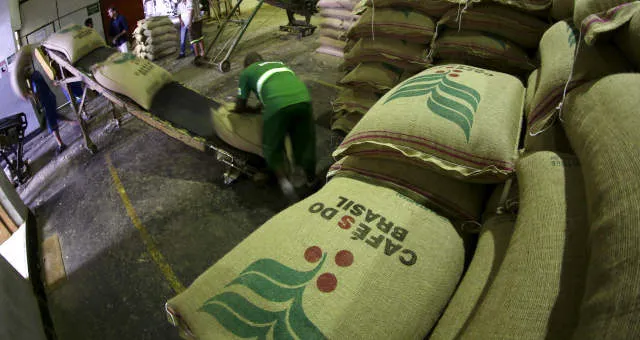
Another major pressure point comes from Brazil, the world’s largest producer of Arabica coffee beans. Brazil is not only a major coffee-exporting country but also a key source of Arabica coffee beans in the U.S. ICE futures market. However, last year the country’s coffee bean production entered what is known as an “off-year,” with overall yields already lower than in 2020. This was compounded by frequent extreme weather events, including multiple severe frosts and floods, which caused serious losses in some producing regions such as Minas Gerais. Coffee trees were buried by landslides, leading to a sharp decline in output. This caused inventories to deplete rapidly, pushing coffee bean futures prices to their highest levels in the past decade.
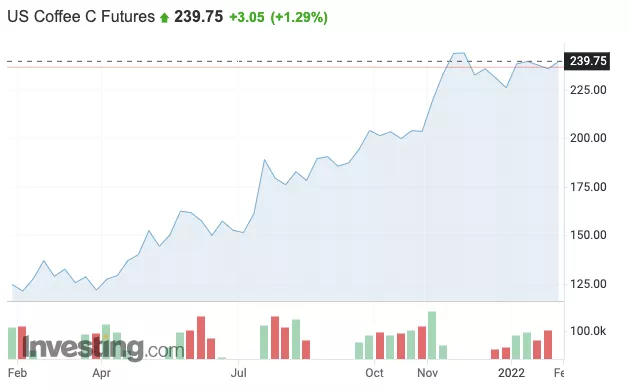
The market had hoped that 2022 would bring a production boom year to alleviate supply tightness, but in early December of last year, heavy rains and floods brought by the La Niña phenomenon struck some coffee-producing areas once again. According to market data, over the past 52 weeks, coffee bean futures prices soared from $1.202 per pound to $2.3920 per pound. This directly impacted Starbucks’ raw material costs and became one of the key drivers of the current price increases.

Starbucks’ fiscal Q1 2022 report shows that in the quarter ending January 2, U.S. sales grew 18% year-on-year, equivalent to an additional $1.3 billion in revenue. However, facing continuously rising costs—including employee salaries, supply chain management, and training for new hires—total operating expenses also surged by $994 million, resulting in limited growth in operating profit, which increased by only $264 million. Management also admitted that due to ongoing disruptions from variant viruses, high cost pressures are expected to continue in the short term, and there is currently no clear answer as to whether prices will be adjusted again in the future.
However, this wave of price hikes in the U.S. market will not directly impact Starbucks’ pricing strategy in China. The primary reason is that Starbucks prices in China are already significantly higher than in the U.S. For example, after two rounds of price adjustments, the large-size Americano in the U.S. is about $2.95 (approximately 18.8 RMB), while the same product in China is sold for 31 RMB. Chinese consumers’ acceptance and brand positioning both support higher pricing, and the current profit margin is also sufficient to absorb fluctuations in raw material costs.
Secondly, during the pandemic, China implemented relatively strict epidemic prevention policies, resulting in relatively stable employee attendance at Starbucks stores, without the large-scale staffing shortages seen in the U.S. Stable staffing means no need for additional pay to retain employees, further reducing operational cost pressures.
In addition, the competitive landscape of China’s coffee market is vastly different from that of the U.S. In the U.S., Starbucks is a mass-market, high-frequency, affordable beverage option; but in China, Starbucks is more often seen as a mid-to-high-end consumer brand, distinctly positioned apart from local brands like Luckin. If it were to follow suit with price hikes at this time, it could not only lose price-sensitive customers but also be at a disadvantage in fierce price competition. Therefore, in the short term, it is unlikely that Starbucks in China will raise prices, and may even further optimize its pricing strategy to respond to market competition.
Overall, Starbucks’ recent U.S. price increases reflect the multiple challenges facing the global coffee industry, from labor and raw materials to the macroeconomic environment. Although the Chinese market has not been directly impacted for now, continued fluctuations in global coffee bean prices may still indirectly affect future supply and pricing strategies. As consumers enjoy a cup of coffee, they can also observe the subtle changes in global supply chains and market dynamics.
The above content is compiled by CoffeeHunters, a coffee news website.


