







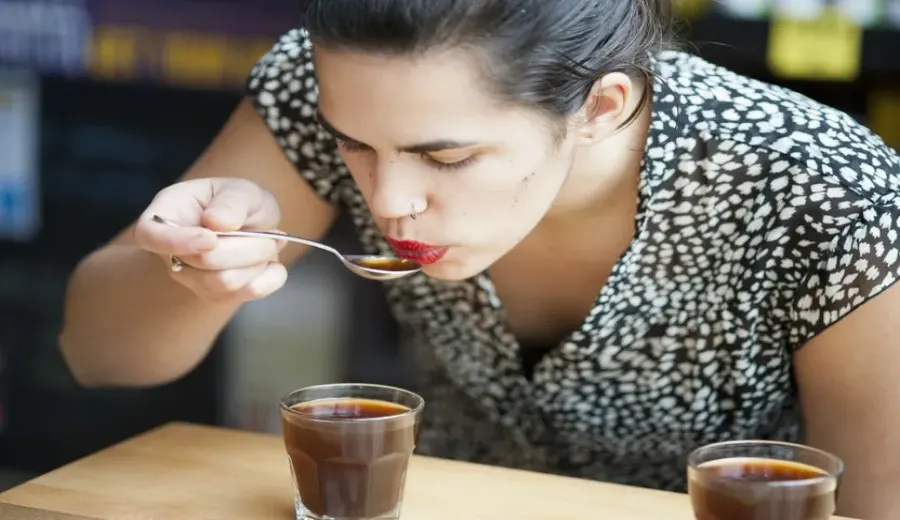
Introduction:Sipping is a common tasting technique used in professional coffee cupping, where a special inhalation method is employed to release aromas and enhance flavor perception. But is this technique suitable for everyday coffee drinking? This article delves into the principles behind sipping, the correct way to perform it, and the differences between its use in cupping and regular consumption. It helps readers understand the science behind sipping and master practical techniques and considerations.
Sipping is a highly technical aspect of coffee tasting, especially in the cupping process. The purpose of this action is to aerosolize the coffee liquid through rapid inhalation. The resulting fine droplets come into contact with the oral and nasal mucosa, significantly enhancing the retronasal olfaction’s ability to capture aromas and flavors, thereby providing a more comprehensive perception of the coffee’s complex layers.
So, what exactly constitutes a correct sip? The basic action involves lightly pursing the lips and using the mouth as an intake channel to quickly draw a small amount of coffee liquid into the oral cavity, creating a fine mist. This inhalation not only disperses the liquid more widely but also helps aroma molecules come into contact with the nasal cavity via the mist droplets, effectively triggering the olfactory nerves. Usually, this process is accompanied by a distinct “slurp” or “whoosh” sound—the stronger the suction, the louder the sound. However, the volume is not a measure of success; the key lies in whether the coffee liquid is uniformly aerosolized.
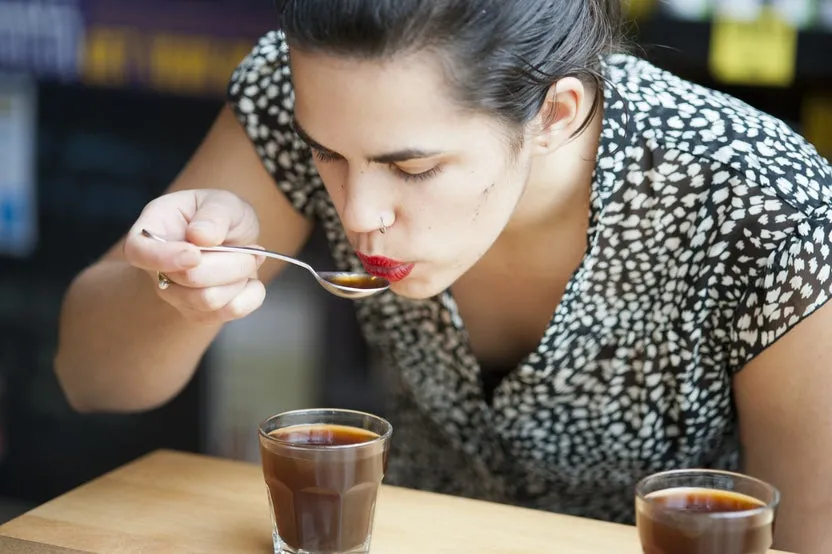
Some may find this somewhat exaggerated action puzzling or even feel that sipping so loudly in public is unseemly. In fact, this method is similar to the experience of Cantonese people drinking old-fire soup—when the soup has just been cooked and is steaming hot, drinking directly may scald the mouth. Therefore, they often blow gently along the edge of the bowl before quickly drawing in the liquid. This action not only reduces the risk of burns but also aerosolizes the soup, allowing the fats and aromas to disperse more easily, enhancing the richness and smoothness of the taste. Applying this concept to coffee tasting helps explain why sipping can help release more flavor compounds.
However, sipping is absolutely not just about making noise; it requires certain skills. The recommended method is to lightly purse your lips, place the coffee cup or spoon at the edge of your lower lip, slightly part your upper lip, and mimic the action of a “rapid inhalation” to quickly and evenly draw the coffee liquid deep into your oral cavity. This process requires control over the suction strength—enough to achieve the aerosolization effect while avoiding excessive force that could cause splashing or oral discomfort. After inhalation, you can gently exhale through the nose to allow the aromas to be fully released.
But returning to the context of everyday coffee drinking, especially when stepping into a quiet café, is such sipping still necessary? The answer may vary from person to person. For general consumers, pour over or drip coffee, when consumed normally, can already release the main aromas and flavor characteristics. Unless it’s a particularly flavor-focused tasting occasion, there’s no need to deliberately imitate cupping actions.
Furthermore, loudly sipping in a quiet café may not only draw unwanted attention but also affect the dining experience of other customers. More importantly, sipping may alter the original flavor balance of certain brewing methods—such as finely ground pour over or French press coffee—even masking some delicate flavors due to over-aerosolization.

In summary, sipping is a technical action originating from professional cupping, aimed at maximizing the release of aromatic information through aerosolization to help tasters more accurately capture flavor profiles. But in daily life, especially in non-competitive or non-professional settings, whether to adopt this method should depend on personal needs and the occasion. Understanding the principles of sipping and its practical differences enables both beginners and advanced enthusiasts to confidently handle various coffee tasting scenarios and find the most suitable method for their own enjoyment.
The above content is compiled by CoffeeHunters, a coffee news website.


