








Introduction:Pour over coffee may seem simple, but behind every cup of great flavor lies precise control over water temperature, grind size, and coffee-to-water ratio. Although machines are becoming increasingly proficient in delivering consistent results, professional baristas who truly understand the logic of coffee brewing remain indispensable. This article delves into the three core parameters of pour over and explores the evolving role and future positioning of baristas in an age of automation.
There are countless ways to brew pour over coffee, but what truly dictates the flavor profile of a cup boils down to just three key elements: grind size, water temperature, and coffee-to-water ratio. Many people learning to pour over often get stuck on these seemingly simple variables. Even if they master basic circular pouring techniques, differences in hand feel often prevent them from consistently reproducing their ideal taste.
It’s worth noting,Water Temperatureis generally recommended to be between 90°C and 96°C. This range effectively extracts the acidity, sweetness, and body of the coffee, but the exact temperature should be fine-tuned according to bean variety and roast level. AndGrind Sizeacts like a valve that regulates extraction rate—too coarse can lead to under-extraction and weak flavors, while too fine may cause over-extraction, resulting in bitterness and off-flavors. Generally, a medium-fine grind is suitable for most pour over scenarios, with a texture similar to granulated sugar being a common starting point.
As forCoffee-to-Water Ratio, the classic golden range falls between 1:15 and 1:17, meaning 15 to 17 milliliters of water per 1 gram of coffee grounds. For example, using 20 grams of coffee, the total water volume can be controlled between 300 and 340 milliliters. This ratio balances concentration and extraction yield, and is also the starting point recommended in many competitions and professional courses.

Although many coffee enthusiasts spend considerable time practicing pouring paths and techniques—such as so-called “center pour,” “spiral pour,” or “pulse brewing”—these methods vary widely among individuals and lack unified standards. In fact, something as minor as “going one extra circle” or “pouring slightly faster” during circular pouring can significantly affect the final flavor, yet these nuances are extremely difficult to convey precisely in words or fully grasp through observation. This is where human operation introduces the greatest variability.
In contrast, machines demonstrate extremely high stability when executing fixed parameters. As long as grind size, water temperature, pour speed, and ratio are preset, machines can continuously produce coffee with remarkable flavor consistency—even achieving the ideal of a hundred cups tasting identical. This is why automated pour over equipment is gaining increasing attention in commercial settings focused on standardization and efficiency.
In advanced Golden Cup extraction courses, students face stricter assessments, such as brewing three cups with the same extraction yield but different concentrations. This not only tests technical skill but also demands a deep understanding and precise control of various variables. Passing such tests requires more than just hand feel and experience—it also calls for a certain level of mathematical logic and scientific foundation to correctly analyze and adjust variables to achieve the goal.
With technological advancement, prototypes of coffee machines capable of simulating pour over movements have already emerged, even undergoing live demonstrations at some high-end expos. In the long run, if labor costs continue to rise and eventually exceed machine operating expenses, frontline baristas responsible solely for basic brewing tasks could indeed face the risk of being replaced by automation.
However, this does not mean the profession of barista will disappear. On the contrary, we anticipate that in the future, a group of professionals with deep understanding of coffee flavors, extraction principles, and parameter variations will take on the roles of strategic planners and adjusters behind the scenes. Their work will focus on designing optimal extraction protocols and executing them via precision machinery to ensure every cup of coffee meets professional standards.
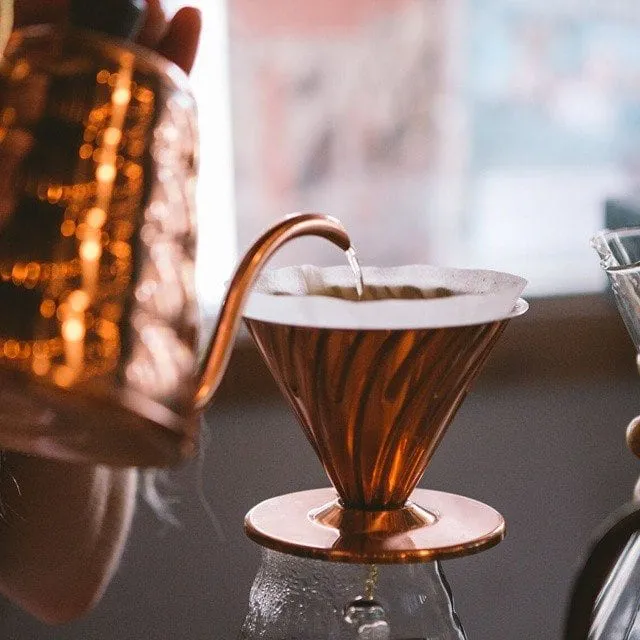
Of course, for coffee enthusiasts who love the process of pour over itself, machines can never fully replace the joy and nuanced experience of pouring by hand. Pour over coffee is not just a method of beverage preparation—it’s a ritual of focus and appreciation, and may even evolve into a cultural phenomenon that blends craftsmanship and philosophy, much like the tea ceremony.
In summary, stable, mechanical-like brewing skills are certainly important, but what truly sets a coffee professional apart is their deep understanding of variables and commitment to continuous learning. From flavor description to extraction science, the journey of learning has no end, and every great cup of coffee is the cumulative result of understanding and practice.
The above content is compiled by CoffeeHunters, a coffee news website.


