







Introduction:The competition in China's coffee market has reached a white-hot stage. Relying on its high cost-performance ratio and dense store network, Luckin Coffee has, for the first time, surpassed Starbucks in consumer preference to become the top choice among chain coffee brands. By the end of September 2021, it had 5,671 stores nationwide, surpassing Starbucks. Faced with the rapid rise of domestic brands, Starbucks plans to add 22,000 new stores globally over the next eight years and is actively adjusting its store format strategy to respond to the changing landscape.
For many office workers, a day often begins with a rich and aromatic cup of coffee. Whether it's to perk up or to enjoy a moment of leisure, coffee has become an indispensable part of modern life. But have you ever thought about which coffee brand you visit most often?
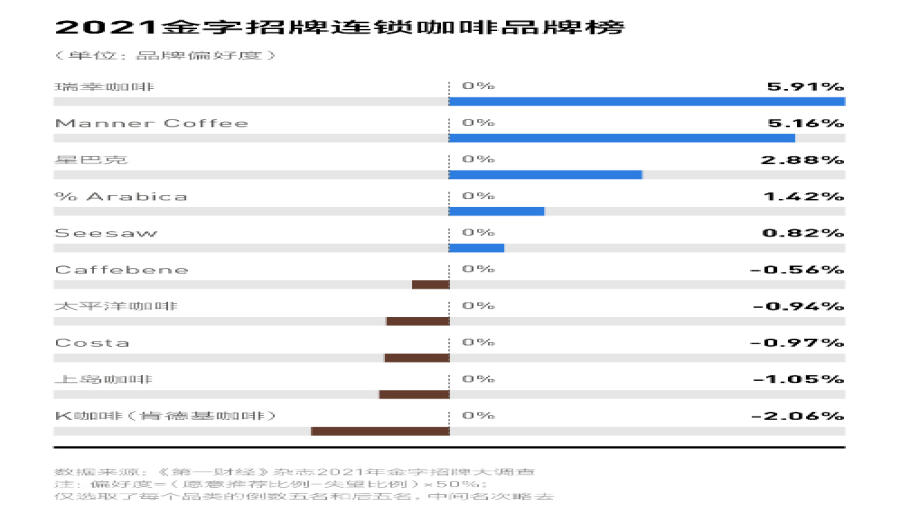
According to market research, Luckin Coffee has, for the first time, surpassed Starbucks in consumer preference among chain coffee brands, claiming the top spot in the Chinese market. In the survey, more than half of the respondents said they were more willing to recommend Luckin to their friends,with a brand preference score as high as 5.91%, compared to Starbucks’ mere 2.88%.
Moreover, domestic coffee brands that focus on the premium segment, such as Manner and Seesaw, have also gained significant attention in the market. Among them, Manner Coffee’s preference score reached 5.16%, second only to Luckin, demonstrating the potential of premium coffee in the domestic market.
Data shows that by September 30, 2021, the total number of Luckin Coffee stores across China had reached5,671, not only surpassing Starbucks in number but also having a deeper presence in first-tier, new first-tier, and second-tier cities, reaching a broader consumer base. This strategy has given Luckin stronger competitiveness in terms of market penetration and consumer reach.
Notably, Luckin not only leads in store numbers but has also achieved a turnaround in operational performance. In the third quarter of 2021, its total net revenue reached 2.35 billion RMB, demonstrating solid financial performance and market acceptance.
With the rise of domestic brands like Luckin and Manner, Starbucks is facing unprecedented competitive pressure in the Chinese market. To maintain its market position, Starbucks is accelerating its omni-channel layout both online and offline. After ending its partnership with Ele.me, Starbucks quickly partnered with Meituan and launched the ‘1971 Lounge’ service, further expanding its ‘third space’ concept to offer diverse scenarios such as business meetings, friend gatherings, and study spaces to meet the needs of different consumer groups.
Looking ahead, Starbucks also plans to open 60 ‘Greener Stores’ with an environmental theme across mainland China, combining sustainability concepts with the consumer experience to deepen its brand image.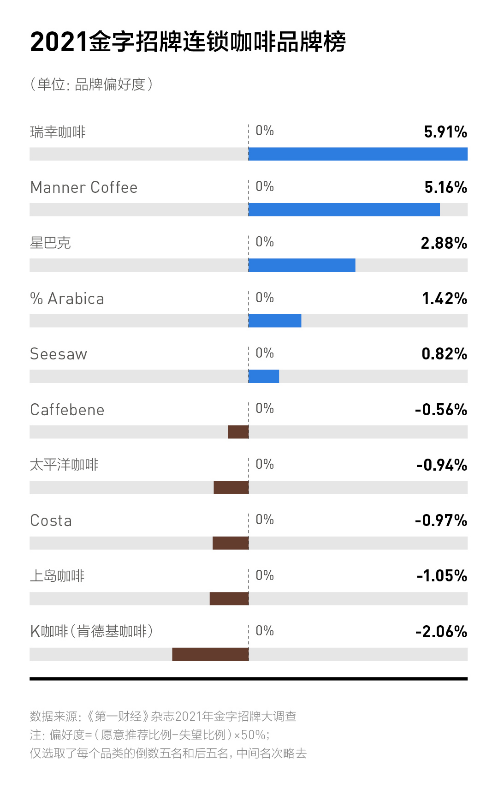
Beyond the Chinese market, Starbucks is also adjusting its global strategy, announcing plans to open at least22,000 new storesworldwide over the next eight years. This expansion plan includes not only traditional large ‘third space’ stores but also more small-format stores and ‘Drive-Thru’ outlets to meet various consumption scenarios and market demands with greater flexibility.
As more brands enter the fray, international players such as Peet’s Coffee and Tim Hortons have also gradually entered the Chinese market, making the already fiercely competitive coffee sector even more crowded. Moreover, even brands originally focused on instant coffee, such as Saturnbird, are gradually expanding their physical retail presence, further blurring market boundaries.
On the tea beverage front, well-known brands such as Heytea, Nayuki, Yihetang, and Mixue Ice Cream & Tea have also joined the coffee product line, launching a variety of innovative coffee beverages. This has led to a trend in China’s beverage market where ‘coffee and tea beverages develop on parallel tracks’, with increasingly refined market segmentation and intensified competition among brands.
The above content is compiled by CoffeeHunters, a coffee news website.


