







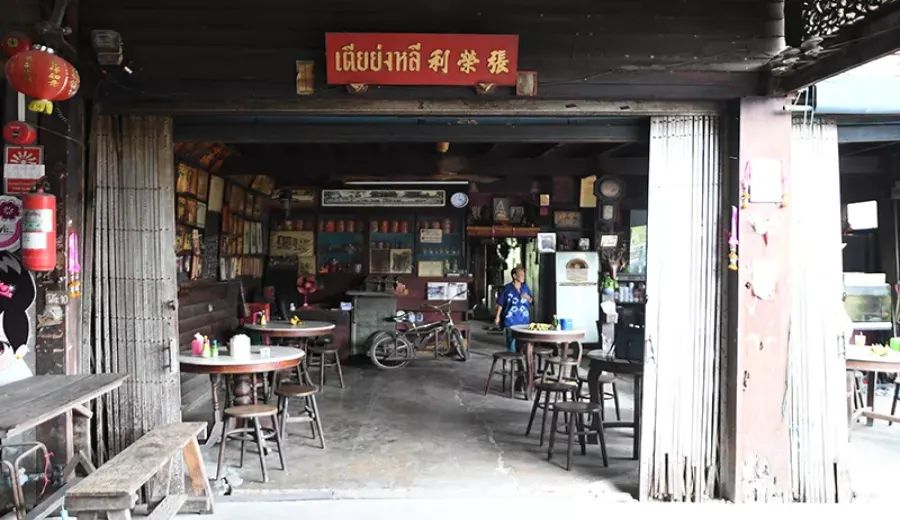
Introduction:Stepping into “Zhang Li Rong” Café in Pathum Thani, Thailand, what you don’t find is an obsessive pursuit of specialty coffee — instead, you discover the traditional flavors upheld by generations. This 117-year-old shop serves warm black coffee at just 10 Thai baht per cup, using robusta beans roasted over charcoal and brewed with a simple drip method. From its Cantonese menu to the commitment of three generations, let’s explore the cultural and craftsmanship value behind this non-specialty coffee.
While coffee enthusiasts around the world are passionate about pour over techniques and golden cup extraction parameters, tucked away in a corner of Pathum Thani, Thailand, there’s an old café that still brews coffee in the most unpretentious way. There’s no expensive equipment here, nor any complex flavor wheel analysis — just a stainless steel coffee pot, a cheap drip filter, and a commitment that has spanned three generations.
This café, named “Zhang Li Rong,” was established in 1905 by an immigrant from China’s Chaoshan region. The name, in the Chaoshan dialect, means “a house full of good stories,” and it has now been passed down to the third generation. The grandfather of the current owner, A’nan Cha, used to sell coffee beans at the canal market, and later bought property by the river to open this long-standing shop that still serves black coffee for just 10 Thai baht (approximately 1.9 Chinese yuan).
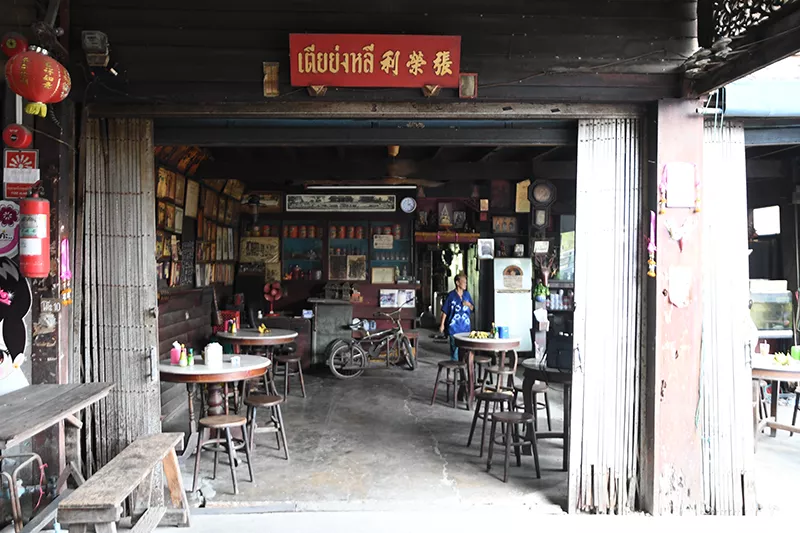
All the coffee beans used at the old shop come from the robusta variety grown in southern Thailand, and are roasted over charcoal each morning by A’nan Cha himself. This process takes 30 to 50 minutes and requires constant monitoring of the heat to avoid the beans becoming overly burnt or bitter. The roasted beans are ground to a medium-coarse consistency and stored in iron tins, waiting for customers to arrive.
The café’s menu is written in the Chaoshan dialect. For example, “suang kao 双口” refers to a mix of hot and cold coffee, “gao baht 九铢” is coffee with red syrup added, and “O liang 乌凉” is iced black coffee. All coffees are priced uniformly at 10 Thai baht, or 15 baht for takeout — a price that hasn’t changed in decades, reflecting the shop’s commitment to the community.
A’nan Cha says that running this café is not just about making a living, but also about continuing the family tradition. He admits that if future generations are willing to take over, he would be happy to pass it on regardless of how closely related they are; if no one is willing, he will continue operating until he can no longer do so. Every item in the shop — from century-old tables and chairs to the roasting stove — tells the story of the Chinese immigrant spirit of “inheriting the family business.”
A turning point for this old shop came in 2005, when A’nan Cha helped a group of hungry youths. Their sharing on social networks quickly made this quietly run café a viral sensation. Today, not only locals but also many foreign tourists make special trips to taste this traditionally flavored black coffee and experience the cultural story behind it.
Beyond Thailand, Hong Kong also has many old shops that uphold similar traditional coffee brewing methods, such as charcoal-roasted coffee and iron pan-roasted beans. Though these shops may not emphasize the refinement of modern specialty coffee, they offer uniquely roasted and filtered black coffee experiences through their distinctive methods. To many, these “non-mainstream” coffees may seem over-extracted or overly strong, but with an open mind, one often discovers the deep flavors and historical weight hidden within.
The above content is compiled by CoffeeHunters, a coffee news website.


