








Introduction:In 2022, Luckin Coffee announced that it had purchased over 80 metric tons of Huakui coffee beans and launched the SOE Huakui 5.0 series, sparking industry discussions about "authenticity" and "market monopoly." Did Luckin have the right to use these beans? What proportion of global production did 80 tons represent? Is the Huakui 5.0 really as rare as rumored, nearly impossible to find? This article takes you through the production volume, procurement logic, and market impact to rationally view this controversy, and provides practical coffee bean selection insights.
In the first quarter of 2022, Luckin Coffee publicly announced that it had directly sourced over 80 metric tons of Huakui coffee beans from the origin region and subsequently launched the SOE Huakui 5.0 series in stores nationwide. This news immediately caused an uproar among coffee professionals and enthusiasts, with doubts ranging from whether it constituted “market monopolization” to whether the Huakui 5.0 was truly authentic, with a wide range of opinions. But what is the real story? Let’s take a deeper look from multiple perspectives.

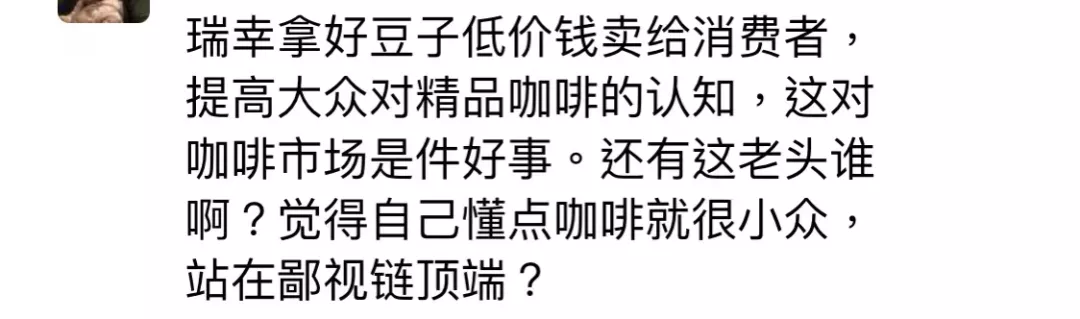
Firstly, Luckin purchased these Huakui coffee beans directly from the origin at a fair price, rather than obtaining them through other traders or domestic agents. In other words, this is a normal commercial activity—since Luckin paid for the beans, it naturally has the right to decide how to use the raw materials. While there were external criticisms questioning whether it was “wasting good beans” or attempting to “monopolize,” looking at the essence, as long as this transaction provides coffee farmers with reasonable income—and enables them to invest more resources into improving cultivation and processing techniques—it could actually have a positive long-term impact on the entire coffee industry.

Furthermore, bringing high-quality SOE (Single Origin Espresso) beans to the market at a relatively accessible price helps consumers better understand the definition of “specialty coffee,” rather than just staying at the basic level of “fresh-ground vs. instant.” Even if some consumers have differing opinions on the flavor profile, such attempts are still positively significant for the broader popularization of coffee culture.

Regarding the accusations of “monopoly,” the fact is that the annual global production of Huakui coffee beans is about 1,000+ metric tons, primarily targeted at the international market—not exclusively for the Chinese market. The 80 metric tons purchased by Luckin only account for approximately 8% of the total production. From a market share perspective, it is simply not enough to constitute a monopoly. Many people worry that Luckin’s large purchase will drive up bean prices, but according to supply chain knowledge, price fluctuations are more influenced by overall import volumes and the balance of supply and demand, rather than the actions of a single buyer.

Additionally, the gradual rise in Huakui coffee bean prices in recent years is related to their scarcity and increasing market demand. However, the real reason behind persistently high prices is that many domestic green bean importers have limited import volumes, making it difficult for supply to meet the pace of market expansion. If the goal is to ease price pressure, the solution is simple: increase imports and leverage economies of scale to lower unit prices. Accusing a single brand of monopolizing the market simply because it made a large purchase is an overinterpretation.
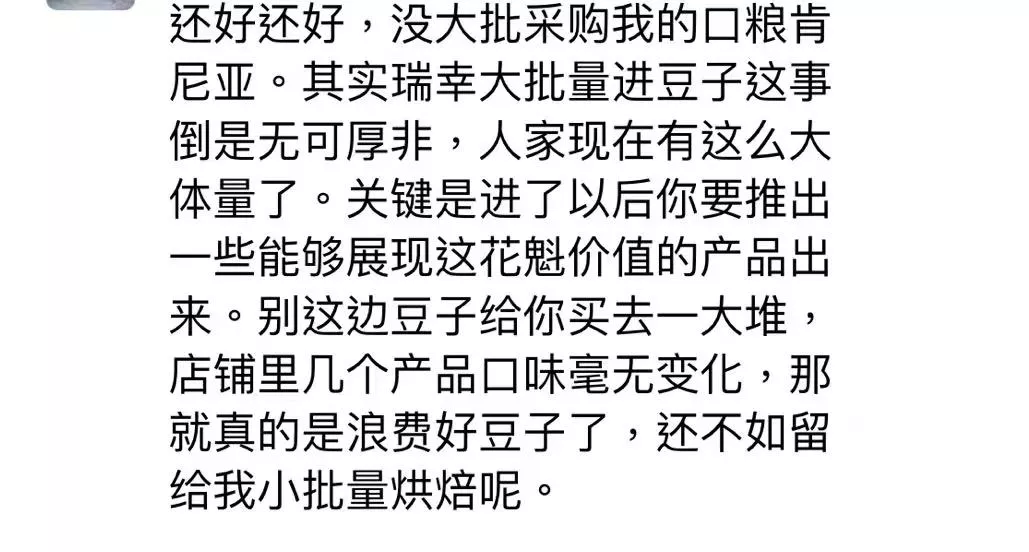
Some also argue that it’s a “waste of premium beans” for Luckin to use such high-quality beans for espresso. But in reality, coffee beans are inherently versatile—they can be used for espresso, pour over, cold brew, etc., depending on whether the roast level and processing method match the brewing style. Luckin’s choice to present the Huakui 5.0 as an SOE is itself an emphasis on the origin's unique flavor, offering consumers a chance to experience the characteristics of a single-origin coffee.
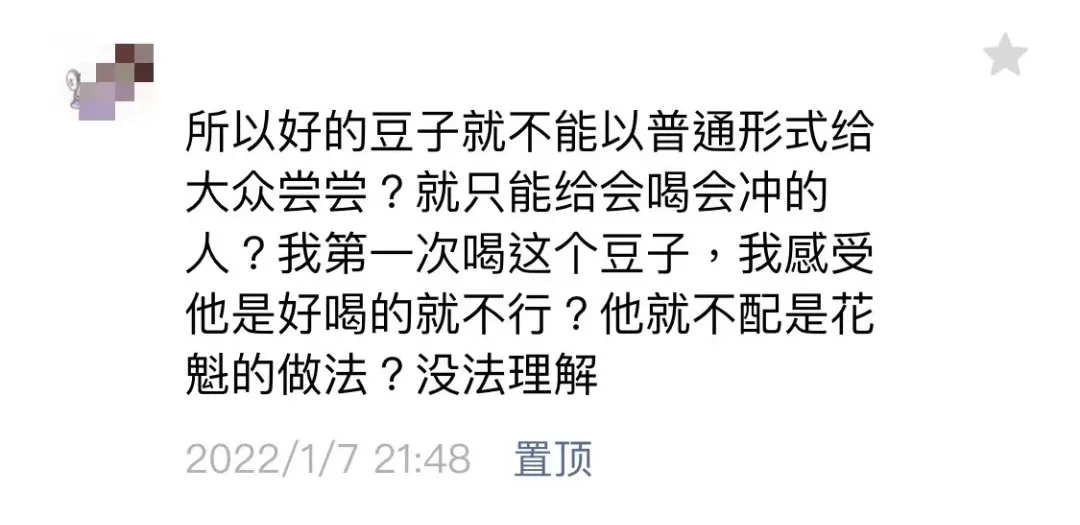
Overall, although Luckin’s large-scale purchase of Huakui coffee beans has sparked quite a bit of controversy, from an industry chain perspective, its actions do not constitute so-called market monopolization, nor should it be simplistically labeled as “wasting good beans.” The 80 metric tons represent only 8% of the global total of over 1,000 tons—an insignificant proportion. If the industry has concerns about Luckin’s approach, it should engage more actively in the supply chain, expand procurement, or improve consumer education, rather than limiting criticism to public discourse.
Finally, whether the Huakui 5.0 is considered “authentic” or “rare” actually depends on market supply and demand and individual subjective judgment. But one thing is certain: understanding the origin, processing method, and roast level of the beans is the key to truly appreciating their unique flavors. For consumers, trying coffees from different origins and processed in various ways is the best way to develop your own coffee taste perspective.
The above content is compiled by CoffeeHunters, a coffee news website.


