







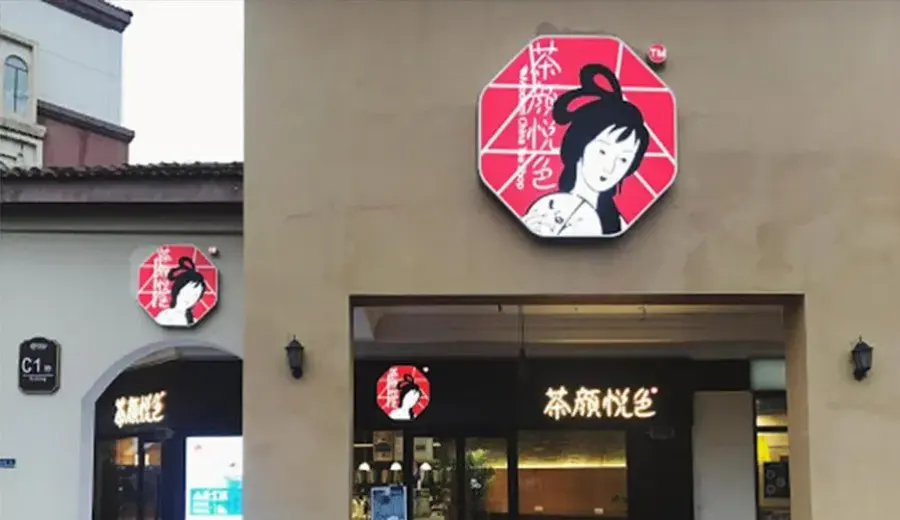
Introduction:In recent years, trademark disputes among tea beverage brands have been frequent, and yet another similar case has come to light—the trademark "茶妍月瑟" (Chayanyueshe) was ruled invalid by the China National Intellectual Property Administration (CNIPA) due to its high degree of similarity in text composition, graphic design, and overall visual appearance to the well-known tea brand "茶颜悦色" (Chayanyuese). Even though the registrant, Mr. Guo, filed a lawsuit against the decision, the Beijing Intellectual Property Court ultimately dismissed the appeal. This article delves into the key points of the case, helping you understand the three core elements in determining trademark similarity and the long-term importance of brand protection.
The trademark battles in the tea beverage industry continue to intensify. Following the infringement lawsuit between "茶颜观色" (Chayanguanse) and "茶颜悦色" (Chayanyuese), another similarly named brand, "茶妍月瑟" (Chayanyueshe), has been drawn into the controversy. This trademark, applied for registration in 2018, was deemed similar to "茶颜悦色" due to its very close resemblance in text combination, pronunciation, and graphic design. As a result, it was ruled invalid by the CNIPA.
According to records from the China Trademark Office, Mr. Guo submitted an application for the trademark "茶妍月瑟及图" (Chayanyueshe and graphic) on June 8, 2018. It passed the preliminary examination and was published in 2018, and was officially registered in March 2019. However, "茶颜悦色" quickly raised an objection, claiming that the trademark was excessively similar to its own brand image and could easily cause consumer confusion, thus applying for a declaration of invalidity.
On March 11, 2021, the CNIPA issued a final ruling, clearly listing three key bases for the determination (See image Location). First, the prominent Chinese characters of "茶妍月瑟" have exactly the same pronunciation as "茶颜悦色" and a highly similar text structure. Second, its graphic design is also extremely similar to the registered design of "茶颜悦色" in terms of elemental composition and visual effect, making the overall design a similar identifier.
Furthermore, the service items for which "茶妍月瑟" applied for registration—including fruit juice, plant-based beverages, bean beverages, tea-flavored non-alcoholic drinks, and milk tea (not primarily milk-based)—directly overlap with the tea beverage categories operated by "茶颜悦色." These belong to the same or similar goods and services. More crucially, "茶颜悦色" has built considerable brand recognition through long-term market operations, with its trademark and design having formed a stable impression among consumers. This makes the registration of "茶妍月瑟" a clear violation of Article 30 of the 2013 Trademark Law.
However, the case did not end there. In April 2021, Mr. Guo, unwilling to accept the defeat, took the CNIPA to the Beijing Intellectual Property Court, arguing that "茶妍月瑟" and "茶颜悦色" have significant differences in text composition, pronunciation, and overall appearance. He also emphasized that their products differ in function, sales channels, and consumption scenarios. Moreover, Mr. Guo claimed that his brand had gained a certain level of market recognition through long-term promotion and would not cause consumer misidentification.
But facts speak louder than words. The Beijing Intellectual Property Court recently issued a final judgment, dismissing Mr. Guo’s appeal and upholding the CNIPA’s invalidation ruling (See image Location). This verdict once again highlights the rigor of trademark protection and the long, difficult journey of brand rights defense.
Industry insiders point out that this case is just the tip of the iceberg among many trademark imitation incidents. From the earlier "茶颜观色" to the current "茶妍月瑟," copycats continue to emerge. For brand operators, a trademark is not only an identifying mark but also a vessel for market reputation and consumer trust. As an emerging iconic tea beverage brand, "茶颜悦色" has consistently defended its rights through legal means in the face of mounting imitation challenges, demonstrating its determination to protect its brand.
This case also serves as a reminder to all entrepreneurs and brand owners that trademark registration and protection require comprehensive planning from the outset, with a deep understanding of trademark laws to avoid legal risks arising from similar designs. Only by valuing intellectual property protection can brands ensure long-term stable development and maintain a solid foothold in the fiercely competitive tea beverage market.
The above content is compiled by CoffeeHunters, a coffee news website.


