







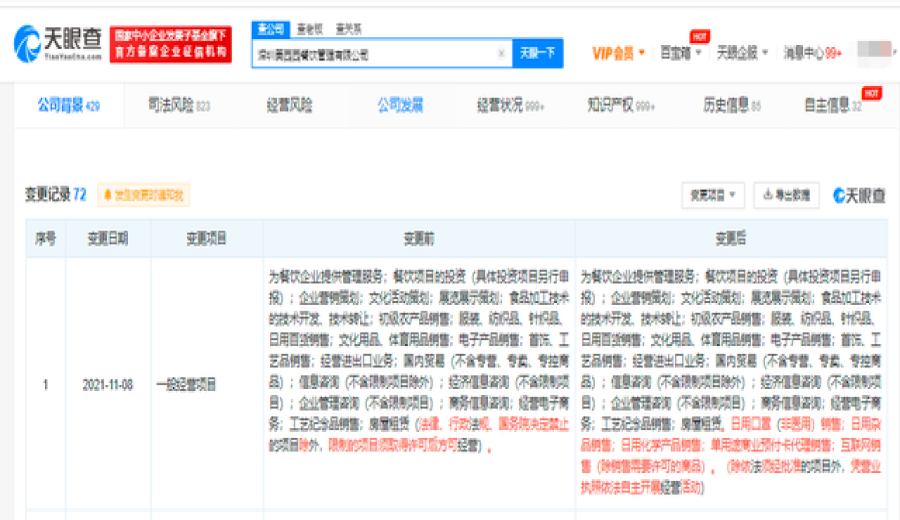
Introduction:Heytea, a leading brand in the new-style tea beverage industry, has recently expanded its business scope by adding items such as "sales of daily-use masks (non-medical)," drawing significant market attention to its brand strategy and cross-industry collaboration model. This article delves into the user positioning strategy behind Heytea’s recent business registration changes, explores how it leverages cross-industry operations to drive traffic growth, and shares practical insights to help readers understand new approaches to brand management, along with relevant consumer advice.
The new-style tea brand Heytea has once again stepped out of its comfort zone to broaden its business boundaries. According to the latest data from Tianyancha App, Heytea’s affiliated company—Shenzhen Meixixi Catering Management Co., Ltd.—has added several new business items to its official registration, including "sales of daily-use masks (non-medical)," "sales of daily-use chemical products," and "agency sales of single-purpose commercial prepaid cards." This move quickly became a hot topic in the industry and has sparked curiosity about Heytea’s future brand layout.
Shenzhen Meixixi Catering Management Co., Ltd. was established in January 2016 with a registered capital of 10 million RMB, and is legally represented by Heytea’s founder, Nie Yunchen. The company is currently wholly owned by Heytea (Shenzhen) Enterprise Management Co., Ltd., making it one of the core management entities within the Heytea Group. This expansion of business scope not only demonstrates the brand’s rapid response to changing market demands but also reveals its strategy of using diversified operations to reach a broader consumer base.
As a leader in the new-style tea beverage sector, Heytea has long been favored by consumers for its youthful, fashionable, and socially engaging brand image. Its target audience primarily consists of urban white-collar workers, students, and beverage enthusiasts who pursue quality of life—demographics that also tend to have relatively high demand for convenience products and personal protective items. Therefore, adding the sale of daily-use masks and similar goods not only aligns with current consumption trends but may also serve as a strategy to enhance store average spending and customer loyalty.
From a brand management perspective, cross-industry collaborations and side-business expansions have become common practices among many leading brands. By extending their brand influence into related or complementary product categories, brands can not only generate additional revenue but also attract consumers at different levels through product diversity, thereby expanding brand exposure and traffic sources. Heytea’s move is a practical example of this strategic approach.

Additionally, the addition of "agency sales of single-purpose commercial prepaid cards" indicates Heytea’s intention to strengthen its membership services and prepaid consumption model. Such prepaid cards can typically lock in consumer budgets in advance, helping to stabilize cash flow and improve customer repurchase rates. For tea beverage brands, maintaining customer loyalty in a highly competitive market often hinges on tools like prepaid cards and membership programs.
In terms of cross-industry cooperation, Heytea has previously launched co-branded products with brands in various fields such as fashion, beauty, and art, generating buzz and traffic through unconventional partnerships. While the newly added category of daily consumer goods may seem traditional, it could serve as a new entry point for the brand to engage with everyday consumption scenarios. Especially in the post-pandemic era, protective items like masks have become essential daily carry items for many consumers. If the brand can cleverly integrate these with its own image, it may further deepen its market connection.
Overall, the business registration changes made by Heytea reflect not just a flexible response to short-term market demands, but also an adjustment in long-term brand strategy. From user positioning to product mix, and then to traffic generation mechanisms, each step showcases the brand’s keen insight into market trends. For industry professionals or brand operators, such a case offers valuable reference.
Whether in the tea or coffee sector, how to create a differentiated advantage in competition and reach more consumption scenarios through cross-industry and side-business expansions are topics worthy of deeper consideration. If you’re also interested in coffee tasting or brand management, you might want to explore related professional recommendations to further broaden your perspective.

The above content is compiled by CoffeeHunters, a coffee news website.


