







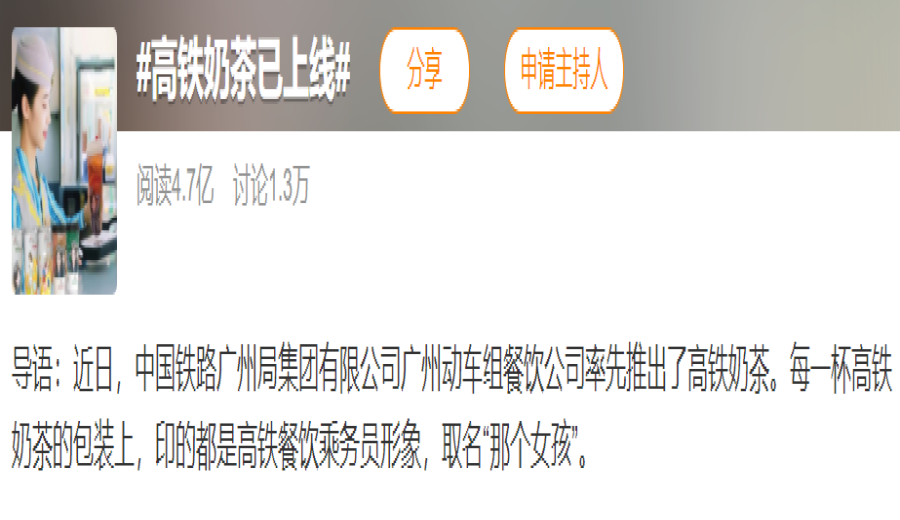
Introduction:The high-speed rail milk tea "That Girl," launched by Guangzhou Railway Group, has sparked considerable discussion since its release. In particular, its pricing of 26 RMB per cup, packaging, and flavor have become hot topics among netizens. In response to the criticism, the authorities recently provided a detailed explanation of the pricing rationale and areas for improvement. This article takes you in-depth into the pricing logic, product specifications, taste controversies, and future upgrade plans of the high-speed rail milk tea, helping you gain a more comprehensive understanding of this popular yet controversial onboard beverage.
The high-speed rail milk tea "That Girl," launched by Guangzhou Railway Group, became a hot topic among passengers shortly after its debut in mid-October 2021. However, with a price tag of 26 RMB per cup, its flavor, packaging design, and pricing quickly drew mixed reactions from netizens. In response to the widespread debate, the person in charge of Guangzhou EMU Catering Co., Ltd. officially responded on November 16, explaining the comprehensive considerations behind the pricing and committing to continuously improve product quality.
According to official statements, the four currently available high-speed rail milk teas—including Clear Snow Jasmine Fruit Tea, Golden Lanca (Hong Kong-style) Original Milk Tea, Pearl Milk Tea, and Red Bean Milk Tea—are all priced at 26 RMB per cup.This price was determined after a detailed assessment of production, transportation, and sales costs across all stages, while also taking into account the volume and pricing levels of similar beverages in the Pearl River Delta region. Notably, the operating environment of high-speed rail is more specialized compared to regular ground-based stores, involving stricter logistics and safety regulations, which also contribute to higher overall operational costs. As such, the pricing is considered to align with the standards set by relevant management authorities.
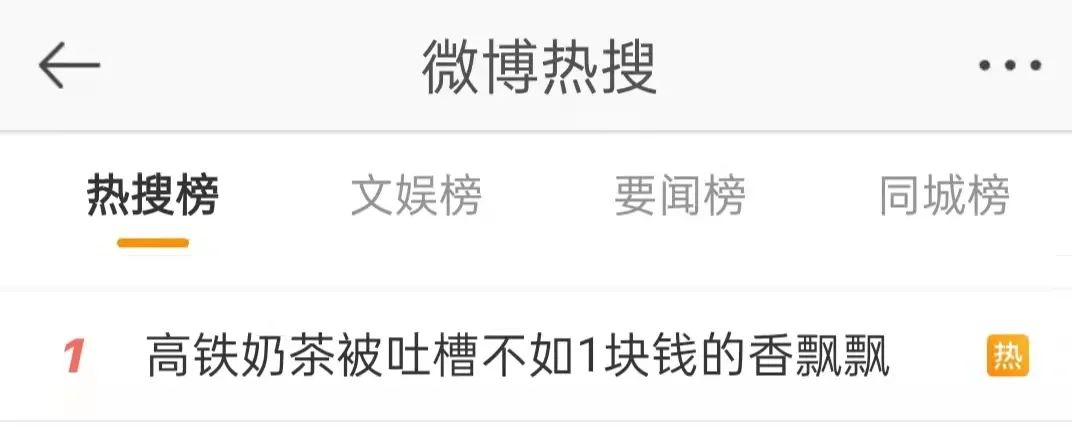
However, consumer reactions to the 26 RMB price vary. Some netizens feel the price is too high, with comments such as "for 26 RMB, you could get a packet of tea for just over 1 RMB" or criticisms that "the milk tea tastes too weak, as if it's been watered down." Aside from flavor, the packaging design has also been criticized for being unappealing. Even the product name "That Girl" has sparked discussion, with some consumers feeling the name is slightly awkward for male passengers and not particularly endearing to female passengers, suggesting that a more relatable, neutral name be used in the future.
In response to concerns about the subpar taste, the person in charge of Guangzhou EMU Catering Co., Ltd. stated that the team will attentively listen to feedback from passengers and netizens, using it as a basis to continually adjust and refine the product formula. The goal is to enhance overall beverage quality, making the high-speed rail milk tea more aligned with passenger expectations and a small but pleasant highlight of the journey. Additionally, the authorities mentioned in a WeChat post on the "China Railway" official account on November 14 that this milk tea has "reduced tea concentration and sugar content" specifically to cater to the needs of high-speed rail travelers, offering a milder taste experience.
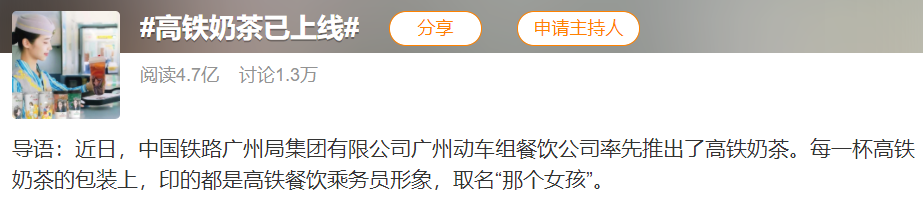
Since its launch, the high-speed rail milk teahas achieved an average daily sales volume of approximately 3,000 cups.During peak hours, supply has even fallen short of demand, briefly selling out—demonstrating that despite the controversy, the product has garnered a certain level of consumer acceptance. Developed by Guangzhou EMU Catering Company, this series also marks the first attempt by China’s railway system to introduce milk tea beverages in the high-speed rail setting. The packaging also features images of high-speed rail catering attendants, adding a touch of familiarity and warmth to the onboard service experience.
However, for a product to truly gain market recognition, innovation and hype alone are not enough. From online comments, it’s clear that aside from pricing and naming, consumers have further expectations regarding the overall flavor profile, aroma layers, tea-to-milk ratio, as well as packaging design and drinking convenience. Expert observers have pointed out that in the high-speed rail environment, beverages must not only deliver on taste but also focus on details such as temperature control, packaging sealability, and ease of access—all key factors affecting the passenger experience.
In summary, the launch of the high-speed rail milk tea represents an innovative attempt to align with travel scenarios and consumer needs, but it has also sparked much discussion due to its pricing strategy, product positioning, and market communication. The authorities have already committed to continuous optimization of various aspects including flavor, packaging, and overall product positioning, with plans for gradual adjustments in the future to better meet consumer expectations. Whether it can successfully turn around public perception still depends on subsequent product upgrades and market responses.

The above content is compiled by CoffeeHunters, a coffee news website.


