







Introduction:Do you think the higher the grade code on a tea package, the better the flavor? In fact, labels like SFTGOP and OP are primarily based on the tea’s appearance and plucking parts, not a direct reflection of flavor performance. This article delves into India’s black tea grading system to help you understand why higher-grade teas may taste lighter, while lower grades can be richer and more robust—and how to choose the black tea that truly suits your taste.
When you walk into a tea specialty store and see packaging covered in letter combinations like SFTGOP and OP, do you also instinctively assume that the higher the grade, the better the tea tastes? But this is actually a common misconception. The tea grading system is mainly based on appearance, bud-to-leaf ratio, and plucking position—not directly on flavor or mouthfeel.
For example, in India’s black tea grading system, SFTGOP is one of the highest grades, standing for “Super Fine Tippy Golden Orange Pekoe.” It is made from the tenderest, youngest golden-tipped buds at the top of the tea plant, usually hand-plucked with great care. OP, on the other hand, stands for “Orange Pekoe,” referring to slightly larger, more mature leaves. Though it seems like a lower grade, in some cases, its flavor can be more robust and full-bodied.
Interestingly, in many blind tasting tests, many tea drinkers actually prefer the thick, full, and layered mouthfeel of OP-grade black tea over the light and smooth texture of SFTGOP. This shows that higher-grade tea isn’t necessarily better tasting—it simply offers different flavor characteristics.
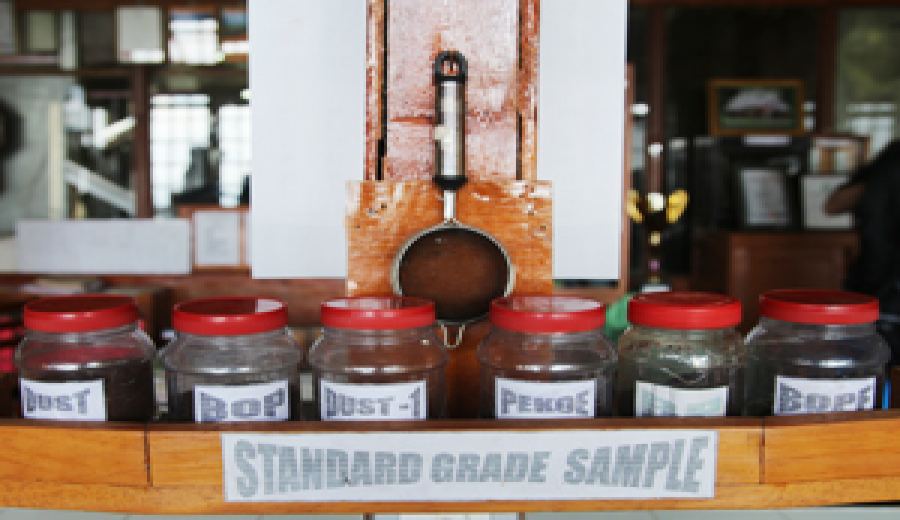
Generally speaking, high-grade black teas like SFTGOP tend to have delicate, soft flavors with subtle floral notes and a clean, elegant finish, making them ideal for slow sipping. In contrast, grades like OP or even lower ones such as BOP (Broken Orange Pekoe), which consist of larger or broken leaves, release more internal compounds, resulting in a typically stronger, bolder cup. These are well-suited for those who enjoy a fuller taste, especially when paired with milk or used to make milk tea.
Additionally, breakfast blends like English Breakfast or Irish Breakfast often use broken leaves and lower-grade teas such as BOP. The goal is to deliver a strong tea flavor and aroma to help invigorate the senses. Though these teas are not high-grade, they are essential morning pick-me-ups for many people.
This isn’t unique to black tea—green tea shows similar patterns. For instance, top-tier Longjing tea is made from the tenderest buds, yielding a smooth cup with subtle layers. But some people may actually prefer the bold and intense flavors of black tea, depending on the occasion and their mood.
It’s also worth noting that many tea powders on the market are often byproducts of the tea-making process, commonly used in tea bags or instant tea drinks. Their flavor usually pales in comparison to tea made from whole leaves. So, if you’re after a true flavor experience, it’s best to choose teas made from whole leaves rather than judging solely by grade labels.
In summary, the grade of tea only reflects its plucking parts and appearance, and does not directly indicate how delicious it will be. Tea enthusiasts are advised not to be limited by grades—try blacks of different grades and origins, and experience their flavor differences firsthand, to find the one that truly suits your palate.
The above content is compiled by CoffeeHunters, a coffee news website.


