







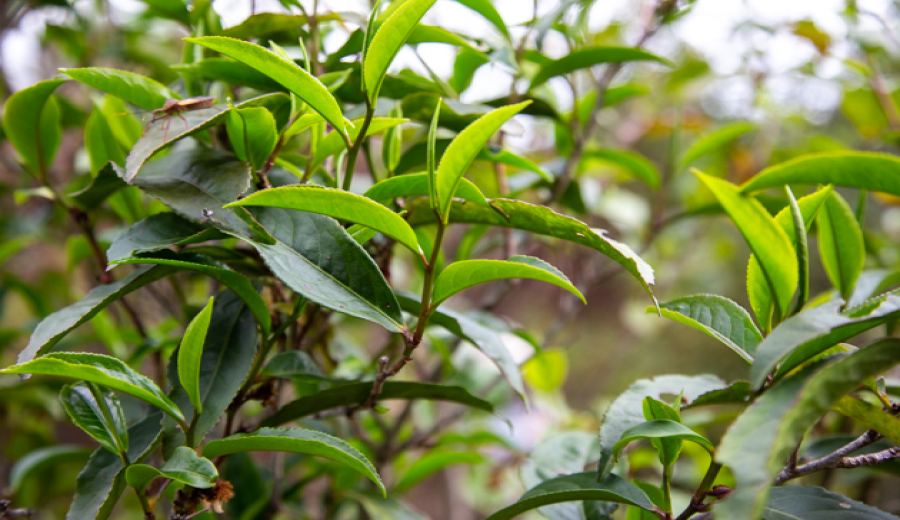
Introduction:Purple tea is a rare type of tea originating from the high-altitude mountainous regions of Lincang and Baoshan in Yunnan, named for the unique purple hue of its stems. Rich in anthocyanins, this tea not only gives the liquor a deep color but also imparts a distinctive aroma of fresh basil and floral notes. This article will delve into the growing environment, varietal characteristics, nutritional value of anthocyanins, as well as brewing and aging suggestions to help you fully understand this uniquely flavored tea.
Purple tea is a relatively uncommon tea cultivar, primarily found in high-altitude mountainous areas around 2,000 meters above sea level in Yunnan’s Lincang and Baoshan regions. The most notable feature of this type of tea plant is its distinctly purple stems, which stand in sharp contrast to the more common green ones. Although its cultivation area across Yunnan is not large, it can still grow steadily under specific microclimates and high-altitude conditions, developing unique flavor characteristics.
The high-mountain purple-black tea introduced here is sourced from a pristine mountainous region at an altitude of approximately 2,100 meters, free from agricultural pollution. The tea garden adheres to a natural cultivation method without chemical fertilizers or pesticides, and particular attention is paid to selecting plants that exhibit excellent throat resonance and aftertaste in the tea liquor. This batch of raw materials was harvested in 2020 and processed using special techniques into purple-black tea, showcasing an aroma and layered complexity that is distinctly different from traditional black tea.
What makes purple tea special lies in the rich content of anthocyanins in its leaves and stems. Anthocyanins are natural antioxidants with health properties similar to the polyphenols found in red wine. During the tea-making process, these compounds not only give the dry tea a deep purplish-brown hue reminiscent of raisins with skin, but also directly influence the color and flavor structure of the tea liquor. In Yunnan, purple tea is often made into raw Pu-erh, but by adjusting fermentation and withering processes, it can also be crafted into black or white tea, expanding its potential applications.
The most impressive aspect of this high-mountain purple-black tea is the uniqueness and lasting quality of its aroma. Through a lengthy 24-hour withering process, the tea leaves are able to fully release their internal components, resulting in a refreshing aroma akin to basil, accompanied by delicate floral and fruity notes. This aroma persists consistently from the first steep to the last, offering clear layers and deep intrigue. However, mastering the withering time is crucial—over-withering may cause excessive moisture loss, interrupt fermentation, and lead to a burnt or bitter taste, so precise control of environmental humidity and ventilation during production is essential.
For brewing, it is recommended to use water heated to 90–95°C, and medium-light roasted purple-black tea is best brewed in a gaiwan or Yixing clay teapot. For the first few infusions, a quick pour-off is advisable to capture its fresh aromatic profile. As the number of infusions increases, you may moderately extend the steeping time to experience how the tea liquor transitions from fresh to richly mellow. Additionally, if stored in an oxygen-free, airtight environment for more than six months, the tea will gradually enter a maturation phase, where the aroma becomes more rounded and profound, and the flavor profile evolves over time to offer greater depth.
In summary, purple tea, as a distinctive tea variety, demonstrates a high degree of expertise in terms of origin, cultivar, and processing. Its rich anthocyanin content also offers another healthy option for tea drinkers. For those who enjoy exploring new flavors and pursuing evolving complexity in the tea liquor, this high-mountain purple-black tea is well worth a try—whether enjoyed fresh or aged over time, it brings a variety of delightful experiences.
The above content is compiled by CoffeeHunters, a coffee news website.


