







Introduction:Heytea’s oolong tea beverages are hugely popular, but do you understand the differences in the types of tea leaves and production regions behind them? This article takes an in-depth look at the main classifications of oolong tea—from Northern Fujian, Southern Fujian, Chaoshan to Taiwan’s high mountain teas—introducing the unique flavors and craftsmanship characteristics of each type. It also clarifies the connection and differences between high mountain oolong and Taiwan’s Dong Ding oolong, helping you choose your favorite tea drinks and tea products more precisely.
The launch of Heytea’s oolong tea series has sparked curiosity among many consumers, especially whether high mountain oolong is the same as Taiwan’s Dong Ding oolong. In fact, although both fall under the oolong tea category, they come from distinctly different production regions and involve unique tea-making processes. To truly understand the types of oolong tea used by Heytea, we need to start with an overview of oolong tea’s overall classification and regional characteristics.
Oolong tea is not a single type of tea, but a broad category encompassing various styles. Alongside green tea and black tea, it is one of the world’s major types of tea. Depending on origin, variety, processing methods, and cultural background, oolong tea can be divided into four major schools: Northern Fujian, Southern Fujian, Chaoshan, and Taiwan. Each school has its own distinct tea leaf appearance, aroma profile, and brewing flavor.
Let’s first discuss the definition of oolong tea. Oolong tea is a semi-fermented tea that falls between green tea and black tea, with fermentation levels typically ranging from 15% to 70%, adjusted according to the production process. The hallmark of this type of tea is that it combines the freshness of green tea with the richness of black tea, and due to variations in production region and technique, it exhibits an extremely rich array of aroma layers and taste variations.
In China, oolong tea is mainly concentrated in a few specific tea-growing regions, primarily Fujian and Guangdong. First is Wuyi Mountain in northern Fujian, regarded as one of the important birthplaces of oolong tea. The oolong tea produced here is collectively referred to as Northern Fujian oolong, also known as the famous Wuyi Rock Tea. These teas usually have tightly rolled leaves in dark brown hues, and when brewed, produce a deep reddish liquor with intense aromas marked by distinct rocky notes and floral scents. Representative teas include Da Hong Pao, Shui Xian, and Rou Gui.
Moving further south to southern Fujian, we find the domain of Southern Fujian oolong, most famously represented by Anxi Tie Guan Yin. This type of oolong tea is often shaped into tight balls through rolling, with relatively light fermentation. The leaves appear dark green or yellow-green, and the brewed liquor tends to be golden or amber in color, with an elegant aroma and a distinctive “Yin Yun” (phonetic rhyme). Traditional methods sometimes involve heavy roasting for some Tie Guan Yin, imparting a strong charcoal aroma to the liquor. However, modern versions also include lightly roasted options that preserve more of the fresh, green characteristics.
Guangdong’s Chaoshan region is renowned for Phoenix Dancong oolong tea. These teas usually feature slender, curly leaves, and their production techniques are complex and meticulous. Some varieties undergo heavy roasting, resulting in rich honey or fruity aromas, while lighter-roasted versions retain more of the natural grassy and floral notes. Chaoshan is not only a major oolong-producing area but also the birthplace of Gongfu tea culture, with unique insights into brewing methods and tea ware usage.
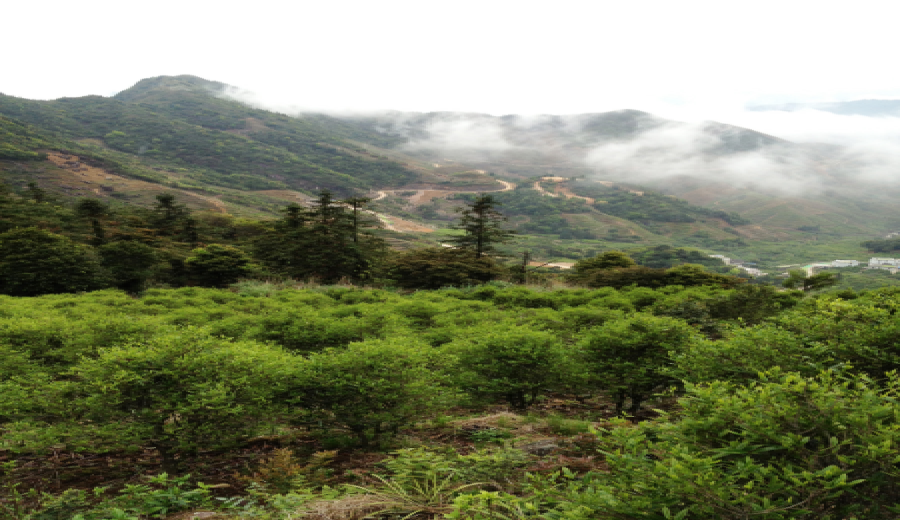
Finally, let’s turn to Taiwan, where the variety of oolong teas is equally rich. Among them, high mountain oolong is the most common and highly acclaimed variety on the market. Taiwan’s high mountain oolong is typically grown in tea gardens above 1,000 meters altitude. The leaves are light green or yellow-green in appearance, with light to medium fermentation. The brewed tea is clear and bright, with a fresh aroma carrying a cool high-mountain essence, and a smooth, mellow taste. Additionally, Taiwan offers other specialty teas such as Pouchong and Bai Hao Oolong (Oriental Beauty), each showcasing different oxidation levels and aroma profiles.
Returning to the original question, high mountain oolong does not originate from Taiwan’s Dong Ding oolong. Rather, it is a lightly fermented oolong produced in Taiwan’s high mountain tea regions, and differs significantly from Dong Ding oolong—which comes from Lugu Township in Nantou—in terms of production region, processing technique, and flavor. Dong Ding oolong is a medium-fermented oolong, with tightly curled leaves, an orange-yellow brew, and a rich aroma with notes of ripe fruit and earthiness. It is one of the classic representatives of Taiwan’s oolong teas.
In summary, understanding the major production regions and styles of oolong tea not only helps you appreciate the finer details in your tea drinks more deeply, but also allows you to make more suitable choices when selecting oolong tea beverages from Heytea or other brands, based on your personal taste preferences. Whether you prefer the light and refreshing high mountain teas or the bold, roasted rock teas, the world of oolong tea is well worth exploring in detail.
The above content is compiled by CoffeeHunters, a coffee news website.


