







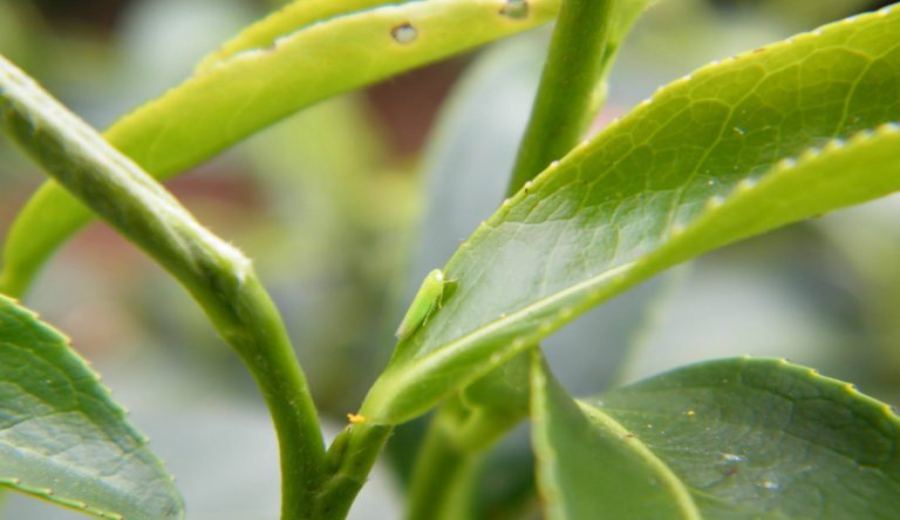
Introduction:Do you know how the unique honey and muscat grape flavors in honey-scented black tea are formed? This in-depth analysis will take you through the tea garden ecosystem, the influence of green leafhoppers, and the key differences in tea processing techniques to fully understand the source of the distinctive aroma of honey-scented black tea. It also provides practical recommendations for low-temperature long-infusion brewing, so you can brew this captivating honey-like flavor at home.
The sweet aroma of honey and grapes found in honey-scented black tea actually stems from a subtle interaction between the tea plant and the green leafhopper. This special flavor is not derived from added spices or flavorings, but rather from the tea plant’s natural defense mechanism triggered by insect bites.
Honey-scented black tea is mainly produced in the low-altitude regions of eastern Taiwan, where the climate is humid and hot — providing an ideal environment for green leafhoppers. Notably, these tea gardens typically do not use pesticides, allowing green leafhoppers to naturally inhabit and interact with the tea plants. From early summer to midsummer each year, green leafhoppers pierce and suck the sap from the phloem of tea leaves, causing localized damage to the leaves.
When the tea plant is stimulated in this way, it activates its self-defense response, promoting the production of specific secondary plant metabolites, particularly volatile compounds such as terpenes and trienes. These substances not only have insect-repellent effects but also release signals that attract natural predators, forming a balanced ecosystem. Among them, trienes are a key component of the muscat grape aroma and are also crucial to the unique flavor profile of honey-scented black tea.
Interestingly, the production process of honey-scented black tea shares many similarities with Oriental Beauty oolong, but there are also clear differences. Honey-scented black tea undergoes only slight rolling during processing and deliberately skips the fixation (kill-green) step, allowing the leaves to continue oxidizing and ultimately being classified as black tea. This special processing method enables honey-scented black tea to fully develop a complex flavor profile that combines honey notes with fruity aromas.
In terms of brewing, honey-scented black tea has different optimal recommendations compared to regular black tea. Due to its unique aromatic characteristics, experts recommend using relatively lower infusion water temperatures, around 85–90°C, and moderately extending the steeping time. This brewing approach more fully highlights the layers of muscat, sweet-tart, and grape-like honey flavors in the tea liquor, making the aftertaste more lingering and pronounced.
If you’d like to experience this unique tea flavor firsthand, it is recommended to look for direct-sale channels from eastern Taiwan tea-growing regions, or choose reputable specialty tea suppliers. These sources often provide fresh, meticulously processed honey-scented black tea, allowing you to fully appreciate its unforgettable honey aftertaste through low-temperature long-infusion brewing at home.
The above content is compiled by CoffeeHunters, a coffee news website.


