







Introduction:In recent years, milk tea has gradually shifted from being synonymous with "high sugar and unhealthy" to embracing a wellness-oriented approach that integrates traditional Chinese medicine and healthy ingredients. University cafeterias and long-established Chinese medicine brands have all jumped on this trend, launching signature drinks such as ginseng peach gum tea and ginger-cinnamon-tangerine peel-red date-goji berry blends. But is wellness milk tea really the future mainstream? What market challenges and food safety concerns lie behind this transformation? This article delves into the realities and development prospects of this wellness milk tea craze.
When Fudan University’s School of Medicine printed designs on milk tea cup sleeves resembling pharmaceutical instruction leaflets, when Beijing University of Chinese Medicine incorporated traditional Chinese herbs like ginger, cinnamon, tangerine peel, red dates, and goji berries into milk tea recipes, and when Shanghai’s renowned traditional Chinese medicine brand Tonghan Chuntang launched a ginseng peach gum milk tea under the concept of "food and medicine sharing the same origin," milk tea—once categorized as "junk food"—is quietly undergoing a glamorous transformation, striving to evolve into a healthier wellness option.
Not only university cafeterias, but traditional Chinese medicine shops and heritage brands are also entering the milk tea market, hoping to reshape consumers' existing perceptions of milk tea through the combination of health and tradition. At the same time, some milk tea brands have begun adjusting their ingredients—for example, using fresh fruit instead of syrup and replacing non-dairy creamer with fresh milk—to emphasize naturalness and low burden, catering to modern consumers’ pursuit of healthier beverages.
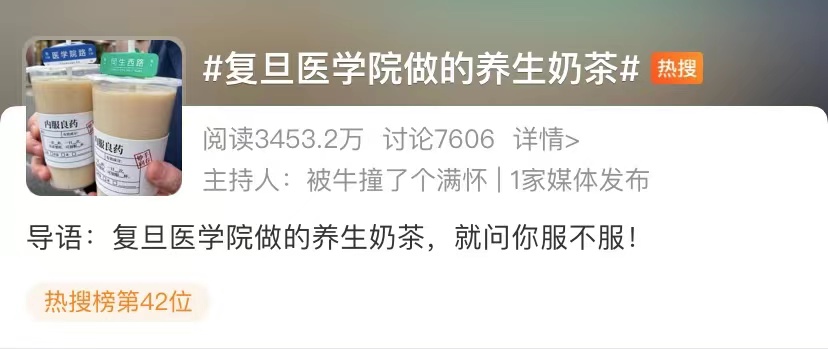
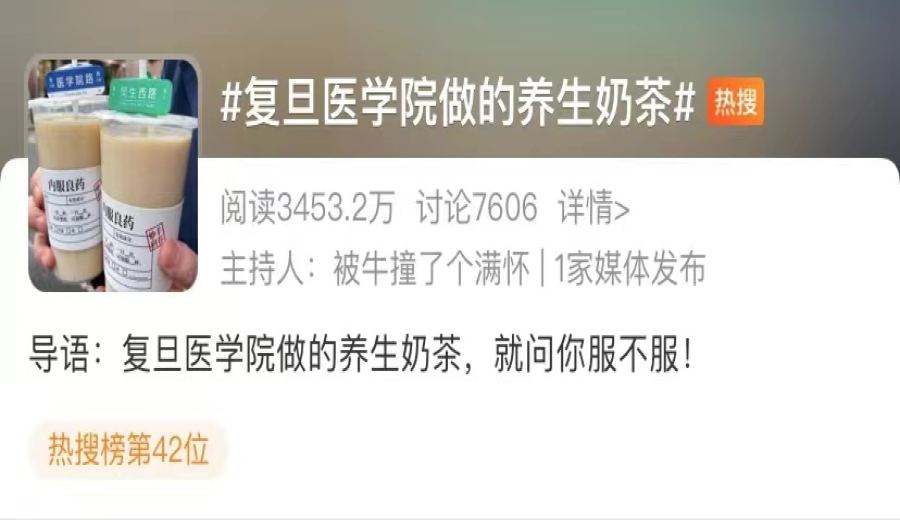
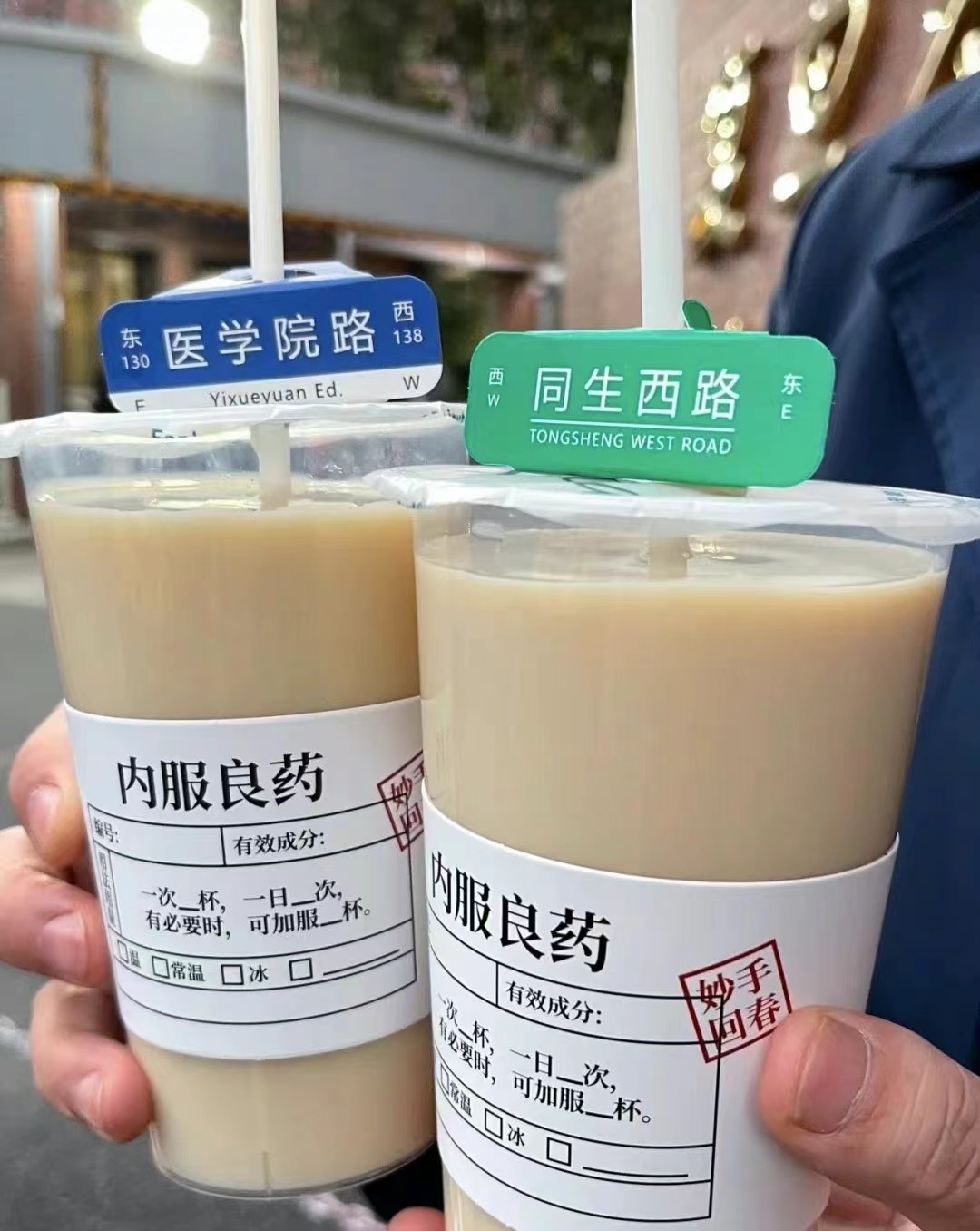
Take Fudan University’s School of Medicine as an example: its wellness milk tea offerings sparked heated discussions on social media. The cup sleeves feature the words "internal tonic medicine" and are designed in the format of pharmaceutical instruction leaflets, echoing the academic background of the medical school. According to a popular food blogger 【Chihuo Zhulimi】, in an unboxing video on October 30, the caramel milk tea and osmanthus oolong milk tea sold at the newly opened milk tea shop in the school cafeteria had relatively mild flavors, with sweetness well-controlled to avoid any heavy feeling. The osmanthus oolong milk tea highlighted the fragrance of osmanthus while retaining the inherent charm of oolong tea; the caramel milk tea was praised for its smooth texture and rich caramel aroma. This tonal shift has transformed milk tea from merely a sweet and greasy drink into one offering a more multi-layered taste experience.
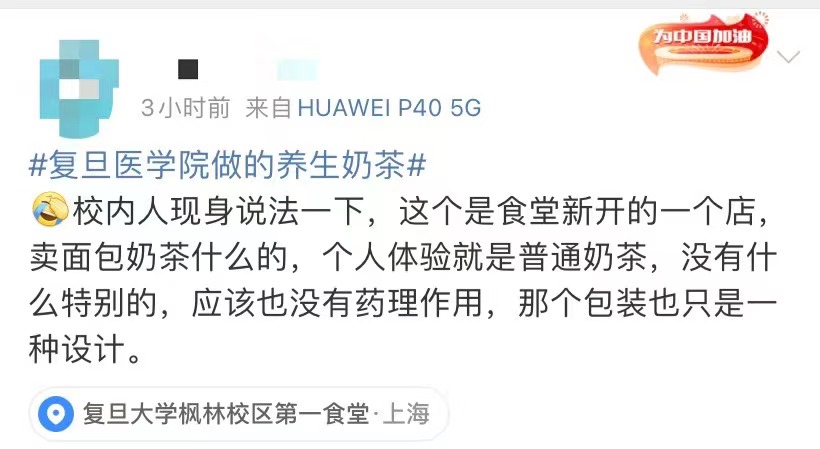
However, behind this wave of "medical school milk tea" hype, it’s actually more of a marketing tactic. According to insiders, the talked-about milk tea is sold by a newly opened milk tea shop in the First Cafeteria of Fudan University Shanghai Medical College’s Fenglin Campus—not developed by the university administration or a professional medical team. Despite its medicine-inspired packaging and appearance, it offers no pharmacological benefits and remains a regular milk tea. Moreover, since the shop only allows entry for students using their campus ID cards, netizens joke that "now even drinking milk tea requires academic credentials." Besides milk tea, the shop also offers options like coffee and ice cream, enriching consumer choices.
Interestingly, Fudan University is not the first to introduce the concept of wellness milk tea. Beijing University of Chinese Medicine has also been found to offer similar products, possibly with even more diverse wellness elements. Photos shared by netizens show that several drinks at the university’s milk tea shop include common traditional Chinese herbs such as ginger, cinnamon, tangerine peel, red dates, and goji berries. It is speculated that these products may come from a milk tea shop within the university’s West Campus Innovation Space. Although publicly available information is limited, it is reasonable to infer that such drinks aim to combine traditional wellness wisdom with modern beverage formats to attract health-conscious consumer groups.
Beyond higher education institutions, many traditional Chinese medicine heritage brands have also joined the competition in the milk tea market. Take Shanghai’s well-known traditional brand Tonghan Chuntang as an example: with its core philosophy of "food and medicine sharing the same origin," the brand has launched milk tea products containing high-wellness-value ingredients such as ginseng and peach gum, attempting to merge traditional Chinese medicine culture with modern beverage consumption habits. Similar cross-industry examples include Tongrentang’s herbal brews marketed as “stay-up-late water,” and Zhang Zhongjing Pharmacy’s milk tea products infused with nutritional ingredients such as donkey-hide gelatin, monk fruit, aloe vera, and yam—demonstrating active positioning by Chinese medicine-branded companies in the milk tea market.
In fact, the milk tea industry has long been regarded as unhealthy due to issues like high sugar content and high trans fats. To reverse this market perception, many brands have started adjusting their ingredients—for example, using fresh fruit instead of syrup flavorings, opting for fresh milk rather than non-dairy creamer, and emphasizing on product labels terms like "no additives," "low sugar," and "uses fresh milk" to enhance consumer trust and acceptance. These transformation measures not only respond to modern people’s pursuit of healthy eating but also reflect shifting consumption trends in the beverage market.
However, the path to transforming milk tea into a wellness product is not without hurdles. Even as brands continue to innovate in product development, packaging design, and marketing strategies, recent milk tea-related news that frequently trends online often involves food safety issues. This not only undermines consumer confidence in milk tea brands but also adds uncertainty to the overall market transformation process. As university medical schools become the focal point of wellness milk tea discussions, we can’t help but ask: is such cross-industry collaboration an opportunity for market innovation—or the beginning of another marketing bubble?
The above content is compiled by CoffeeHunters, a coffee news website.


