







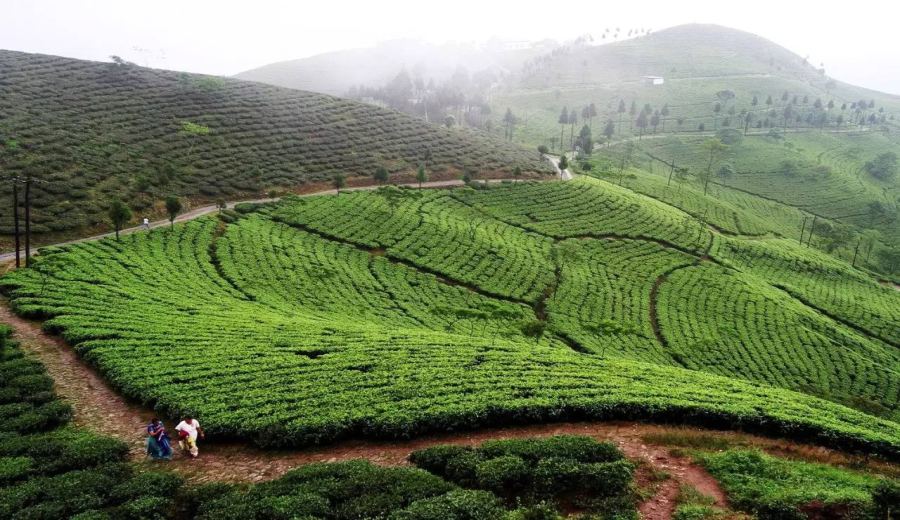
Introduction:Although Nepal tea started relatively late, it has gradually carved out a niche in the specialty tea market thanks to its unique smallholder farming model. This production method, where hundreds of small farmers each cultivate their own plots and then collectively deliver the fresh leaves to factories for processing, results in greater variability in quality—but also gives rise to many unexpectedly delightful flavor highlights. This article will delve into the distinctive taste profile, origin background, and the deeper impacts on quality and sustainability behind Nepal’s smallholder tea farming system.
In recent years, Nepal tea has been increasingly noticed by international tea enthusiasts, particularly gaining a following among pour over tea lovers. Unlike Darjeeling tea, which is mostly produced by large estates, most Nepal tea comes from hundreds of independent smallholders, each managing just a small plot of tea bushes. After harvest, the fresh leaves are sold to nearby tea factories for unified processing. This "smallholder supply chain," while making it harder to standardize quality, also results in unexpectedly unique tea profiles, as farmers nurture their bushes with personal care and attention to detail.
For example, certain spring-picked teas from the Ilam region, after being processed by small-scale cooperative factories, exhibit an intense aroma reminiscent of sweet corn with a hint of butter—rich in body and with a long, lingering finish that even forms a delicate film on the palate. This distinctive flavor is rather rare in Darjeeling and has become one of the hallmark characteristics of Nepal tea.
In fact, nearly all Darjeeling tea is produced by large estates with comprehensive land and management systems, whereas Nepal’s tea gardens are mostly operated by individual families on small, scattered plots. It is understood that some factories source fresh leaves from cooperatives made up of 47 smallholders in the Ilam region, then carry out subsequent processing. Although this "micro-supply chain" model increases quality control challenges, it also means that each batch of tea may carry unique regional and humanistic flavors.
Many international tea industry professionals admit that Nepal’s tea industry structure is “seemingly chaotic, yet full of vitality.” One long-time operator of high-quality tea beverages likened the Nepal tea industry to a wild forest—without clear planning, but occasionally yielding surprising varieties. He observed that some smallholders, treating tea bushes like family members and putting more effort into cultivation, have produced tea with exceptional potential in certain years.
Some social enterprises have also entered Nepal’s tea industry, aiming to improve both tea quality and farmers’ livelihoods through innovative business models. For instance, one founder, formerly a marketing executive at a multinational corporation, saw the market potential of Nepal tea and committed to building a sales channel that allows smallholders to directly access international markets. Together with a group of partners with Nepali immigrant backgrounds, she officially began operations in 2017, hoping that stable procurement and fair compensation will encourage farmers to continue investing in premium tea cultivation.
Others go further by promising housing and education support for tea farmers’ children—akin to the social welfare systems once provided by estate owners in Darjeeling—so that farmers can focus wholeheartedly on improving the quality of planting and harvesting without worries. This model is not common in the global tea industry, as most regions still rely on low-paid migrant labor for tea picking, lacking comprehensive labor protections.
As the visibility of Nepal tea continues to rise in international markets, more consumers are beginning to take notice of its unique flavor profiles and origin stories. However, industry insiders caution that transforming Nepal tea into a globally recognized premium brand akin to Darjeeling will require long-term dedication and continuous effort. As one local factory manager put it, “Success is not accidental—it is the result of fifty years of persistent work.”
For consumers who enjoy exploring diverse tea flavors, Nepal tea offers a rare opportunity to taste unique teas crafted by smallholders who genuinely care for their bushes. Whether you try pour over or gaiwan brewing, you’ll be able to appreciate its layered and nuanced taste. If you’re a fan of black tea, consider adding Nepal tea to your tasting list and experience the distinctive tea essence from the foothills of the Himalayas.
The above content is compiled by CoffeeHunters, a coffee news website.


