







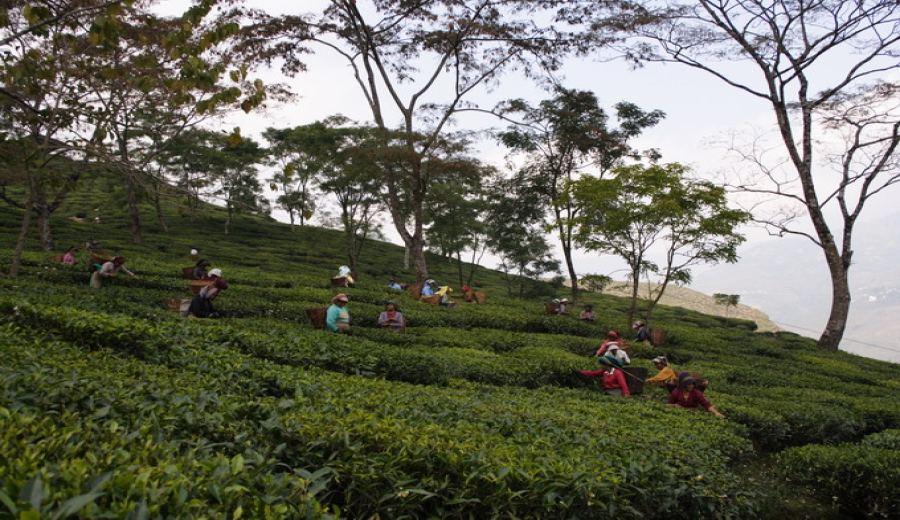
Introduction:Darjeeling and Assam are two of India’s most renowned black tea producing regions. However, due to differences in altitude, climate, and harvest periods, the black teas produced in these areas vary significantly in aroma, flavor, and liquor color. This article delves into the unique flavor profiles each region presents during different tea harvesting seasons—spring, summer, monsoon, and autumn—to help tea enthusiasts and coffee lovers choose the black tea that best suits their seasonal preferences and personal taste.
Although both Darjeeling and Assam are famous tea regions in India, their distinct elevations, climatic environments, and plucking times result in markedly different flavor characteristics. Assam is located at low altitudes with a hot and humid climate. Its teas generally exhibit a strong malt aroma, have a deep reddish-copper liquor color, and are produced in large quantities. In contrast, Darjeeling lies at the foothills of the Himalayas, at relatively high altitudes with harsher climatic conditions. Though its annual production is limited, Darjeeling teas are celebrated for their delicate aromas and diverse flavor profiles, making them premium delicacies in the eyes of tea aficionados worldwide.
To truly appreciate the charm of these two tea regions, one must first understand their topography and climate. Assam features predominantly flat terrain at lower elevations, with consistently high temperatures year-round, very short winters, and long summers and monsoon seasons lasting several months. The hot and humid environment is highly conducive to tea plant growth, making the region one of the world’s major black tea producers. In comparison, Darjeeling’s tea gardens are mostly situated on hillside slopes at elevations between 1,000 and 2,000 meters. The cooler temperatures and significant diurnal temperature variations present higher challenges for tea cultivation. As a result, Darjeeling teas often possess richer layers of flavor and more distinctive aromatic expressions.
The timing of tea harvesting directly impacts the quality and flavor of the final product, and the plucking seasons in Assam and Darjeeling are also set quite differently. Assam primarily focuses on spring and summer harvests, while Darjeeling is divided into four main tea plucking cycles: spring, summer, monsoon, and autumn. The climatic conditions and growth states of the tea leaves during each phase are distinctly reflected in the finished teas.
Assam’s spring plucking usually begins around March, when the tea plants have just emerged from dormancy and the new buds have just sprouted. The resulting teas offer a fresh taste, a light aroma, and a hint of floral notes, with the liquor presenting an enchanting golden hue. These qualities make spring-harvested Assam teas particularly appealing to those who prefer a lighter, more refreshing flavor. Following spring, the summer plucking season generally runs from May to June. During this period, tea plants grow vigorously, producing plump buds and leaves rich in golden tips. The resulting black teas not only have a deep reddish-copper or brownish liquor color but also feature unique spicy notes and a full-bodied malt aroma. Summer-harvested Assam teas are widely regarded as the highest quality offerings of the year.
Darjeeling’s spring plucking season extends from March to April, with tea leaves primarily plucked from the newly emerged tender buds, commonly referred to as “buds.” Teas from this period are characterized by delicate aromas with subtle floral notes. However, due to residual effects of winter, the liquor may carry a slight astringency, and the polyphenol content tends to be higher. As a result, the oxidation level during processing is usually kept lower, giving the liquor a color closer to green compared to typical black teas. The flavor is relatively restrained, making it an excellent choice for experiencing the original character of Darjeeling.
Moving into the summer plucking season of May and June, Darjeeling teas from this period are known for their richness, maturity, and fruity notes. In particular, the aroma of muscatel is one of its defining characteristics. The flavor is smooth and layered, making it the most commonly available type of Darjeeling tea in the market. Although many products do not specifically indicate “summer plucking,” the majority of Darjeeling teas on the market actually come from this season.
The monsoon season typically occurs in September. During this time, influenced by monsoon rains and high temperatures, tea plants grow rapidly. The resulting teas have a darker color, a rich liquor, and a softer flavor profile. They are commonly used for making iced tea or instant tea bags. While the layers of flavor are not as distinct as in other seasons, these teas still hold certain drinking value.
Finally, the autumn plucking season spans October to November. By this time, the tea leaves are larger, having accumulated nutrients throughout the year, and they carry a strong natural fruity aroma. The flavor is round and full-bodied, often featuring nutty and woody undertones. The first infusion may reveal bright and lively aromas, which gradually unfold into a rich aftertaste. This season’s teas are well-suited for drinkers who enjoy deeper flavors and complex layers.
The above content is compiled by CoffeeHunters, a coffee news website.


