







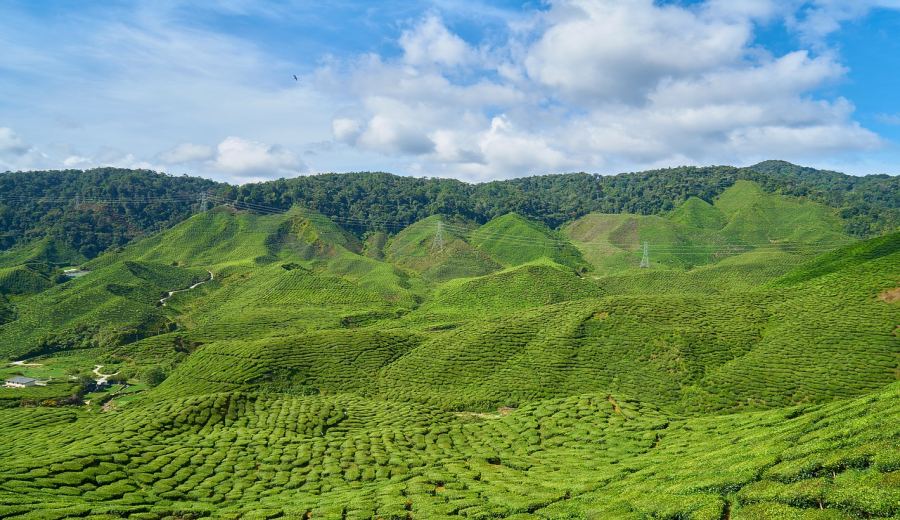
Introduction:This article delves into how Britain transitioned from relying heavily on tea imports from China to developing its own tea plantations in India and other colonies. Readers will learn about the origins of Indian tea, how Britain broke through trade restrictions, and the rise of renowned regions such as Assam and Darjeeling. The article also analyzes the current state and future potential of India’s tea industry, offering a historical perspective on the transformation of the global black tea supply chain.
Britain was once heavily dependent on importing tea from China, spending vast sums annually to purchase millions of pounds of it. This trade model was not only costly but also increasingly unsustainable for Britain. In search of alternatives, they began attempting to cultivate tea plants in India, which ultimately reshaped the global tea trade. From ancient legends predating the Common Era to the 1823 discovery of native tea trees by Robert Bruce in Assam, the development of India’s tea industry is full of exploration and turning points. This article will guide you through the evolution of Britain’s black tea import sources, how tea took root in India and around the world, and look ahead to the future of India’s tea industry.
In India, tea has long transcended being just a beverage—it has become an essential part of daily life. Indians are accustomed to drinking hot tea, believing it refreshes the mind and replenishes energy. This drink is not only widely popular but also rich in antioxidants, helping to eliminate free radicals and toxins in the blood, offering positive health benefits. Britain’s massive demand for imported Chinese tea indirectly led to the birth of India’s commercial tea plantations. By 1750, Britain was importing millions of pounds of tea from China each year. Although Britain had attempted to balance the trade deficit through the opium trade, this model was both expensive and unsustainable, prompting Britain to grow its own tea and set its sights on India.
Historical records suggest that India’s tea-drinking history can be traced back to around 750 BCE. Tea plants were primarily cultivated in northeastern India and the Nilgiri Hills. Numerous fascinating legends about early Indian tea-drinking customs have been passed down to this day.
One such legend tells of a Buddhist monk, later revered as the founder of Zen Buddhism, who resolved to undertake seven years of sleepless meditation dedicated to the teachings of the Buddha. By the fifth year, he frequently struggled with drowsiness during meditation. On one occasion, he accidentally plucked a few leaves from a nearby shrub and chewed them, unexpectedly feeling invigorated. Thereafter, whenever fatigue set in, he used these leaves to stay alert and ultimately completed his seven-year ascetic practice. These magical leaves came from wild tea trees.
Additionally, there is evidence that as early as the 16th century, Indians cooked tea leaves with garlic and oil as a vegetable dish or made beverages from boiled tea leaves. In 1598, Dutch traveler Jan Huygen van Linschoten recorded in his travelogue that Indians would cook tea leaves with garlic and oil as a vegetable, and later brew the boiled leaves into a drink.
In 1788, British botanist Joseph Banks pointed out that certain regions in northeastern India controlled by the British East India Company had climates highly suitable for growing tea trees. However, he overlooked the fact that wild tea trees already existed in the area and instead suggested importing tea seeds from China. This suggestion was ultimately not adopted. It wasn’t until 1823 that Scottish explorer Robert Bruce discovered native tea tree varieties in what is now Assam, marking the beginning of India’s commercial tea plantation development.
There are many captivating stories about how tea truly took root in India. According to historical research, a local merchant named Maniram Dutta-Barua (also known as Maniram Dewan) played a key role. Robert Bruce heard that locals consumed a wild plant similar to tea leaves, used in a manner akin to tea. The Singhpo tribe had a unique way of processing this wild plant: they picked the tender leaves, sun-dried them, soaked them in night dew for three days, then stuffed them into the hollows of bamboo tubes to smoke until they emitted a distinctive aroma. After tasting it, Robert Bruce found the drink quite similar in flavor to Chinese tea.
Robert Bruce passed away soon after, and the samples he brought back from the region were sent to Calcutta for examination by his brother Charles Bruce in 1830. The results confirmed that the leaves were indeed tea, though different from the Chinese variety. In fact, there had been several prior attempts to introduce tea to India: in 1774, Warren Hastings, then Governor-General of Bengal, sent carefully selected tea seeds to British envoy George Bogle in Bhutan for trial cultivation; in 1776, the renowned botanist Sir Joseph Banks was also asked to document information on tea; and in 1780, British East India Company Colonel Robert Kyd even experimented with planting Chinese tea seeds in the botanical garden he established (now the Indian Botanic Garden in Howrah, Kolkata).
These efforts showed that successfully introducing tea trees to India was no easy feat. Meanwhile, the East India Company was also striving to break China’s monopoly on the global tea trade, as trade tensions between the two grew increasingly acute. To this end, the company actively promoted tea cultivation in its colonies, including India, in an attempt to reduce dependence on Chinese tea. They tried smuggling Chinese tea seeds to places like India and Sri Lanka to test their commercial viability, but these tea trees generally failed to adapt to the soil and climate of Assam, ultimately ending in failure.
In contrast, the native Assam tea tree variety discovered by Robert Bruce thrived in the region’s tropical climate and demonstrated commercial value. After years of effort and numerous failures, the first commercially operated tea plantation under British management was officially established in Chabua, Assam, in 1837.
By the 1850s, India’s tea industry experienced rapid growth. Tea plantations expanded from Assam to high-altitude regions such as Darjeeling and Kangra, where tea trees grew even more vigorously. Tea cultivation in Darjeeling began in 1841 when Archibald Campbell, the first superintendent, experimented with planting Chinese tea seeds near his residence. More plantations followed, with the first official tea garden appearing in 1847 and the first commercial tea garden—the Tukvar Tea Estate—established in 1850. Subsequently, hybrid varieties of Chinese and Assam tea trees also emerged.
It is worth noting that in its early stages, India’s tea industry still faced shortcomings in resource management, such as immature practices in water usage, soil fertility, and fertilizer management. In comparison, Kenyan tea, benefiting from scientific fertilization, pesticide use, and soil and water management techniques, demonstrated greater competitiveness in both quality and yield. Nevertheless, India’s tea industry still has significant room for improvement. In the future, it can enhance brand value and product premiumization by cultivating new tea varieties (such as yellow tea and green tea) and developing tea tourism in renowned regions like Nilgiri, Darjeeling, Assam, and Katchal.
The above content is compiled by CoffeeHunters, a coffee news website.


