







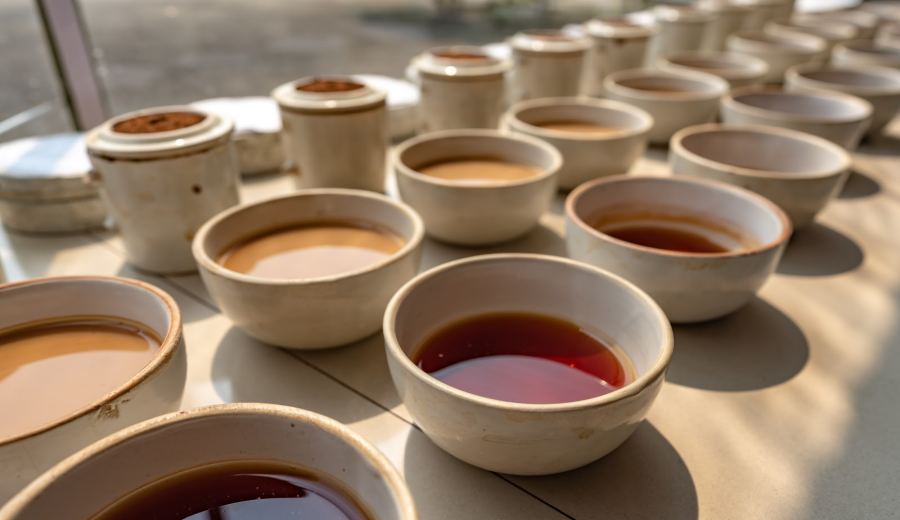
Introduction:Darjeeling tea is hailed as the "Champagne of Teas," renowned for its unique floral aroma and refreshing taste. In reality, it encompasses a diverse range of tea types, including green tea, white tea, oolong, and black tea. This article delves into the historical origins of Darjeeling tea, the main cultivated tea plant varieties, and provides a detailed explanation of the harvesting times, flavor characteristics, and market positioning of different seasonal teas—spring, summer, monsoon, and autumn—helping you master this classic tea from beginner to advanced levels.
Darjeeling tea originates from the Darjeeling region in West Bengal, India. The most distinctive feature of this tea is that it is not limited to a single type but spans four major categories: green tea, white tea, oolong tea, and black tea. With the correct brewing method, one can experience its clear liquor, delicate aroma, and naturally subtle floral notes. It is precisely this hard-to-replicate flavor that has earned Darjeeling tea the title of "Champagne of Teas" in the tea world—not only for its rich layers of taste, but also for its occasional slight astringency and musk-like spice, with some even detecting a fruity aroma reminiscent of muscat grapes.
To understand Darjeeling tea, one must first know which tea plants it primarily comes from. In fact, most Darjeeling tea is grown from the small-leaf variety of the Chinese tea plant, known as Camellia sinensis. This type of tea plant is naturally suited to high-altitude climates and can produce delicate and uniquely flavored tea leaves in high-elevation environments.
The history of Darjeeling tea dates back to 1841, when Dr. Archibald Campbell, a Civil Surgeon from the Indian Medical Service, was transferred from Kathmandu, Nepal, to Darjeeling as an educational officer. In 1841, he introduced seeds of the Chinese tea plant from the Kumaun region and began cultivation trials. Around the same time, the British colonial government also actively promoted the development of tea plantations, laying the foundation for the future Darjeeling tea industry. Commercial production officially began in the 1850s and gradually became a globally recognized boutique product in the tea market.
Traditionally, Darjeeling tea was classified as black tea. However, with the evolution of tea processing techniques, many modern Darjeeling teas now use the hard withering method to control the oxidation level of the leaves, resulting in a partially oxidized state. As such, teas with flavors similar to oolong can also be produced. Additionally, some Darjeeling teas are produced in the form of green tea or white tea, offering a variety of choices.
Darjeeling tea can be divided into five main types based on the harvesting season: spring, in-between (mid-season), summer, monsoon, and autumn. First, spring tea is usually harvested around mid-March, making it the earliest batch of the year. At this time, temperatures are still low and new buds have just begun to emerge. The resulting tea leaves have a light color, a fresh but relatively subdued aroma, and a taste that may carry a slight hint of astringency, making it suitable for tea drinkers who prefer a refreshing flavor profile.
Between the spring and summer harvests, there is a shorter mid-season picking period. The quantity of tea leaves during this time is limited, and their characteristics fall somewhere between spring and summer teas. Sometimes regarded as an extension of late spring, the flavor is slightly more refined, but overall, the yield remains small.
Next is the highly anticipated summer harvest, typically taking place around June. This is one of the most popular seasons for Darjeeling tea production. Due to high temperatures and ample sunlight, the tea leaves are rich in internal compounds. The liquor takes on a deep amber hue, with a strong and layered taste that often features a distinct muscatel note—a classic flavor cherished by many tea enthusiasts.
Monsoon tea is harvested during the rainy season around late autumn. During this period, due to the humid climate and reduced sunlight, the withering process is relatively lighter, and the oxidation level is higher. The liquor tends to be darker in color, the aroma more subdued, and the price generally more affordable, making it suitable for everyday drinking.
The final season is autumn, with tea harvested in the fall after the monsoon season ends. These leaves do not have the same refined flavors or prominent aromas as spring or summer teas, but the liquor has a fuller, more robust mouthfeel and deeper color, appealing to those who enjoy stronger tastes. Although not as outstanding in aroma as other seasons, autumn tea still possesses its own dignified charm.
The above content is compiled by CoffeeHunters, a coffee news website.


