







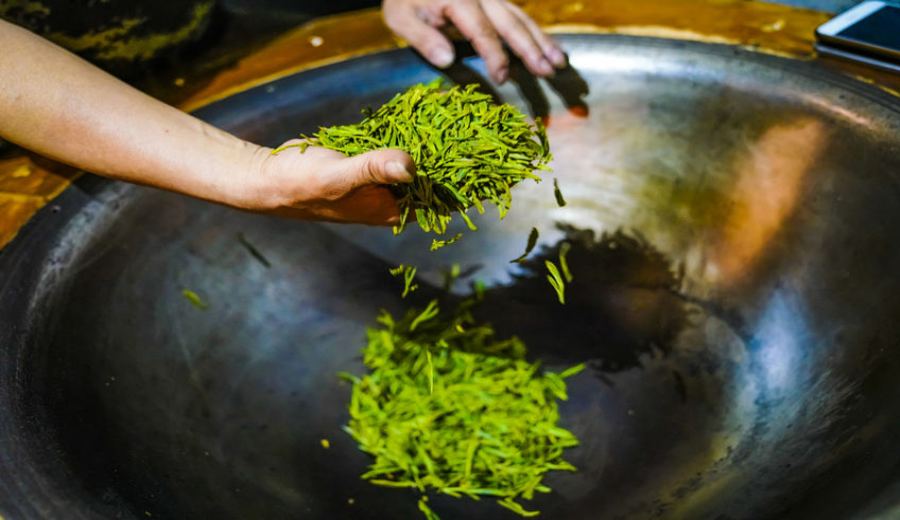
Introduction:Charcoal-roasted single-bush oolong tea is a high-end craft tea among Phoenix Single-Bush oolongs. Its unique charcoal aroma and excellent storage properties have made it a focal point for both tea enthusiasts and coffee lovers. This article delves into the seasonal production process of charcoal-roasted single-bush, the control of charcoal roasting temperatures, the principles behind aroma formation, and debunks common misconceptions such as whether the cinnamon aroma is artificially added, taking you through the essence and market status of this traditional tea art.
When it comes to charcoal roasting, many people first think of sizzling barbecues or roast chicken. But in the world of tea, oolong tea roasted with charcoal also holds a very prestigious position, especially the Phoenix Single-Bush tea from Chaozhou, Guangdong. Among these, charcoal-roasted single-bush is regarded as the pinnacle of oolong teas due to its special charcoal roasting technique and layered aromas.
The biggest difference between charcoal roasting and standard mechanical drying lies in the heat source and temperature control method. Charcoal roasting utilizes the stable heat and smoky aroma generated by burning charcoal, allowing the tea leaves to slowly absorb the charcoal fragrance in bamboo baskets. This not only influences the flavor but also significantly enhances the tea’s storage capability. This craft requires years of experience, and even the slightest mistake can ruin an entire batch of tea.
Generally, single-bush tea farmers begin the charcoal roasting season after the Dragon Boat Festival, typically from late June to early August. The timing mainly depends on the texture of that season’s tea leaves and the results of the initial processing. Not all single-bush teas are suitable for charcoal roasting; farmers decide whether to apply charcoal treatment and how many roasting rounds to perform based on the tea’s aroma profile, fermentation level, and moisture content.
It’s worth mentioning that charcoal-roasted single-bush usually needs to rest for at least a month after roasting to allow the charcoal aroma to fully integrate with the internal components of the tea. Otherwise, the initial smokiness can easily overpower the delicate flavors. Therefore, the earliest available charcoal-roasted single-bush usually hits the market after September, and this period of waiting is a guarantee of quality.
The charcoal roasting process is generally carried out in specially made iron kilns. The tea is placed in roasting baskets lined with bamboo baskets and suspended over a kiln burning charcoal. Farmers control the overall roasting environment to maintain a temperature between 90 to 120°C by observing thermometers and sensing the heat with their hands, continuing for about eight to ten hours. This process requires constant turning of the tea, observation of color changes, and adjustment of the heat—making it an extremely time-consuming step that demands extensive experience.
Single-bush teas can be divided into two major aroma categories: one is the floral type, such as the commonly mentioned Duck Shit Aroma, Orchid Aroma, and Magnolia Aroma; the other is the heavier aroma type, such as Cinnamon Aroma, Almond Aroma, and Milan Aroma. The cinnamon aroma type is especially beloved for its rich and spicy profile, but it’s important to clarify that the cinnamon aroma does not come from added spices. Instead, it is a natural aroma produced by the interaction between the tea plant variety and the charcoal roasting process—this is also one of the key reasons for its popularity.
As for the number of charcoal roasting rounds, most single-bush teas undergo one to two rounds, adjusted based on the tea’s response and requirements. In very rare cases, farmers may perform a third touch-up roasting at the end of the year, but this is considered a fine-tuning process and is very uncommon. Each round of roasting alters the tea’s aroma structure and throat feel, making the number of roasts and the skill involved core factors in determining the final flavor.
Beyond imparting unique layers of aroma, charcoal roasting also chemically alters the composition of the tea leaves. Research shows that moderate charcoal roasting can reduce the caffeine and tannin content in the tea, resulting in a smoother, sweeter taste while reducing astringency, making it more suitable for long-term storage. Additionally, tea leaves processed with charcoal roasting can maintain a stable moisture content within the ideal range of 3% to 5%, effectively preventing mold and rapid oxidation—another key reason why charcoal-roasted tea has excellent storage capabilities.
Although cinnamon aroma single-bush is popular in the market, its production is limited, mainly due to the scarcity of tea tree varieties suitable for this aroma type, limited plantation areas, and climatic conditions. Coupled with the complex and time-consuming charcoal roasting process, authentic charcoal-roasted cinnamon aroma single-bush tends to be priced higher. Actual pricing may vary depending on factors such as origin altitude, tea tree age, and the number of roasting rounds. If you’re a beginner exploring charcoal-roasted oolong tea, it’s recommended to start with floral types that have undergone medium to low-level roasting, gradually experiencing the charm and depth of charcoal roasting.
The above content is compiled by CoffeeHunters, a coffee news website.


