







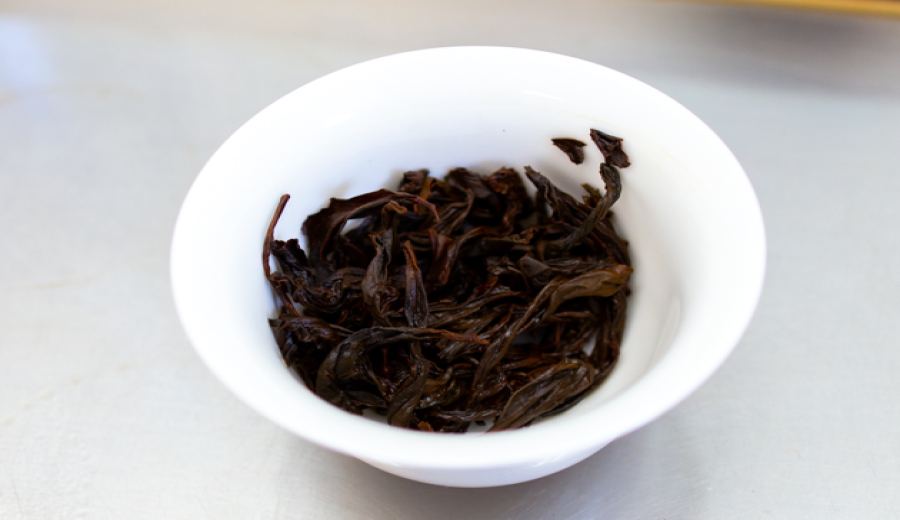
Introduction:Lapsang Souchong is hailed as the world’s first black tea, originating from Tongmu Village in Wuyi Mountain, Fujian. Made from tender spring buds, it undergoes a unique pine-smoking process, resulting in a deep amber liquor with distinctive notes of pine and longan. This article not only explores its aromatic profile but also takes you back to the late 17th century to uncover how this tea was accidentally born amid wartime chaos and entered international markets under the name “Bohea.” It’s essential reading for both black tea beginners and history enthusiasts.
Lapsang Souchong, widely recognized as the world’s first black tea, comes from Tongmu Village in the Wuyi Mountain region of Fujian, China. The tea is made from tender buds and leaves harvested locally in spring, processed through a unique pine-smoking technique, and ultimately brewed into a deep amber liquor that emits delicate pine aromas along with the sweet fruity scent of longan. Its flavor is rich and full-bodied, with a lasting sweetness. For tea lovers who enjoy smoky notes without overly intense flavors, Lapsang Souchong is an exceptionally approachable choice.
The most authentic version of this tea comes from Zhengxiaoshan Farm within Tongmu Village, continuing centuries-old traditional craftsmanship. If you’re interested in the history of black tea and the formation of its aroma, we’ll delve into the flavor characteristics of Lapsang Souchong in detail next, and take you back to the late 17th century to see how it entered the Fuzhou market under the name “Bohea,” as well as the unexpected story of its development born out of wartime turmoil.
The raw materials for Lapsang Souchong all come from Tongmu Village — a small mountain hamlet regarded as the birthplace of black tea, with over 450 years of tea-making history. Local tea farmers harvest only tender buds and leaves each spring. These materials are processed using traditional methods, yielding a liquor that is not only rich and full-bodied but also carries distinct regional characteristics: a refined and captivating pine aroma, a deep amber color, a fresh longan fruitiness, and a long, sweet aftertaste. Even if you’re not a fan of smoky teas, you’ll likely find this mellow-flavored black tea easy to enjoy.
Many Asian tea drinkers are particularly drawn to the subtle, natural smokiness of Lapsang Souchong from its place of origin in Tongmu Village. In contrast, European markets, especially British consumers, tend to prefer a heavier smoky flavor. When this tea first appeared on the Fuzhou market in the late 17th century, its novel pine smoke aroma attracted considerable attention. When people asked the tea farmers for the name of the tea, they answered “Wuyi tea,” meaning tea from Wuyi Mountain, which buyers pronounced with their local accent as “Bohea” (sounding like “Boo-he”). This term later became one of the alternative names for Lapsang Souchong.
The birthplace of Lapsang Souchong — Tongmu Village — was established in the late Ming Dynasty, around 1607 to 1644. The area features rugged terrain and scarce arable land, so villagers mostly made a living by growing tea trees and bamboo. Due to the harsh winter climate in the mountains and food shortages, they relied heavily on selling tea to meet their daily needs. Notably, the high altitude environment here slows down tea leaf growth, allowing for the accumulation of abundant amino acids that make the liquor sweeter.
In its early days, Tongmu Village produced only green tea, processed using traditional pan-firing for fixation and bamboo charcoal drying. But one spring, an unexpected event completely changed the village’s fate and inadvertently gave rise to the world’s first black tea.
It is said that at the time, a troop, aiming to launch a surprise attack, marched along rugged mountain paths straight into Tongmu Village during the peak tea-picking season. After the villagers had harvested their tea, upon hearing of the approaching troops, they fled into the deep mountains to hide. The soldiers not only consumed all the remaining food in the village but even slept directly on the freshly picked tea leaves. A few days later, when the army left and the villagers returned, they found the tea leaves had already become damp, oxidized, and tainted with the strange odors from the soldiers’ clothes and bodies.
Faced with this batch of nearly ruined tea leaves, one villager came up with a clever idea: to rebake the leaves using the commonly available horse-tail pine charcoal from the area, hoping the pine smoke would mask the off-putting smells. They placed the tea leaves on bamboo-matted floors and burned horse-tail pine charcoal beneath, letting the smoke naturally rise and evenly infuse the leaves. The intensity of the smoke could be adjusted by varying the density of the bamboo grates covering the mats.
This batch of pine-smoked tea leaves was eventually sent to a nearby trade hub in Xincun, then transported by waterway to the Fuzhou port. A local merchant reluctantly accepted this batch of “defective” tea. Unexpectedly, not only did it sell well the following year, but he also received repeated restocking orders. This is how the world’s first cup of black tea came into being — born from a desperate improvisation that turned into a pivotal turning point in the history of tea drinking.
The above content is compiled by CoffeeHunters, a coffee news website.


