







Introduction:As a classic representation of Ethiopian natural-processed beans, the Huacai (Hua Kui) series has garnered widespread attention since winning the TOH championship in 2017. This article delves into the flavor evolution of Huacai 6.0 and 7.0, explores how the unique environment of the Guji-Hambela region influences the beans’ performance, and provides medium-light roasting strategies along with V60 three-stage brewing parameters to help coffee enthusiasts master this specialty bean with its pronounced strawberry cream notes.
Ethiopia, as the holy land of specialty coffee, boasts such diverse regions and processing methods that they often overwhelm newcomers. On the pour over menu, washed Yirgacheffe and natural Sidamo are the two most common stars. Among them, the Huacai series, with its distinctive strawberry cream flavor, has become the go-to choice for many coffee lovers starting their journey into natural-processed beans. Sourced from the Hambela sub-region of Sidamo, this coffee not only inherits the terroir characteristics of the area’s fertile volcanic soil but also showcases exceptional fruitiness thanks to professional processing techniques.
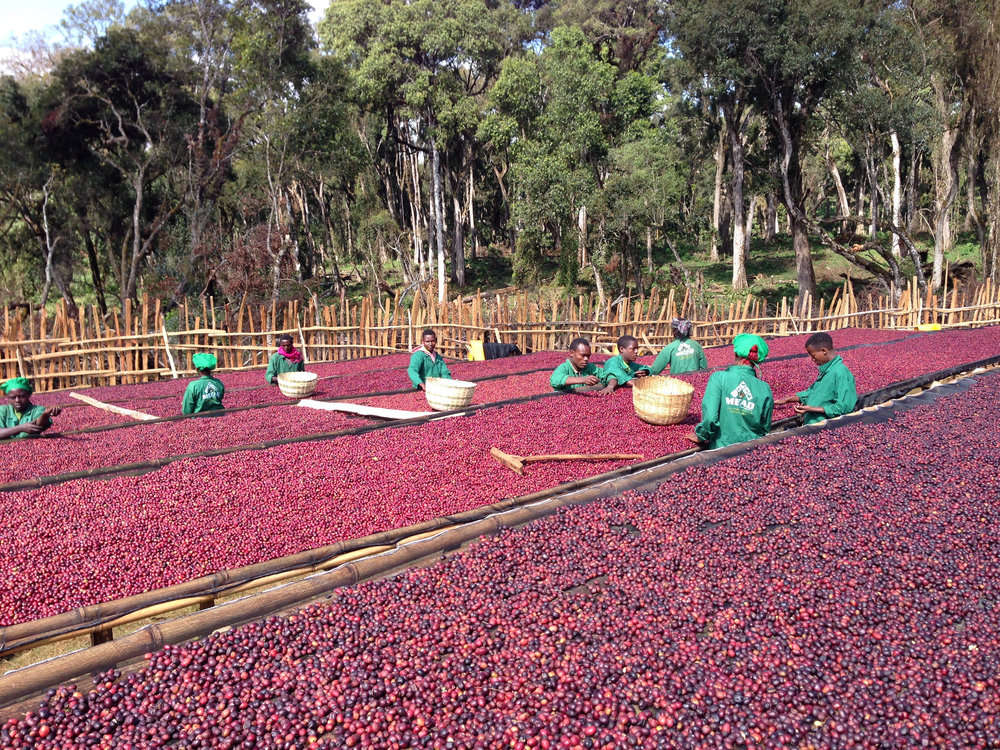
Located in southern Ethiopia, Sidamo features diverse soil types including red volcanic soil, nurturing a rich variety of coffee cultivars. These heirloom varieties are generally not classified by single varietal lineage but exhibit diverse flavor profiles due to environmental differences. The Hambela sub-region, as the high-altitude core area of Sidamo, is just separated by a mountain from the renowned Yirgacheffe Kochere village. The Buku Abel processing station, operated by METAD Agricultural Development, employs natural organic farming and mature post-harvest processing methods, laying the unique quality foundation for the Huacai series.
The origin of the name “Huacai” dates back to the 2017 TOH competition. At that time, the Buku Abel natural beans submitted by DW Company impressed international judges with their intense berry and cream notes, winning the natural category championship. These champion beans were later named “Huacai” (meaning “the foremost flower”) by a Beijing green bean supplier, symbolizing the queen of flowers. Interestingly, in the same year’s Chinese Barista Championship, although Geisha varieties performed outstandingly, some contestants still achieved great results using the same batch of Huacai, further boosting its popularity.
The naming convention of the Huacai series follows “Huacai X.0,” incrementing each year according to the harvest season. From 2.0 in 2018 to 6.0 in 2022, and then to 7.0, which arrived in Hong Kong in April 2023, each version reflects the climate and processing conditions of that year. Currently, the more readily available versions in the market are Huacai 5.0 and the specially selected small-bean Huacai, both of which offer distinct flavor profiles.
The story behind the small-bean Huacai is quite ingenious. Over years of cupping, baristas noticed that some smaller beans exhibited more concentrated aroma. After being independently processed by DW Company’s Buku Abel processing plant, these small beans displayed berry flavors even closer to the original award-winning batch. Cupping data shows that Huacai 5.0 from the 2021 harvest presented floral and mixed berry notes common to the Guji region, while the small-bean Huacai retained more pronounced strawberry characteristics and a rich creamy aftertaste.
In terms of roasting strategy, professional roasters generally recommend a medium-light roast. This approach effectively preserves the coffee’s high-quality acidity and enhances a bright mouthfeel. For pour over enthusiasts, it is recommended to use a Hario V60 dripper with a water temperature of 91°C and a powder-to-water ratio set at 1:15. The grind size can refer to an 80% passing rate through a Chinese standard No. 20 sieve, a parameter that balances extraction efficiency and flavor clarity.
During actual brewing, it is suggested to use a three-stage pouring method to enhance the layered flavors. The first stage involves pouring 30 grams of hot water for a 30-second bloom, followed by slowly circling the water from the center outward with a small stream to reach a first pour of 125 grams. When the water level in the dripper is about to expose the coffee bed, continue pouring to a total of 225 grams, with the overall extraction time controlled at around 2 minutes. This method effectively highlights the unique fruity notes of the Huacai series while avoiding over-extraction that could lead to bitterness.
For readers new to specialty coffee, it is recommended to start with Huacai 5.0. Its relatively balanced sweet-and-acidic profile and clear juice-like mouthfeel make it an ideal entry point for natural-processed beans. If you’re seeking more intense berry characteristics, you can try the small-bean Huacai or wait for the latest arrival of 7.0, to experience the unique flavor expressions brought by the Hambela region’s annual climatic variations.
The above content is compiled by CoffeeHunters, a coffee news website.


