







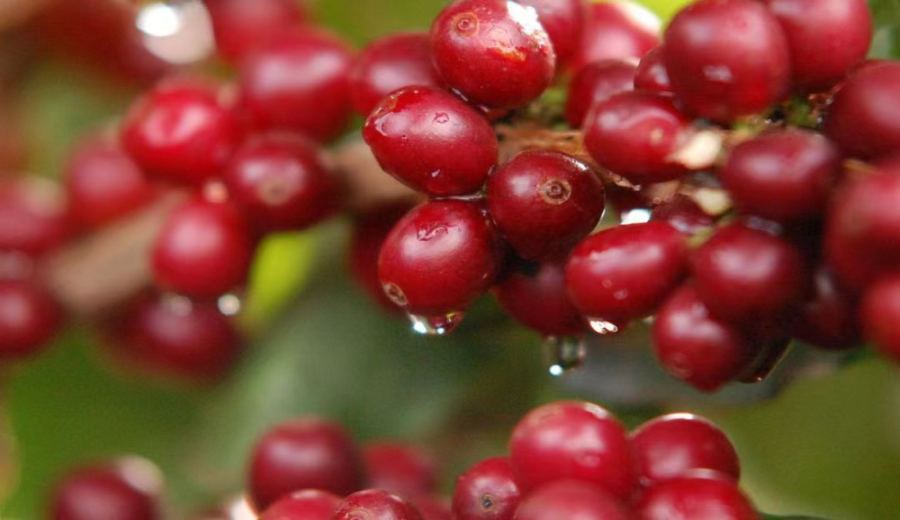
Introduction:Want to learn how to identify coffee varieties by observing the tree’s appearance? This article will guide you through intuitive features such as tree height, leaf shape, and cherry color, helping you easily distinguish six classic Arabica varieties—Typica, Bourbon, Caturra, Catuai, Pacamara, and Geisha (also known as Gesha). Mastering these identification tips not only deepens your understanding of coffee plants but also helps you make more informed choices when purchasing beans or visiting coffee farms.
Understanding what a coffee tree looks like is a great starting point for exploring the charm of different varieties. Arabica accounts for about 70% of global coffee production, and this species not only offers elegant flavors but has also evolved into numerous distinctive sub-varieties. This article takes a practical approach, teaching you to distinguish common Arabica varieties—including Typica, Bourbon, Caturra, Catuai, Pacamara, and Geisha (Gesha)—by key visual indicators such as plant height, leaf tip color, branch arrangement, fruit shape, and color.
You may have seen a coffee tree before or even recognize the look of Typica, but do you know what the term “Bourbon dynasty” means in the context of coffee varieties? In fact, the differences between coffee varieties are reflected not only in flavor and overall silhouette but also in many visible traits on the plants themselves.
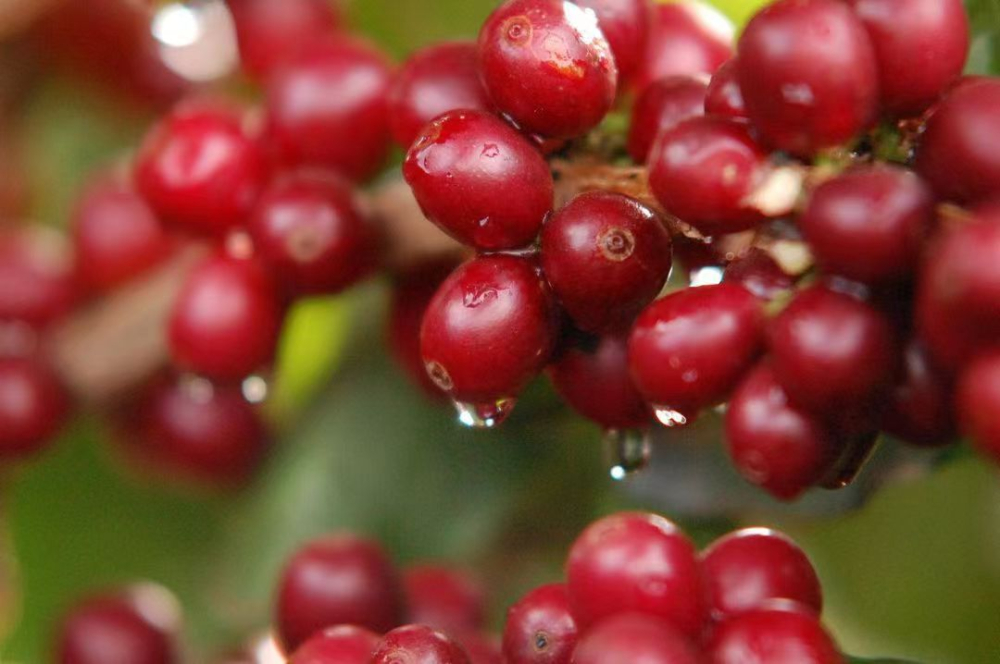
The flowers of different coffee varieties also vary in appearance, adding further fun and challenge to identification. Next, let’s break down the key plant identification points for these popular varieties one by one.
To correctly identify different coffee varieties, you can start with several key dimensions: including tree height (tall or compact), leaf tip hue (green or bronze), overall plant shape (conical or round), leaf shape (slender or broad), cherry and green bean size and shape (e.g., slender, round, and small, medium, large, or extra-large), cherry ripening colors (red, yellow, orange, or even pink), branch growth angles, spacing between branches (tight or loose), and the variation in internode length on the same branch.
It’s worth noting that some varieties have very prominent and easily recognizable visual traits, and there’s no need to compare every single detail.
Typica is arguably one of the most representative varieties, with highly distinctive external features that often make it the easiest to recognize. Typica plants exhibit a classic conical shape with a single vertical main stem and can reach heights of up to five meters. Such height results in noticeably longer branch spacing and node intervals along a single branch compared to other varieties.
The angle between lateral branches and the main stem typically ranges from 50 to 80 degrees, and the overall trunk and branches are not particularly thick. Leaves, cherries, and green beans are usually slender, and young leaves often have bronze-colored leaf tips. Compared to other common Arabica varieties, Typica leaves have smoother surfaces with less pronounced wavy edges. Additionally, Typica cherries turn a vivid red when ripe.
Bourbon has a tree shape similar to Typica, also conical, but with an overall denser structure and more secondary branches. Its main stem is thicker, and the branches appear sturdier, making the plant overall more robust than Typica. The spacing between branches and nodes is also slightly shorter, and this increased density allows Bourbon to yield about 30% more fruit than Typica.
Bourbon leaves are wider than those of Typica, with clearly wavy edges and a more uneven texture. Young leaves are usually green, though bronze-colored leaf tips may occasionally appear. Cherries are round and can mature into various hues, including red, orange, or yellow.
Caturra is a natural mutation of Bourbon, significantly shorter than its parent but with higher plant density. It has shorter distances between branches and the trunk, along with numerous secondary branches, making Caturra look denser than either Typica or Bourbon.
In addition, Caturra retains many features similar to Bourbon, such as large, wavy-edged leaves, with leaf tips usually being green. Cherries are also round, medium in size, and turn red or yellow when ripe.
Catuai is a hybrid of Mundo Novo and Caturra. Mundo Novo itself is a natural mutation of Typica, so Catuai exhibits genetic traits from both Typica and Bourbon. The plant is relatively short, with smaller angles between lateral and main branches, and rarely develops secondary branches at the top, giving it an overall umbrella-like appearance rather than the conical shape commonly seen in Typica or Bourbon.
Catuai leaves are also wavy, with leaf tips mostly green. The fruit of this variety is firm and less prone to dropping from the branch, making Catuai a relatively stable choice in regions with strong winds or frequent rainfall.
Pacamara is a hybrid developed from Pacas and Maragogype, first created in 1958 by the Salvadoran Institute of Coffee Research (ISIC). This variety is known for its instability, meaning plant performance can vary across generations, yet it remains widely cultivated.
Pacas is a mutation of Bourbon, while Maragogype is a variant of Typica, the latter famous for producing exceptionally large cherries—a trait also inherited by Pacamara. As a result, the massive fruit size and unique pointed leaves are key identifying features of Pacamara. Additionally, the tree is compact and conical, with short distances between branches and nodes, resulting in a very dense plant. The thickness and toughness of the trunk and branches are similar to Bourbon, generally sturdier and less elastic than other varieties.
Finally, Geisha (also known as Gesha) is a variety that has garnered significant attention in recent years, with highly recognizable plant characteristics. Judging from the growth angle of the top branches and the overall tree shape, Geisha branches extend upward at an angle of about 45 to 50 degrees, and the plant can grow quite tall, with wide spacing between branches and nodes. The trunk and branches are slender, giving it a style somewhat similar to Typica.
Geisha leaves are smooth and slender, and the cherries also maintain the slender shape typical of Typica. Based on experience, the most obvious difference between Geisha and Typica lies in the canopy form: Geisha has an umbrella-shaped or flat-topped canopy, whereas Typica has the classic conical shape.
Moreover, the flavor profile of Geisha cherries is also highly distinctive, often showcasing citrus, sweet, and jasmine-like aromas, which is one of the reasons it stands out in the specialty coffee world. Different coffee varieties, whether in terms of flavor profiles or plant appearances, display a rich and diverse range of characteristics.
The above content is compiled by CoffeeHunters, a coffee news website.


