







Introduction:This Geisha blend from Mirazu Estate in Tarrazú, Costa Rica, combines four varieties—Geisha, ET47, SL28, and MAICO—and showcases intense floral and fruity aromas with sweet layers through a raisin honey process. This article delves into the variety origins, processing methods, and light-to-medium roast flavor profile, offering professional pour-over recommendations to help you fully appreciate its captivating notes of rose, strawberry gummy candy, and almond.
While Geisha coffee is famously associated with Panama, its global expansion actually traces back to Costa Rica. This article focuses on Mirazu Estate in the Tarrazú region of Costa Rica, dissecting a multi-variety blend that combines Geisha, ET47, SL28, and MAICO. From the estate’s history and variety origins to the raisin honey processing technique, and further to the cupping flavor profile after a light-to-medium roast, it fully presents the refined layers of rose, strawberry gummy candy, raisin, and almond, along with practical pour-over parameters.
When it comes to Geisha, many first think of Panama, but the variety originally spread from Costa Rica. After Panamanian Geisha achieved remarkable success in international competitions, neighboring Costa Rica also began to recognize this potential variety. The star of this article is precisely the Geisha blend from Mirazu Estate in Tarrazú, Costa Rica.
Mirazu Estate is located in the Tarrazú region and was founded by Esteban Sanches, who was originally part of the nearby Candelaria Estate. Driven by his passion for coffee, he established his own farm and named it "Mirazu," meaning "overlooking Tarrazú." This name not only reflects the surrounding stunning landscape but also hints at the microclimate here being highly favorable for coffee growth, laying the foundation for the beans’ quality.
In this blend, the Geisha variety accounts for50%, with the remainder consisting of ET47, SL28, and MAICO. Geisha was first discovered in the Gesha Forest in Ethiopia, later introduced by the Kenya Coffee Research Institute, spread to Uganda and Tanzania by 1936, entered Costa Rica in 1953, and didn’t gain prominence in Panama until the 1970s. ET47 is an Ethiopian native Geisha, distinguished by the local Costa Rican designation "47" for wild varieties; SL28 is a high-quality Bourbon-type variety cultivated by the Scott Laboratories in Kenya.
This blend’s complex variety combination reflects Mirazu Estate’s expertise in variety traceability and classification—some regions can only provide vague descriptions of coffee varieties, while Mirazu clearly labels the proportion of each component.
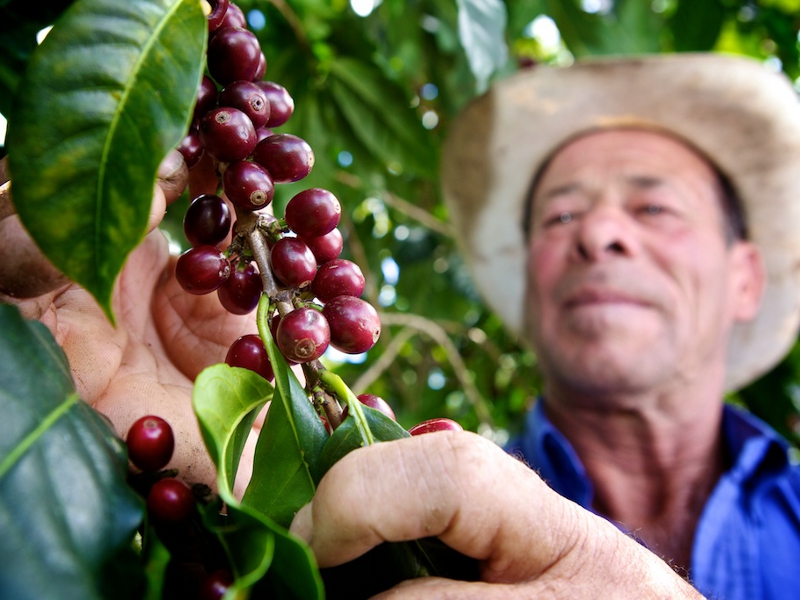
In terms of processing, this bean employs Costa Rica’s signatureraisin honey process: retaining 100% mucilage with zero water washing throughout. On the day of harvest, the coffee cherries are first screened in a water tank, with ripe, plump ones sinking and retained, while unripe or overripe floaters are removed. The selected fruits are then placed on raised beds to dry for at least three days before the cherry skins are removed, continuing to dry the mucilage. During this process,climate control and turning frequency are crucial—even drying is required to avoid under- or over-fermentation.
Based on the honey process characteristics and the potential of the Geisha variety, the roaster opted fora light-to-medium roastto enhance high sweetness and iconic floral and fruity acidity. Cupping results at eight hours post-roast revealed a clear flavor profile of rose, strawberry gummy candy, raisin, and almond, earning it the nickname "strawberry candy."
In this blend, Geisha contributes jasmine floral notes, while ET47, SL28, and MAICO add berry flavors. Paired with the sweetness from the honey process, the overall profile is richly layered. Brewing should highlight the floral and berry aromas, as well as the subtle grape and strawberry notes.
It is recommended to usefreshly roasted beans within 5 days of roasting(this batch has a resting period of about 4–7 days and arrives at peak flavor). Recommended pour-over parameters: 15g coffee, grind size with 20-mesh sieve passing rate of78-80%(slightly fine), brew ratio of1:16, water temperature of90-91°C, using a V60 filter to enhance layering. Specific steps: start with a 30g bloom for 30 seconds (the honey process beans will absorb water and expand, releasing berry aromas); then pour 120g of water in small, circular motions (when the coffee bed descends to the bottom of the shorter ribs); finally, pour 90g of water until dripping is complete, with a total extraction time of1 minute and 50 seconds.
The above content is compiled by CoffeeHunters, a coffee news website.


