







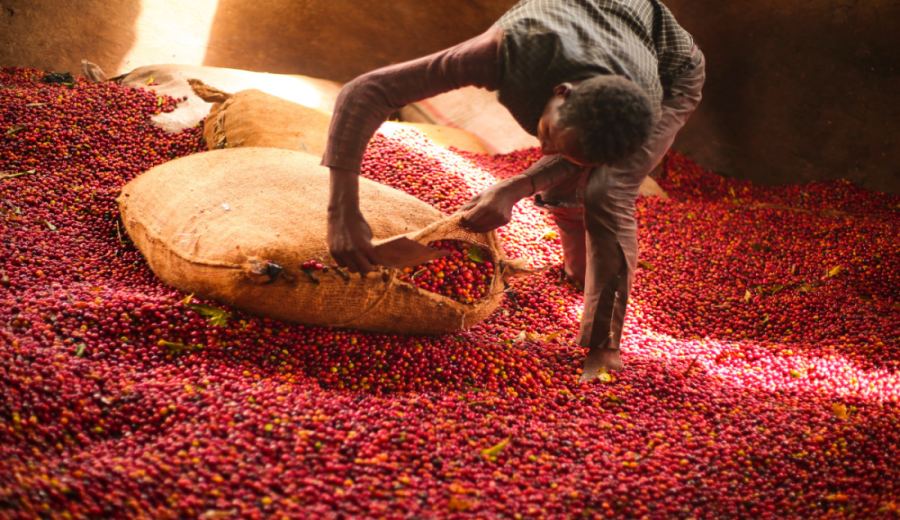
Introduction:Take an in-depth journey to the hidden micro-region of Shakisso within Ethiopia’s Sidama Guji zone, and explore its unique geographical background and distinctive coffee flavor characteristics. This article details the craftsmanship behind Shakisso’s washed processing method, analyzes the origins of its bright acidity and citrus notes, and offers practical roasting and pour over recommendations to help you fully experience this vibrant specialty coffee bean.
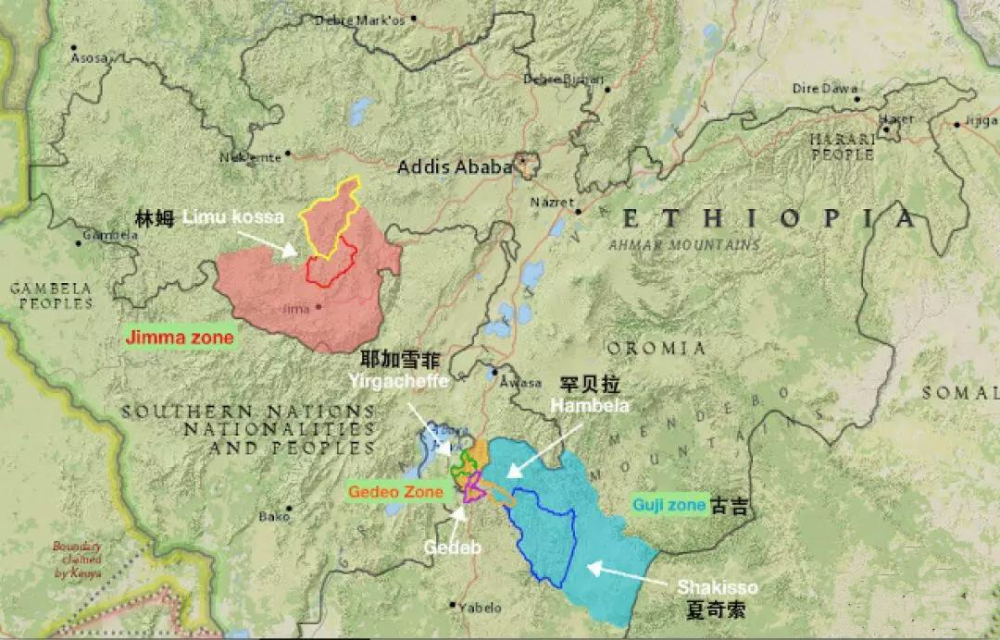
Within the vast coffee-growing belt of Ethiopia’s Sidama, the Guji zone has long been renowned for celebrated bean varieties such as Hambella. However, few notice that hidden within this plateau lies a micro-region with uniquely flavorful and highly promising beans — Shakisso. This small area, nestled deep within Guji, not only boasts a rich mineral history but also, thanks to its special altitude and microclimate, produces coffee with highly recognizable flavor profiles.
Cupping tests reveal that beans from this origin exhibit exceptionally vibrant acidity, marked by distinct lemon and citrus notes, interwoven with layers of white grape juice and blackcurrant fruitiness. The aftertaste delivers a smooth, Earl Grey-like warmth. Compared to the fuller body and sweet-dominant styles commonly found in other parts of Guji, the coffee here is notably fresher and more layered — a trait inseparably linked to its washed processing method.
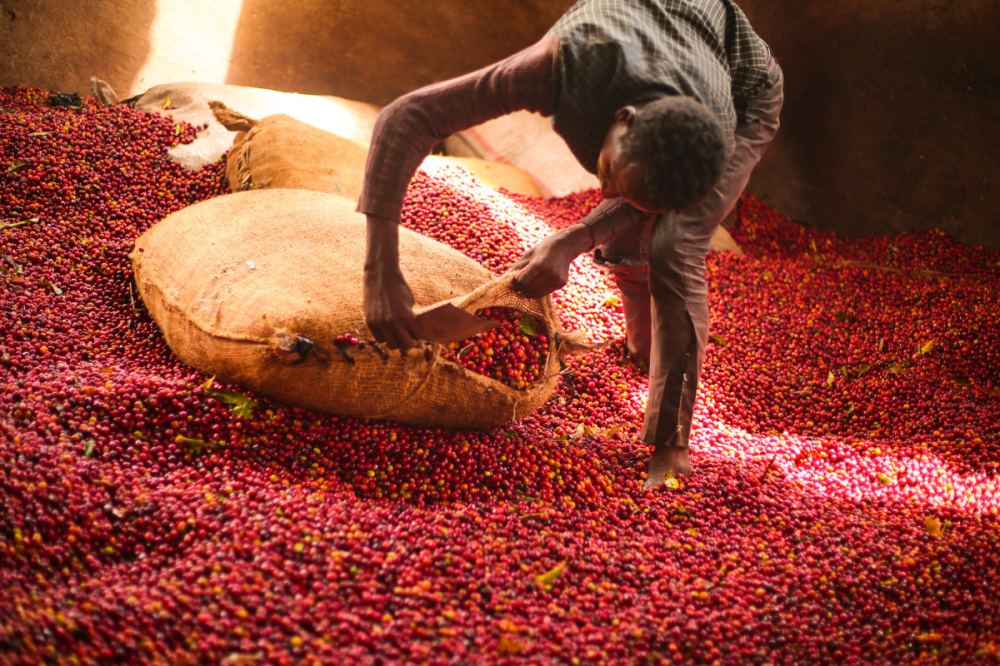
When talking about Sidama, most people first think of Yirgacheffe and its world-famous Hambella coffee beans. In 2017, the Hambella Bukuru washing station’s Hambella coffee won top honors at the Ethiopia Coffee Competition. Although subsequent harvests haven’t fully replicated that year’s stunning performance, it hasn’t dampened market enthusiasm for the region. Yet beyond Hambella, Guji actually nurtures other potential micro-regions, and Shakisso is one of them. Though geographically part of Guji, Shakisso’s coffee flavors have carved out a distinctly different path.
The Guji zone was originally part of Sidama until it was officially designated as an independent region by the Ethiopia Commodity Exchange (ECX) in 2010. Located southeast of Yirgacheffe, the terrain is diverse, with high mountains, valleys, and plains intermingling. The soil is predominantly nutrient-rich black clay (Vertisol), with soil depth approaching two meters, and the average altitude exceeds 1800 meters. Such terrain and soil conditions, combined with significant diurnal temperature variations, provide an ideal environment for growing specialty coffee.
Shakisso is situated in the southern part of the Guji zone, bordering the Oromia and Guji regions. This area was once a historic gold mining site, and to this day, remnants of early mining activities — including many pits — can still be seen, requiring extra caution when walking through. Due to its remote location and past instability caused by land, ethnic, and miner-related issues, Shakisso has long faced challenges with labor shortages. However, since 2001, local smallholder farmers have committed to organic coffee cultivation and collaborated with medium-sized producers to gradually develop forest-grown coffee with regional character at high altitudes, making Shakisso one of the most distinctive micro-regions within Sidama.
Cupping results show that the coffee from this area features clear lemon and citrus acidity, accompanied by the fruitiness of white grapes and blackcurrants, with an aftertaste that carries the smooth, comforting sensation characteristic of Earl Grey tea. This flavor profile forms a strong contrast to the sweeter, fuller-bodied coffees typically found in other parts of Guji. One key reason for this difference is the choice of processing method. While most coffees in Guji are sun-dried, yielding intense sweetness and soft acidity often with berry-like tones, this area opts for washed processing, resulting in cleaner, brighter acidity and clearer fruit flavors.
Washed processing is a refined method that removes pulp, mucilage, and impurities through multiple steps. First, selected coffee cherries go through a pulper to remove the outer skin and fruit flesh. Then, the beans — still coated with some mucilage — undergo fermentation in water for 18 to 36 hours to break down residual stickiness. After fermentation, the beans are thoroughly washed in flowing channels to remove all mucilage, followed by drying either in the sun or by machine until the moisture content drops to around 12%. Finally, the parchment is removed, leaving the familiar green coffee bean. Though the process is complex, it effectively enhances the cleanliness and consistency of the beans, usually resulting in higher market value.
The Shakisso coffee beans introduced here are of the Heirloom variety, unique to Ethiopia. Ethiopia is home to nearly 2000 coffee varieties, 1927 of which are heirloom types. Due to the vast number of varieties and classification difficulties, coupled with the government’s conservation policy that keeps full varietal information undisclosed, they are commonly grouped under the term Heirloom. These heirloom varieties not only vary in appearance but also serve as a genetic treasure trove for Arabica coffee, laying a solid foundation for flavor diversity.
Here is the production information for these Shakisso washed beans: origin is Shakisso, Guji, Sidama; planted at altitudes between 1950 and 2300 meters; processed via washed method; grade is G1; variety is local heirloom.
For roasting, to highlight the beans’ vibrant acidity and fruity character, the roaster opted for a medium-light roast level. Using a Yangjia 800N roaster, the charge weight was 300 grams, with a drum temperature of 170°C at drop-in. The air damper was set to 3, and the heat to 100.2. The turning point occurred at approximately 1 minute and 42 seconds. When the drum temperature dropped to 140°C, the air damper was adjusted to 3.5, the bean surface gradually turned yellow, grassy notes faded, and the stable drying phase began. At 180°C, the heat was reduced to 70, and the air damper opened to 4. Around 7 minutes and 50 seconds, the bean surface began showing unsightly wrinkles and dark spots, and the coffee aroma shifted to toasted bread, signaling the approach of first crack. By 8 minutes and 20 seconds, first crack officially began. The heat was lowered to 50, the air damper increased to 5, and first crack was allowed to develop for about 1 minute and 28 seconds, with the roast finishing at 192°C.
The cupping procedure was rigorous, with sample beans tested within 8 to 24 hours post-roast. A 200 ml ceramic cupping bowl was used, with water temperature controlled at 94°C. Grind size was set to 70%-75% passing through a #20 sieve, and the brew ratio was 1:18.18 (11 grams of coffee to 200 ml of water). Concentration fell within the Golden Cup range of 1.15%-1.35%, with a brewing time of 4 minutes. Cupping results showed floral and lemon notes in the dry aroma, and orange aromas in the wet aroma. Flavor layers included lemon, jasmine, vanilla, honey, orange, and cane sugar.
If you’d like to try a pour over of these Shakisso washed beans at home, we recommend using a V60 #01 filter cone, with water temperature at 90-91°C, a coffee dose of 15 grams, and a brew ratio of 1:15. Use a medium-fine grind (similar to fine sugar, 80% through a #20 sieve). The pour over steps are as follows: Wet the filter and preheat your equipment. Start with a 30-second bloom using 30 grams of water. Then, pour in a small circular motion until you reach 125 grams for the first pour. When the water level drops and is about to expose the coffee bed, continue pouring to 225 grams, then stop. Once the water level drops again and is about to expose the coffee bed, remove the filter cone. Total extraction time is approximately 2 minutes and 5 seconds. This method fully highlights Shakisso’s lemon acidity. With a slightly lower temperature, you can perceive jasmine floral notes, creaminess, and nutty tones, while the aftertaste carries an oolong tea-like mouthfeel with a lasting, pronounced sweetness.
The above content is compiled by CoffeeHunters, a coffee news website.


