








Introduction:Although the AeroPress resembles a syringe in appearance, it is an innovative brewing device that combines immersion, paper filtration, and pressure extraction. This article delves into the two mainstream brewing methods—standard and inverted—breaking down everything from the device’s structure, coffee bean selection, to grind size, water temperature, and time parameters. Paired with step-by-step instructions, it will help you master this brewing technique that offers both stability and layered flavors.
The AeroPress looks like a thick syringe, vastly different from traditional coffee tools, but it’s actually a versatile gadget that merges elements of French press, pour over paper filtration, and espresso-style pressure brewing. Its unique design has even inspired a dedicated AeroPress brewing competition, sparking curiosity about its appeal.
The AeroPress mainly consists of three components: the brew chamber, the filter cap, and the plunger. It comes with round paper filters, a stirring paddle, and a funnel. Its working principle involves fully mixing coffee grounds with hot water, then using the plunger to apply pressure and expel air, forcing the coffee liquid through the filter to extract clean yet complex flavors.
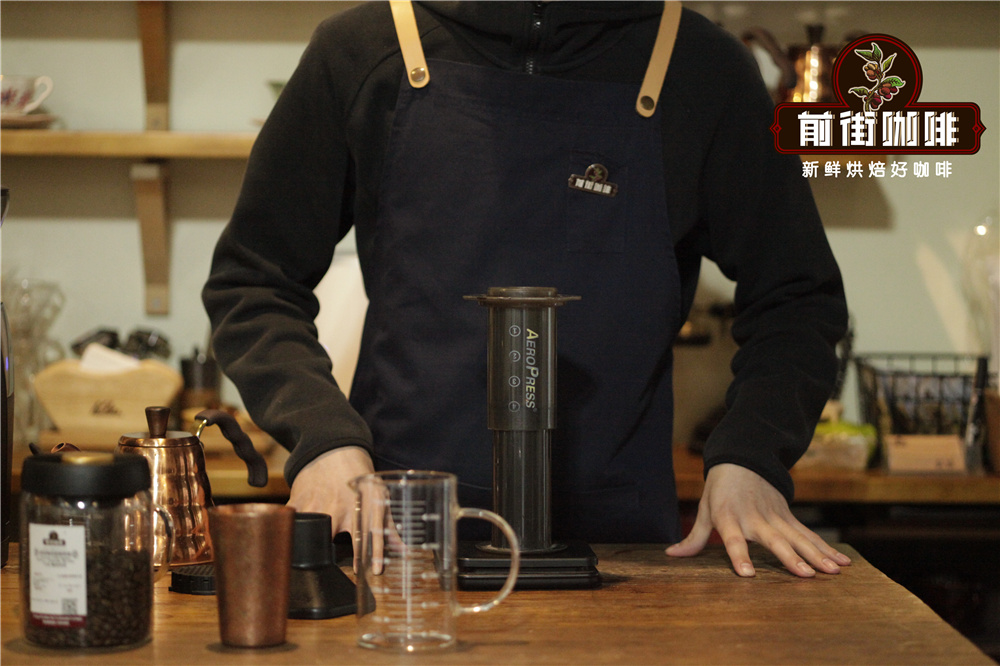
There are two main ways to brew with the AeroPress: standard (regular) and inverted. The standard method involves placing the brew chamber right-side up on top of a cup or server, adding coffee grounds and hot water, stirring, and then pressing the plunger down to push the coffee through the filter. The inverted method involves attaching the plunger inside the brew chamber first, flipping the entire assembly upside down, adding coffee and water, and then flipping it back to brew. The inverted method offers better control over flow rate and pressure during brewing.
This demonstration uses medium-dark roasted Yellow Bourbon beans from Brazil’s Fazenda Rainha estate, which exhibit distinct roasted peanut notes along with rich body and a nutty aftertaste. To match the short extraction time of the AeroPress, it is recommended to grind the beans to a powder-like fineness, aiming for about 85% of the grounds to pass through a #20 sieve, with water temperature controlled around 90°C to balance acidity and body.
[Standard (Regular) Brewing Steps]
First, place the round paper filter into the filter cap and wet it with water to make it adhere tightly to the inner rim of the cap. Then, place the filter cap face-up on top of the brew chamber and set up the funnel. Add 15 grams of ground coffee and start timing. Slowly pour hot water up to the ‘④’ mark on the brew chamber.
Use the stirring paddle to gently agitate the coffee grounds, ensuring each particle is evenly saturated with water. Quickly attach the plunger afterward. Note that during standard brewing, the coffee liquid drips directly into the cup, so it’s best to complete the water pouring, stirring, and plunger attachment steps in one smooth sequence to maintain extraction consistency. Once the plunger is attached, an airtight space forms inside, temporarily stopping the dripping. Let it sit for about 1 minute, then slowly press the plunger down until all the coffee liquid is pushed into the cup. The total brewing time is approximately 1 minute and 20 seconds.
[Inverted Brewing Steps]
For the inverted method, first push the plunger to the ‘④’ mark and place the brew chamber upside down on a flat surface. Insert the funnel, add 15 grams of coffee grounds, then start timing and pour hot water until full. Stir the coffee grounds evenly with the paddle—the liquid should appear as a clear golden color at this stage.
Quickly attach the filter cap and flip the entire upside-down brew chamber over onto the filter cup. This movement should be done swiftly to prevent any coffee from spilling. Let it sit for 1 minute, then steadily press the plunger down to extract the coffee into the cup. The total brewing time is also 1 minute and 20 seconds.
Both brewing methods have their own characteristics, but most users find the inverted method easier to handle and more stable. The standard method can be trickier for beginners due to the need to manage the dripping coffee while pouring water, requiring more practice to get the timing right.
The above content is compiled by CoffeeHunters, a coffee news website.


