







Introduction:Bypass is a common yet often misunderstood technique in pour over brewing. Many coffee enthusiasts simply view it as a means of dilution. In reality, Bypass is a practical method to optimize flavor by adjusting concentration, especially suitable for light roast coffee. This article will delve into the principles behind Bypass, its practical application scenarios, and how precise control over brew ratio, water temperature, and grind size can enhance clarity and acidity in your cup.
In the world of pour over, the term Bypass may not be as frequently mentioned as "brew ratio" or "extraction time," but it is a technique often employed by professional baristas to adjust flavor profiles. Many assume Bypass merely involves adding water to brewed coffee to mask under-extraction issues—but this perspective is overly simplistic. In fact, Bypass is a scientifically grounded method of flavor modulation, particularly impactful for light roast coffee where bright acidity and clean mouthfeel are paramount.
So, what exactly is Bypass? Literally, Bypass can be understood as "going around"—in the context of coffee brewing, it refers to water that bypasses the coffee grounds entirely and is instead added directly to the already extracted coffee liquid. Compared to the main brewing pathway where water flows through coffee grounds to dissolve flavor compounds, Bypass acts like a detour, injecting additional water directly into the final beverage to alter overall concentration and mouthfeel.
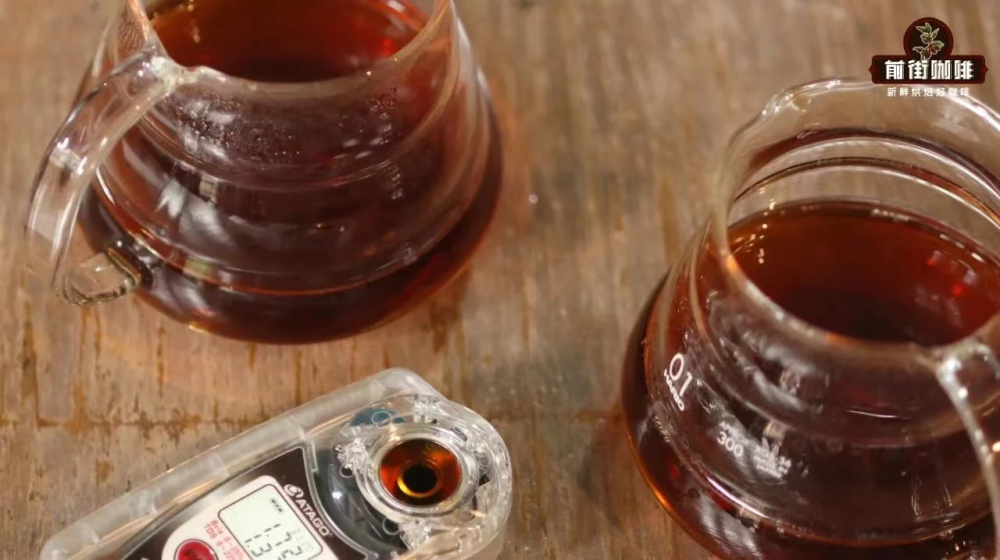
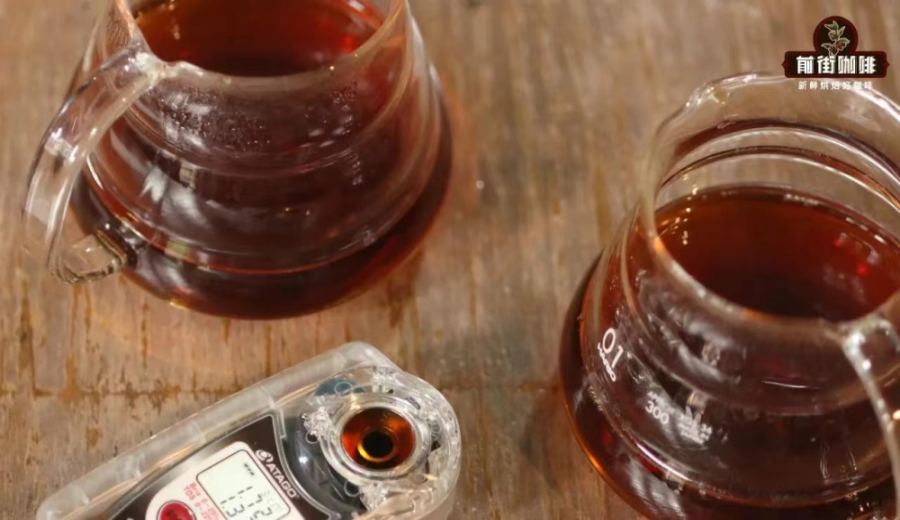
To understand the practical application of Bypass, let’s consider a common example: suppose we use 15 grams of coffee with a 1:15 brew ratio, resulting in a coffee liquid concentration of approximately 1.58% and an extraction yield of 21.76%. According to the SCA (Specialty Coffee Association) Golden Cup standard, this extraction yield falls within the ideal range of 18% to 22%, indicating that the coffee's flavor compounds have been appropriately extracted. However, when the concentration is too high, the coffee can taste overly intense or even harsh. This is where the Bypass technique comes in—by adding an appropriate amount of pure water to this highly concentrated coffee, we can effectively lower the overall concentration, bringing it into the SCA-recommended comfort range of 1.15% to 1.35%, thereby improving the drinking experience.
It’s important to note that Bypass is not a universal solution. If a coffee has obvious defect flavors—such as excessive sourness, bitterness, or off-notes—simply diluting with water will at best reduce the intensity of these negative traits, not eliminate them. Moreover, adding too much water can leave the coffee tasting weak, stripped of its intended layers and complexity. Therefore, the premise of using Bypass is that the coffee’s extraction quality is already within a reasonable range, with the focus being on fine-tuning concentration.
The operational logic of Bypass is closely tied to the core principle of the Golden Cup standard: first achieve a higher-concentration extraction with less water, then adjust the concentration to a more palatable level using pure water with zero total dissolved solids (TDS). This "extract strong, then dilute" approach not only balances the coffee’s flavor but also highlights the brightness of its acidity and overall cleanliness.
The Kinoshita method is another commonly referenced technique with principles similar to Bypass. Promoted by Japanese barista Kinoshita Masayuki, this method emphasizes extracting only the desirable early-stage compounds from coffee while avoiding later-stage large molecules and bitter, astringent flavors. The specific practice involves stopping extraction after the initial phase, rather than continuing to brew the remaining coffee grounds, and then diluting the resulting "coffee essence" with roughly twice the volume of water. This approach preserves the bright, sweet, and refreshing early-stage flavors while yielding a smoother, more rounded mouthfeel.
In practical applications, Bypass also opens up more possibilities for parameter adjustments in pour over brewing. For instance, one could start with a 1:13 brew ratio for the initial extraction, then add bypass water equivalent to twice the coffee’s weight (e.g., 30 grams of water for 15 grams of coffee), bringing the total brew ratio to 1:15. Since this additional 30 grams of water does not pass through the coffee grounds, it won’t extract more large molecules, effectively reducing the proportion of late-stage bitterness while brightening acidity and enhancing refreshment. This method is particularly well-suited for light roast coffee, helping to showcase vibrant fruit acids and a layered flavor structure.
Beyond adjusting brew ratios and bypass water volumes, the use of Bypass can extend to experimenting with other parameters—such as trying a finer grind size or slightly increasing water temperature—to observe how these changes influence extraction performance and flavor expression. Each subtle adjustment can lead to a distinctly different taste experience, which is one reason why Bypass is so favored among advanced pour over enthusiasts.
In summary, Bypass is far more than just "adding water to dilute." It is a scientifically grounded technique designed to optimize concentration and flavor balance. Mastering the logic and key parameters of Bypass not only allows you to tailor your pour over coffee to personal taste preferences but also enhances your overall control over the coffee’s flavor profile. The next time you hear the term Bypass, consider re-evaluating its significance in pour over brewing—from the perspectives of flavor adjustment and concentration optimization.
The above content is compiled by CoffeeHunters, a coffee news website.


