







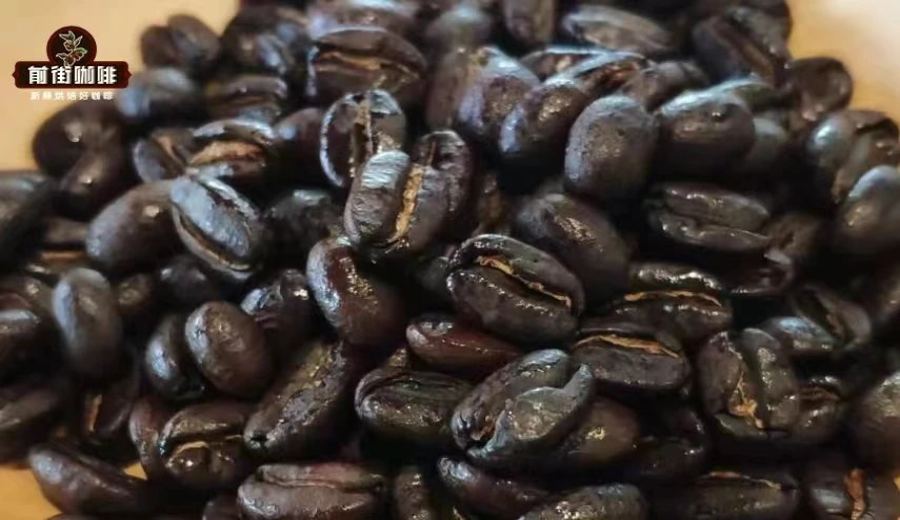
Introduction:Coffee beans with an oily surface often lead people to mistakenly assume poor quality or long storage, but in reality, it is closely related to the roast level. This article takes two well-known Indonesian Mandheling beans — PWN Golden Mandheling and Kayu Mas Triple-Picked beans — as examples, conducting an in-depth analysis of their selection criteria, processing method differences, varietal characteristics, and exploring the scientific principles behind the oiliness. It also provides practical roasting parameters, KONO filter pour over recommendations, and detailed flavor notes to help coffee enthusiasts more accurately master the brewing and tasting essentials of Mandheling.
Is the glossy appearance on coffee beans a sign of quality issues or a normal phenomenon? Many coffee lovers, when brewing Mandheling, often notice that the beans gradually develop an oily sheen, especially popular beans like Indonesia’s renowned PWN Golden Mandheling and Kayu Mas Triple-Picked Mandheling. So what does this oiliness actually indicate? Is it aged beans? Commercial-grade beans? Or simply a natural result of roasting and storage? This article will start with a practical comparison of these two highly popular Mandheling beans, helping you understand the truth about coffee bean oiliness and analyzing their subtle differences in variety, processing method, cleanliness, and flavor.
First, let’s get to know the PWN Golden Mandheling used in this case. These beans come from the Gayo Mountain area in the northwestern part of Sumatra, Indonesia, specifically from Lake Tawar. Its most distinctive feature is its extremely strict selection standard: only beans larger than eighteen mesh are used, and in a 300g sample of green beans, there must be no more than three defective beans, making it fall under the highest grade, G1. In addition, because Indonesia commonly uses the wet-hulled processing method, the removal of the mucilage and parchment layers can easily cause so-called “elephant ear beans” — beans that are damaged, cracked, and irregular in shape due to compression. Although such beans are not considered defective, the brand still insists on removing them to maintain aesthetic consistency in bean appearance. Furthermore, after three rounds of manual sorting, machine sorting is performed based on density and color to ensure that each bean is uniformly colored and intact in shape. Precisely because of this, this Mandheling displays a golden-like luster in sunlight, which is also the origin of the name “Golden Mandheling.”
As for the other market variety also called “Golden Mandheling” — the Kayu Mas Triple-Picked beans — they come from the Gayo Mountain region in Aceh, Sumatra. Although they also undergo three rounds of manual selection and reach the G1 grade, their overall cleanliness is slightly inferior to the PWN version due to differences in variety and processing details. Many retailers, for marketing convenience, also refer to this high-end hand-selected bean as Golden Mandheling, but it has not actually been certified by the PWN manufacturer. Careful tasting can still reveal slight differences in impurities and purity.
In terms of roasting, both beans were subjected to a medium-dark roast to highlight the distinctive richness and spice notes of Mandheling, while still preserving nuanced layers. Taking PWN Golden Mandheling as an example, it was roasted using a Yangjia 800N roaster, with a charge weight of 480g. The initial drum temperature was set at 200°C, with the air damper open to 3. After one minute, the heat was reduced to 160°C, keeping the air damper unchanged. Around 5 minutes and 40 seconds, when the temperature dropped to 148°C, the beans turned yellow and the grassy aroma dissipated, marking the completion of the drying phase. The heat was then adjusted to 140°C, and the air damper increased to 4. By 9 minutes and 40 seconds, the beans began to show wrinkles and dark spots, entering the stage just before first crack, requiring careful listening to the first crack sounds. Finally, at 9 minutes and 54 seconds, first crack began, the heat was reduced to 60°C, the air damper opened to 5, and the beans were dropped at 204.5°C. The roasting curve for the Kayu Mas Triple-Picked beans is similar, but it reached 148°C and turned yellow at around 5 minutes and 18 seconds after charging. First crack occurred at 9 minutes, and the final drop temperature was 202°C. The overall time was slightly shorter, but it still firmly stayed within the medium-dark roast range.
Many consumers have mistakenly believed that “oily = commercial grade,” thinking that beans with an oily surface are low-quality or aged. In fact, this is a common misconception. The real main reason for coffee bean oiliness is directly related to the roast level and the release of carbon dioxide. Darker roasted beans, due to the high temperatures that cause internal lipids to be released and moisture to evaporate significantly, result in an imbalance in the water-to-oil ratio. After roasting, the beans continue to release large amounts of carbon dioxide, which pushes the oils to the surface, especially noticeably within 2 to 5 days after first crack. Therefore, oiliness is commonly seen in medium-dark to dark roasted beans, and it is related to the roast depth and the lipid content of the bean variety — for example, Robusta beans tend to show more obvious oiliness.
In terms of flavor profile, cupping results show that PWN Golden Mandheling has extremely high cleanliness, with a rich and full-bodied mouthfeel, gentle and understated acidity, and an aftertaste featuring strong notes of cream, walnuts, and chocolate, along with delicate aromas of sweet herbs, cinnamon, and citrus. In comparison, the Kayu Mas Triple-Picked Mandheling, while also full-bodied, has slightly weaker cleanliness, a slightly brighter acidity, and a flavor profile leaning toward spicy and herbal notes, with a cocoa and nutty aftertaste. Its sweetness is pronounced but with relatively simpler layers.
To fully showcase the richness and aromatic characteristics of these two Mandheling beans, the KONO filter is specially selected for pour over. The KONO filter has short ribs concentrated at the bottom, resulting in slower drainage speed, which helps extend extraction time and is suitable for coffees emphasizing body and sweetness. For actual brewing, it is recommended to use a medium-coarse grind (approximately 73% passing rate through a 0.85mm standard sieve), 15g of coffee, a 1:15 coffee-to-water ratio, and water temperature controlled at 89°C. Start with a small amount of hot water — 30g — for a 30-second bloom, then pour up to 125g total water, gently circling the water to avoid channeling. Finally, add water up to 225g, with a total extraction time of about 2 minutes. These parameters help balance the rich base and delicate aromas of both beans, highlighting their unique flavor characteristics.
The above content is compiled by CoffeeHunters, a coffee news website.


