







Introduction:Did you know that Geisha coffee actually originated in Ethiopia, not Panama? This article takes an in-depth look at the Green Label Natural Geisha coffee beans from Gesha Village Estate in Ethiopia. From the growing environment, variety origins, processing methods, to cupping and pour over parameters, it provides a comprehensive guide to this uniquely flavorful coffee bean. Whether you’re a beginner or an advanced coffee enthusiast, you’ll find practical information and inspiration here.
The fame of Geisha coffee often leads people to immediately think of Panama, but this variety was first discovered in 1931 in the Gesha forest of Ethiopia. After years of migration and cultivation, it wasn’t until 2004 that Panama’s Hacienda La Esmeralda brought it onto the international specialty coffee stage. However, few know that the origin of Geisha still has coffee plantations to this day, and the Green Label Natural Geisha from Ethiopia’s Gesha Village Estate is a prime example.
This Green Label Geisha comes from Gesha Village Estate in the Bench Maji region, grown at altitudes between 1911 and 2001 meters, and the variety is Gori Gesha. Using the natural (sun-dried) processing method enhances its fruity and sweet notes. Its flavor profile is distinctly different from the more common Panamanian Geisha, closely resembling the berry characteristics typical of Ethiopian heirloom varieties.
The establishment of Gesha Village Estate was initiated by documentary filmmaker couple Adam Overton and Rachel Samuel. In 2007, while filming a coffee-themed documentary for the Ethiopian government, they visited the Gera Coffee Forest in the Bench Maji region, which inspired them to create their own brand and estate. In 2009, on the advice of coffee judge Willem Boot, they decided to return to Ethiopia to search for the roots of the Geisha variety.
After extensive exploration, they discovered wild coffee trees in a pristine forest near the South Sudan border in Bench Maji that were very similar to the original Geisha variety—these were the Gori Gesha forests. This forest is considered one of the earliest sites where the Geisha variety was found, so they collected seeds from there and established what is now Gesha Village Coffee Estate about 12 miles away.
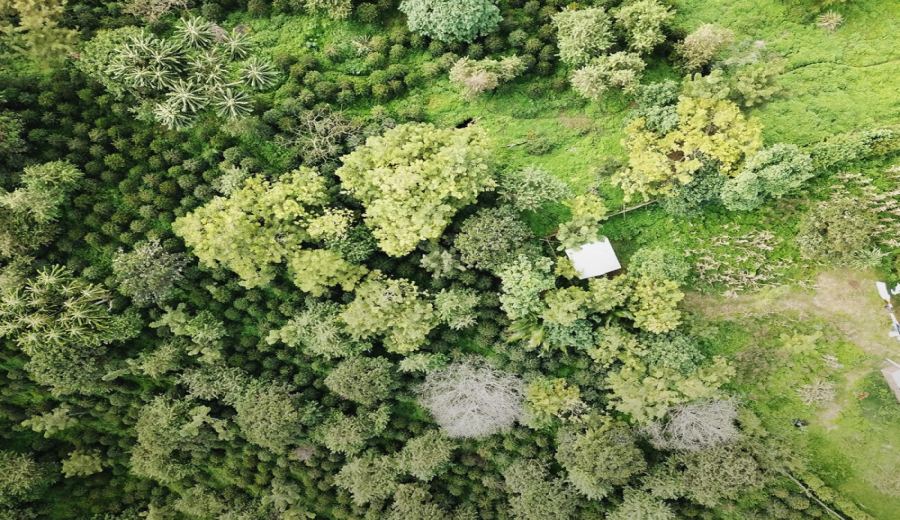
Spanning 475 hectares, Gesha Village Estate is vastly different from the smallholder farming model typically seen in Ethiopia. It is a large-scale, scientifically managed modern estate with its own wet mill and laboratory. The estate grows only Geisha-related varieties, without mixing in other Ethiopian heirloom types, ensuring consistency and traceability in quality.
Currently, Gesha Village mainly cultivates three varieties: Gesha1931, Gori Gesha, and Illubabor. Among them, Gesha1931 is considered the variety closest to the parent plant of Panamanian Geisha, while Gori Gesha was discovered by the estate founders in 2011 in a wild forest about 20 kilometers from the estate—an area where no identical samples have been found elsewhere. The Green Label Geisha introduced here uses the Gori Gesha variety, grown in the Bangi area in the northwest of Gesha Village.
Gesha Village Estate’s product line is divided into several grades, including Gold Label (RARITIES), Red Label (GROWERS RESERVE), Green Label (SINGLE-TERROIR), and Chaka. The Green Label series focuses on single terroirs and specific plots, with each batch traceable to a particular farm, variety, and processing date. This Green Label Natural Geisha comes from the Bangi area, emphasizing the combination of regional character and natural processing methods.
In terms of processing, this Green Label Geisha uses the traditional natural (sun-dried) method. After harvesting, the coffee cherries are first floated to remove unripe or defective beans, then spread in thin layers on African-style raised beds and covered with breathable, sun-shielding material. During the drying process, the beans are continuously turned and flawed ones are removed. The entire drying period lasts about 18 to 30 days. This method preserves more sugars and fruity aromas, resulting in a coffee with pronounced sweetness, soft acidity, and a rich, complex fruit profile.
In roasting, this 2020-season Green Label Natural Geisha from Gesha Village has a relatively high moisture content. Therefore, during roasting, the dehydration phase was extended, and the final roast level is medium-light, aiming to highlight the fruity and sweet characteristics. It is recommended to use a Yama 800N roaster, with a bean inlet temperature of 175°C, initial flame at 130, air vent at 3, steadily increasing the temperature and adjusting the air vent and flame as needed until about one and a half minutes after first crack, with a drop temperature of around 193.5°C to fully showcase its floral, fruity, and sweet layers.
Cupping results show that this Green Label Geisha has a notably different flavor profile compared to the more common Panamanian Geisha. Panamanian Geisha often exhibits pronounced floral notes and tea-like qualities, whereas the Green Label Geisha from Gesha Village highlights a rich berry juice character, with aromas of red berries, cherries, and honey. The cup is full-bodied with distinct layers, and the finish carries a subtle fermented aroma—making it highly suitable for coffee lovers who enjoy bright, fruity profiles.
For home brewing, it is recommended to use 15 grams of coffee grounds with 225 grams of water, at a 1:15 coffee-to-water ratio, with a grind size around pour over fine (78% passing through a #20 sieve), and water temperature controlled at 90°C. For the brewing steps, start with a 30-second bloom using 30 grams of water, then pour in a slow circular motion until reaching 125 grams for the first pour. After the water level drops, continue pouring to 225 grams. The total extraction time is about 2 minutes. These parameters effectively bring out the berry sweetness and full body of the Green Label Geisha, and are suitable for use with a V60 or fan-shaped dripper for pour over.
The above content is compiled by CoffeeHunters, a coffee news website.


