







Introduction:Want to learn about the classic Santa Ana coffee beans from Guatemala’s Antigua region? This article provides an in-depth analysis of this washed coffee, a blend of Bourbon and Caturra varieties. From the region’s geography and varietal appearance differences, the impact of processing methods on flavor, to cupping flavor profiles and V60 pour over brewing parameters, it offers a comprehensive guide to this high-altitude, volcanic-soil-grown coffee with vibrant floral and fruity notes.
In recent years, Guatemala’s coffee-growing regions have been facing challenges from climate change and rising post-pandemic costs, affecting around 12,500 local coffee farming families. Representatives from the coffee association stated that current prices can hardly sustain basic livelihoods, and it is expected that coffee bean prices will continue to rise in the new season, making these high-quality beans from the Antigua region even more precious.
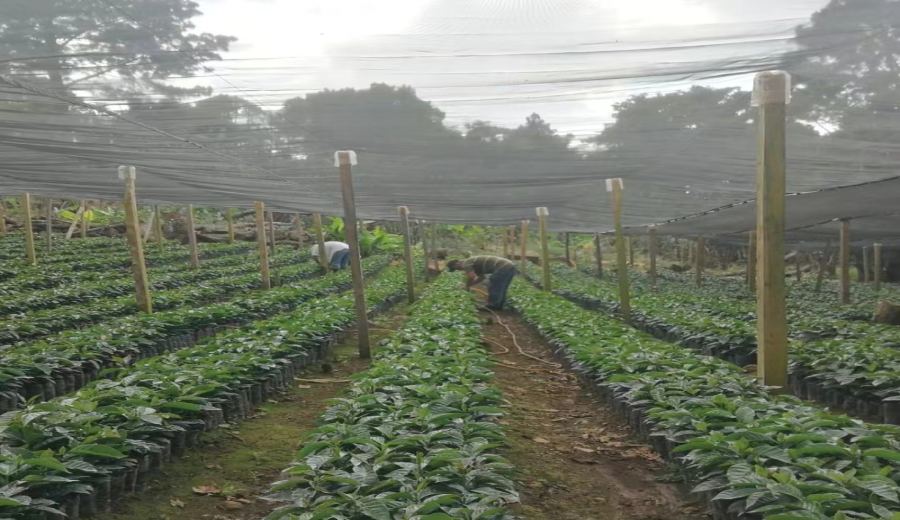
Antigua is located in Guatemala’s Panchoy Valley at an altitude of about 1,500 meters, surrounded by mountains and close to the Agua and Fuego volcanoes. These volcanoes not only shape the stunning landscape but also deposit volcanic ash rich in various minerals after eruptions, providing excellent nutrients for the soil and creating an ideal environment for coffee cultivation.
Among the many Guatemalan coffees, the Santa Ana coffee beans from the Laminita Estate stand out with their distinctive flavor profile. These beans are meticulously processed by the renowned local washed coffee mill Las Pastores, commissioned by the estate, with strict quality control at every step to highlight the unique terroir of the region. The dry aroma features prominent floral and tea-like notes, while the cup reveals bright citrus acidity and berry flavors, with a honey-like sweetness in the finish. The overall profile is clean and well-layered.
Another unique trait of Santa Ana coffee is its subtle smoky note. In many coffee regions, smokiness is often seen as a defect, but in Guatemala, this faint smoky undertone becomes a highlight, complementing the delicate floral notes and creating a surprisingly balanced and intriguing flavor.
The bean variety blend consists of Bourbon and Caturra, both belonging to the Bourbon family with relatively round beans. However, a closer look at the bean tips reveals an easy way to distinguish them: Caturra beans have a noticeably greater bend at the tip, appearing more elongated overall. For coffee enthusiasts familiar with varietal characteristics, this subtle visual difference serves as a key identifying clue.
In terms of processing, the brand uses the washed method, which effectively highlights the coffee’s acidity and aroma. During processing, the coffee cherries are first depulped by a machine to remove the outer skin and some pulp, then the mucilage-covered beans are soaked in water for 18 to 36 hours of wet fermentation. After fermentation, flowing water is used to wash away residual mucilage and impurities, followed by drying the parchment-covered beans on patios until the moisture content drops to around 12% before hulling. Cupping experience shows that the washed process enhances the expression of white floral notes in the coffee, while making the acidity cleaner and moderately reducing the otherwise potentially pronounced smoky flavors.
For roasting, the brand adopts a medium-light to medium roast strategy, with the drum entry temperature set at 200°C and the initial air vent setting at 3. After 30 seconds, the heat is reduced to 160°C, and the turning point is observed at 1 minute and 36 seconds. The heat and air vent are then gradually adjusted to control the temperature and speed during the drying phase until the beans turn yellow and the grassy notes dissipate. First crack begins at 8 minutes and 37 seconds, at which point the heat is lowered to 80°C and the air vent is opened wider to 5, allowing the coffee to develop for another 1 minute and 50 seconds after first crack, finally dropping at 195.3°C. This approach preserves rich aromas and a balanced acidity-sweetness profile.
Cupping results show that this Santa Ana coffee has a dry aroma of berries and caramel sweetness, while the wet aroma releases lemon and fresh floral notes. The flavor profile includes lemon, berries, white flowers, chocolate, nuts, along with a hint of subtle smokiness, offering a richly layered taste with a long-lasting finish.
For actual pour over brewing, it is recommended to use a Hario V60 filter, with a coffee-to-water ratio of 1:15 (e.g., 15 grams of coffee to 225 grams of water), water temperature controlled around 90°C, and grind size between medium-fine and medium-coarse (referencing about 77% extraction through a Chinese standard No. 20 sieve).Step-by-step extraction methodis as follows: First, perform a bloom with 30 grams of water for about 30 seconds. This step helps the coffee grounds fully expand—if a “hamburger” shape does not form, pay attention to bean freshness or grind size. Then, at 54 seconds, pour water up to 125 grams, pause briefly to let the water level drop to two-thirds of the coffee bed, then continue pouring to 225 grams. The total brew time is about 2 minutes and 10 seconds. This method effectively brings out the sweet and acidic elements along with the coffee’s body. It is recommended to gently swirl the cup before drinking to achieve the best flavor balance.
When tasting, the high-temperature stage reveals bright citrus acidity. As the temperature lowers, juicy notes and subtle floral aromas gradually emerge, while the finish delivers depth from cocoa and a hint of smokiness, ending with a caramel-like sweetness. This profile is highly suitable for coffee lovers who enjoy floral-fruity notes and delicate layers.
The above content is compiled by CoffeeHunters, a coffee news website.


