







Introduction:Delve into the variety background, regional characteristics, and historical origins of Mandheling coffee from Sumatra, Indonesia. Analyze the reasons behind its dark roast flavor profile and compare the differences between Lintong Mandheling and PWN Golden Mandheling. This article provides practical flavor descriptions, purchasing advice, and pour over parameters to help you gain a more comprehensive understanding of this classic dark roast coffee.
When Sumatra, Indonesia is mentioned, many coffee enthusiasts immediately think of the “Mandheling coffee beans” known for their intense herbal, earthy, and rich chocolatey notes. However, for this highly representative coffee, many still have only a vague understanding of its variety classification, historical background, and flavor traits. This article will detail the regional positioning and developmental trajectory of Mandheling, analyze its variety composition, and compare two commonly available types on the market—Lintong Mandheling and PWN Golden Mandheling. Finally, it also offers practical pour over suggestions to help you fully grasp this distinctive classic coffee.
Mandheling is not the name of a single variety, but specifically refers to Arabica coffee grown in the Sumatra region of Indonesia. Only Arabica planted in Sumatra can be labeled as “Mandheling.” This land has a typical tropical rainforest climate, with an average annual temperature of about 25 to 27°C, abundant rainfall, and an annual precipitation of up to 1600 to 2200 millimeters. In addition, much of Sumatra consists of high-altitude mountainous areas with volcanic-rich soils, creating extremely favorable environmental conditions for growing Arabica.
The history of Arabica coffee being introduced to Indonesia can be traced back to the late 17th century. At that time, the Dutch East India Company brought Arabica coffee seedlings originating from India to Jakarta on the island of Java, which were later gradually expanded to Sumatra and Sulawesi, among other regions. However, the leaf rust disease outbreak in the 1880s severely damaged Java’s Arabica crops, causing large numbers of plants to die. The Dutch then switched to planting the more disease-resistant Robusta, stabilizing Indonesia’s coffee supply. To this day, Robusta still accounts for 90% of Indonesia’s total coffee production, mainly distributed in low-altitude regions, while the remaining 10% of Arabica is concentrated in northern Sumatra, Sulawesi, and some high-altitude areas of Java—with Mandheling being the most representative.
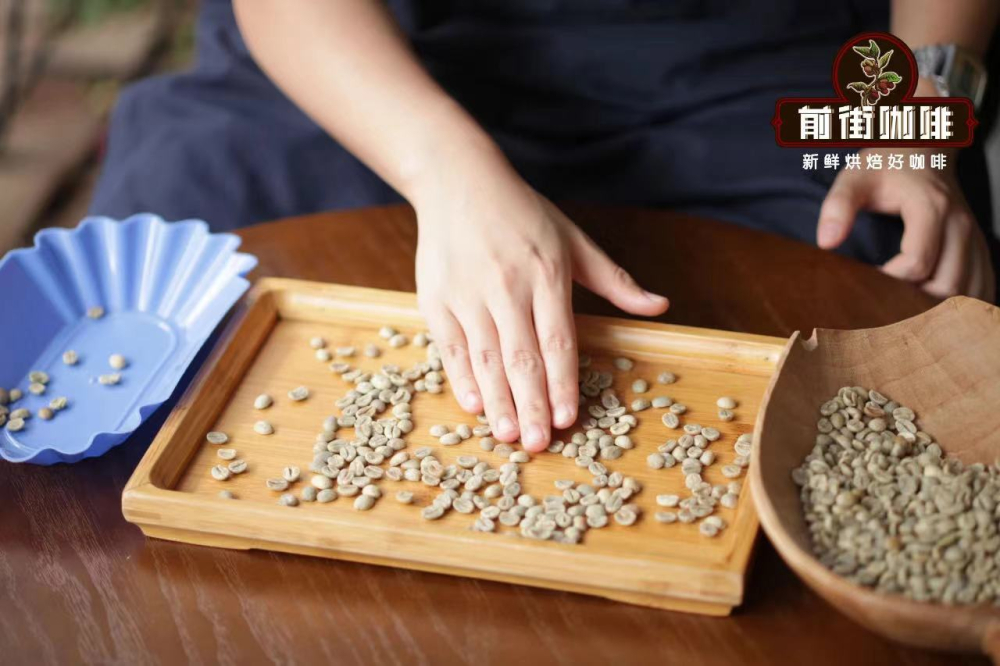
So, what variety does Mandheling coffee actually belong to? In fact, most Mandheling coffee on the market today comes from Typica or its derivative varieties grown in the mountainous areas around Lake Toba in Sumatra. Among them, the Lintong Mandheling sold by one brand uses the Tim Tim variety (also known as Timor Hybrid, abbreviated as Tim Tim), which is a natural hybrid variety originating from Timor Island in the 1940s, resulting from a cross between Arabica and Robusta, and is naturally more resistant to diseases. The image shows what these beans look like.
Another product from the same brand, PWN Golden Mandheling, uses the Ateng variety, also known as Catimor, which is a further hybrid of Tim Tim and Catuai. It was first introduced to Java in 1928 and later made its way to Sumatra. Ateng is so named because it was initially widely planted in the Gayo Highlands of Aceh Tenggah, and locals abbreviated the name of the region to refer to the variety. Although these two varieties differ from traditional Typica, they both belong to the Arabica family and have been widely planted due to their adaptation to Sumatra’s unique environment.
Speaking of the differences between Lintong Mandheling and PWN Golden Mandheling, the most notable distinction lies in the level of precision in green bean selection. PWN Golden Mandheling undergoes at least three rounds of manual sorting after processing, keeping only beans larger than screen size 18, with a defect rate controlled to no more than 3 defects per 300-gram sample, placing it in the highest grade category, G1. Its appearance features a darker green color, uniform bean shape, mostly flat beans. According to cupping comparisons, this meticulously selected coffee offers a cleaner and brighter taste, with more pronounced sweetness and aroma layers.
In comparison, although Lintong Mandheling does not go through such a rigorous selection process, its overall flavor profile still effectively showcases the characteristics of the Sumatra region, and thus it is often regarded as a cost-effective “everyday bean,” suitable for daily drinking and allowing consumers to experience the essence of Sumatra’s dark roast flavor at a reasonable price.
In terms of brewing, to fully highlight Mandheling’s bold characteristics, it is recommended to use freshly roasted coffee beans, ideally within 5 days post-roast. Mandheling is typically roasted to a darker level, so a slightly coarser grind size should be chosen during brewing, and water temperature should not be too high to avoid bitterness caused by over-extraction.
It is recommended to use a filter cone with immersion capabilities, such as the KONO filter cone, paired with a medium-coarse grind (about the size of coarse sugar, approximately 70% passing through a #20 sieve), a water temperature of around 88°C, and a brew ratio suggested at 1:15. In practice, start by pouring 30 grams of water for a 30-second bloom, followed by pouring in a circular motion with a small stream of water up to 125 grams. Once the water level drops halfway, pour again up to 225 grams, with a total extraction time controlled at around 2 minutes and 10 seconds. These parameter settings can fully bring out Mandheling’s rich body and low acidity, while avoiding off-flavors caused by over-extraction.
The above content is compiled by CoffeeHunters, a coffee news website.


