







Introduction:The piccolo latte is a miniature milk coffee originating from Australia, renowned for its intense flavor and refined texture. Compared to the more common latte or flat white, it comes in a smaller cup with a lower milk ratio, allowing the coffee’s inherent aroma and layers to shine more prominently. This article will delve into the differences between the piccolo and the flat white, key brewing parameters including milk steaming techniques, foam thickness, and temperature control, while also providing practical advice to help you master the brewing essentials of this refined coffee.
Among the many coffee beverages, the piccolo latte (Piccolo Latte), though not as widespread as the latte or cappuccino, enjoys steady popularity in the Australian coffee market—its status is comparable to that of the flat white. However, in cafés in Taiwan or Hong Kong, the piccolo is relatively rare. This small cup of milk coffee is based on a single ristretto shot, combined with a small amount of warm milk topped with a thin layer of microfoam, with a total volume of only about 90 to 100 milliliters—just a few sips and it’s gone. It’s highly suitable for consumers who enjoy intense coffee flavors but don’t want to consume too much liquid.
Although both the piccolo latte and the flat white are small cup milk coffees, they differ significantly in cup size, milk ratio, and milk foam treatment. Generally, the piccolo is served in a cup of about 90 milliliters, using a single ristretto (about 15 to 18 milliliters) as the base, then adding about 75 milliliters of hot milk with a fine layer of thin foam, resulting in an overall milk-to-coffee ratio of approximately 1:5. In contrast, the flat white typically has a capacity of 150 to 200 milliliters, uses a double shot of espresso, and is combined with about 150 milliliters of milk with thicker foam, yielding a creamier and smoother mouthfeel that suits those who prefer a stronger milk flavor.
The origin of the piccolo latte was initially designed by baristas as a smaller portion when testing new beans or adjusting extraction parameters, aiming to avoid wasting a full cup of coffee. Since traditional latte cups are too large, baristas often ended up drinking only a small part during tasting, so they switched to a smaller cup size and reduced the milk ratio to better highlight the characteristics of the coffee itself. Over time, this small cup milk coffee gradually evolved into a standalone beverage and gained market popularity due to its intense and layered flavors.
To make a high-quality piccolo latte, the key lies in controlling the details of each step. First is the choice of coffee—opt for blends with complex flavor profiles, such as those combining notes of wine, vanilla, and cream with beans that offer tropical fruit and fermentation characteristics, which can bring a more intricate taste experience to the piccolo.A practical approach used by some cafés is to use a single ristretto as the base, employing 20 grams of coffee grounds to extract 28 grams of coffee liquid, with an extraction time controlled between 20 to 25 seconds, ultimately yielding about 14 to 16 grams of concentrated coffee.This part will serve as the core flavor source of the piccolo.
In terms of milk preparation, the piccolo requires foam that is thinner than that of a flat white, with a thickness of only about 0.3 centimeters, which demands greater precision during steaming. It’s recommended to use a milk pitcher with a capacity of about 350 milliliters, pouring in around 100 milliliters of milk, and controlling the steaming temperature between 55 to 60°C . This temperature range ensures the milk isn’t too hot upon drinking while retaining appropriate sweetness and a smooth texture. During steaming, use less air intake and keep the duration relatively short to maintain the fineness and stability of the microfoam.
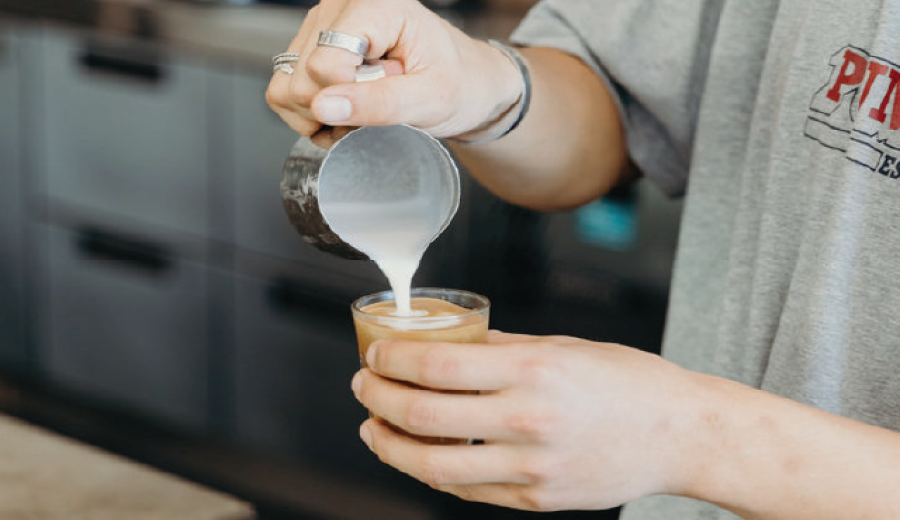
Slowly pour the steamed milk into the cup already containing the ristretto. It’s recommended to begin latte art when the liquid in the cup reaches about seven-eighths full. This not only enhances visual appeal but also allows the coffee and milk to blend more uniformly.Due to the small cup size, extra attention must be paid to the flow rate and angle during pouring to avoid disrupting the microfoam structure.The finished piccolo latte should exhibit an intense coffee aroma, along with notes of cream, chocolate, and a hint of wine, offering a smooth and silky mouthfeel from the microfoam, with a long-lasting aftertaste and distinct layers.
As for why the piccolo is less popular in Chinese markets like Taiwan or Hong Kong, it’s mainly related to consumer habits and market promotion. Compared to the Australian or European markets, consumers in these regions often visit cafés for leisure or socializing, preferring larger cups of coffee that allow for a slower sipping experience, such as lattes or cappuccinos. The piccolo, due to its small serving size, although rich in flavor, may seem insufficient for consumers accustomed to larger drinks. Additionally, the piccolo has a relatively higher brewing threshold—it requires precise control over espresso extraction, milk steaming, and pouring techniques, which poses challenges in promotion and training costs for most cafés.
Nevertheless, with the development of specialty coffee culture, more and more consumers are beginning to pursue the intrinsic flavor expression of coffee. Small cup milk coffees like the piccolo latte, which highlight the characteristics of coffee beans, still have the potential to gain broader attention in the future. For coffee enthusiasts or professional baristas, understanding the key points of making a piccolo not only expands technical skills but also offers customers a more diverse and refined coffee experience.
The above content is compiled by CoffeeHunters, a coffee news website.


