







Introduction:Jamaica Blue Mountain No. 1 coffee is hailed as one of the world’s top-tier coffees, yet the market is flooded with various counterfeit and misleading labels, making genuinely certified Blue Mountain coffee extremely rare. This article delves into the legal growing regions, altitude requirements, CIB grading system, and washed processing methods of Blue Mountain No. 1, helping you understand the stringent standards of the NO.1 grade. Through cupping notes and roasting profiles, we also reconstruct its unique flavor profile. Practical tips for identifying fakes and brewing suggestions are provided to help you select and brew a Blue Mountain experience that’s as close to the real thing as possible.
Blue Mountain coffee enjoys global renown, but coffee that can truly be called “Jamaica Blue Mountain” is actually very scarce. Many products on the market labeled as “Blue Mountain” are often merely flavored blends or beans sourced from other regions. So what exactly qualifies as officially certified Blue Mountain No. 1? Where is it grown? How is it graded? And how can you tell if it’s authentic? The following will answer these questions one by one.
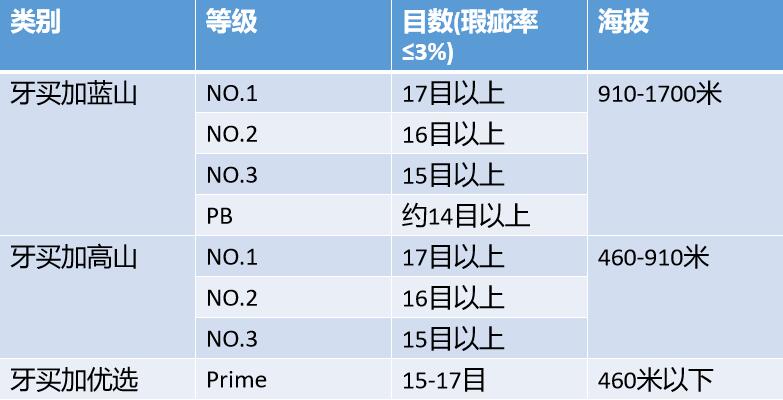
According to regulations set by the Jamaica Coffee Industry Board (CIB), authentic Blue Mountain coffee can only be grown in four administrative regions in the eastern part of the country: St. Andrew, St. Thomas, St. Mary, and Portland. These areas cover the main range of the Blue Mountains, with legally permitted cultivation altitudes between 1000 and 1700 meters, covering a total area of approximately 6100 hectares. Only coffee produced within this specific altitude and region can rightly bear the name “Blue Mountain.” If the cultivation altitude is only between 500 and 1000 meters, the coffee can only be classified as “Jamaica High Mountain Coffee”; those grown below 500 meters can only be categorized as “Jamaica Supreme Coffee.” It’s worth noting that even if located within the aforementioned four regions, coffee grown below the required altitude cannot use the Blue Mountain designation. As for coffee produced in other parts of Jamaica, it is entirely ineligible to use this title. Overall, no more than a quarter of all Jamaican coffee production can be called Blue Mountain coffee.
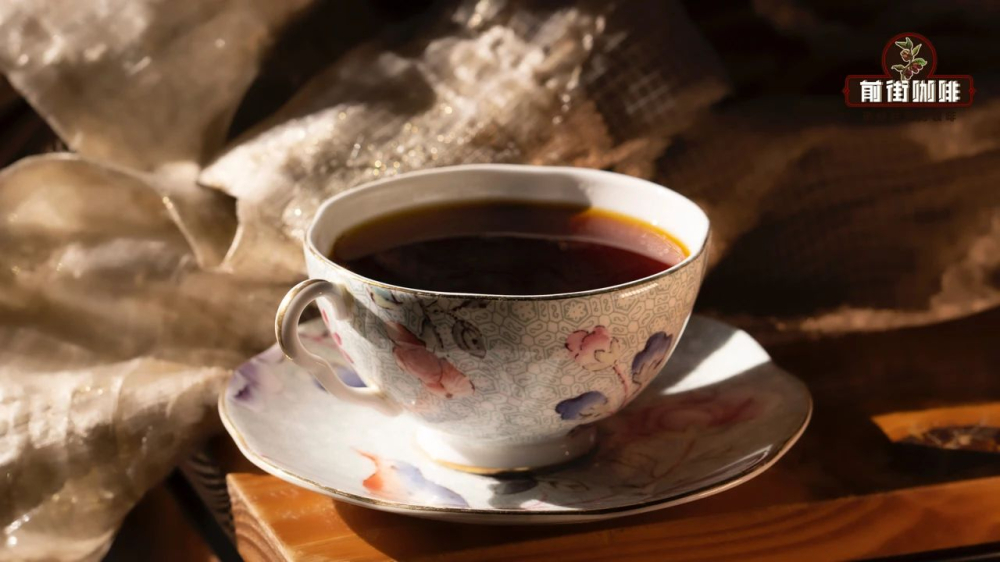
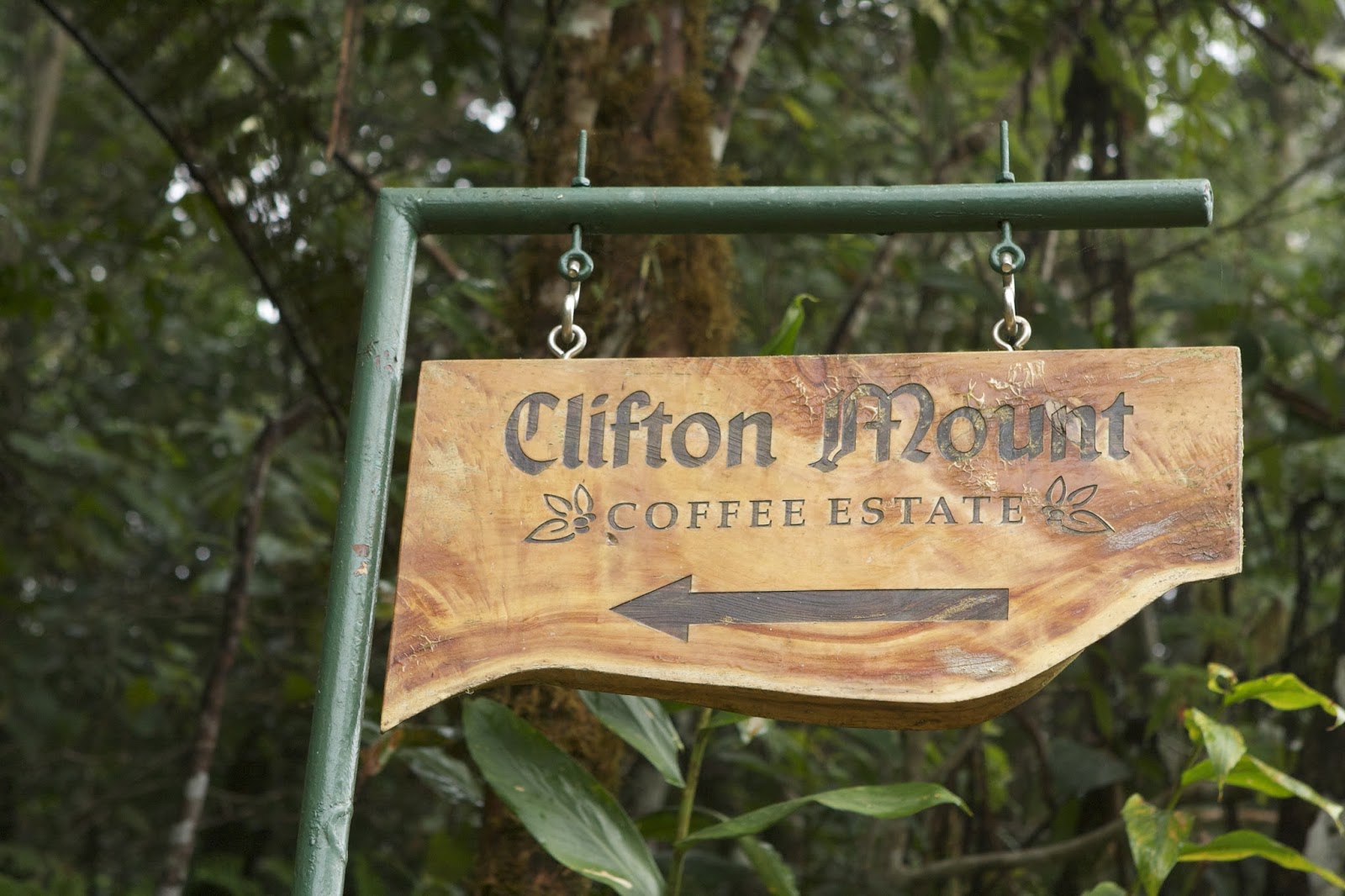
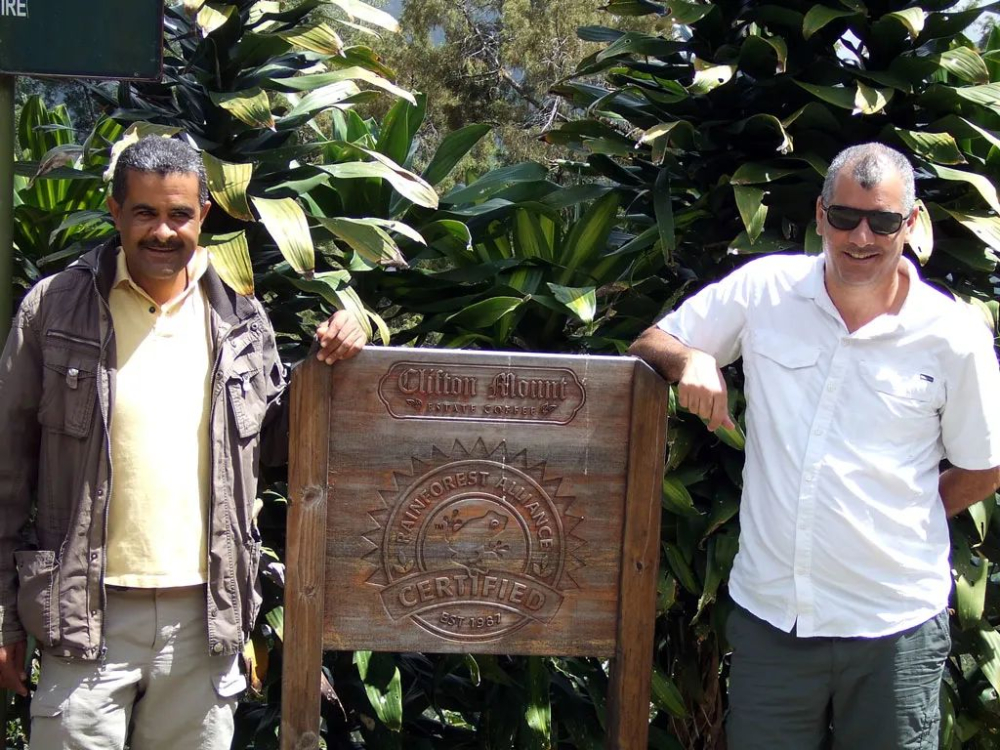
The Blue Mountain growing region spans only about 6000 hectares, an extremely limited area. Therefore, much of the coffee labeled as “Blue Mountain” on the market does not actually come from this region. Among them, the Clifton Mount Estate (Jamaica Clifton Mount Estate) is the largest coffee plantation in the region. Although small by international standards, its Blue Mountain No. 1 is considered among the best of Blue Mountain coffees. Managed by the Sharp family, the estate holds Rainforest Alliance certification, grows at an altitude of about 1310 meters, and primarily cultivates 100% Arabica Typica variety, using the washed processing method. Its flavor profile is highly balanced, with acidity, body, and aroma all well-integrated.
Notably, Blue Mountain coffee is one of the very few regions that still uses wooden barrels for shipping green beans. Compared to the jute sacks commonly used for other coffees, wooden barrels better preserve the beans’ flavor and freshness.
Regarding washed processing, Blue Mountain No. 1 has traditionally only used this method. Washed processing involves fermentation and multiple rinses with clean water to remove the pulp, mucilage, and impurities outside the parchment layer. First, the outer skin and pulp of the coffee cherry are removed, then the beans undergo 12 to 18 hours of fermentation. They are then transferred to a washing channel, where friction between the beans and the flow of water remove the remaining mucilage on the surface until the beans are smooth and clean. At this point, the coffee beans are still enclosed in their parchment layer and have a moisture content as high as 50%. They must then undergo prolonged sun drying or mechanical drying to reduce the moisture content to 12% to 14% before being sorted and stored. Each step must be precisely controlled, otherwise it can easily affect the final flavor and quality.
Jamaica Blue Mountain coffee is divided into three main grades based on quality: Blue Mountain Coffee, Jamaica High Mountain Supreme Coffee Beans, and Jamaica Prime Coffee Beans. Both Blue Mountain and High Mountain Coffee are further subdivided into two levels, with the overall ranking from highest to lowest as: Blue Mountain No. 1, Blue Mountain No. 2, High Mountain No. 1, High Mountain No. 2, and Jamaica Coffee. In terms of quality selection grades, they are classified as NO.1, NO.2, NO.3, and PB (peaberry). According to CIB standards, NO.1 grade Blue Mountain green beans must meet strict criteria such as bean size of 17 mesh or larger, defect rate below 3%, and moisture content around 13%.
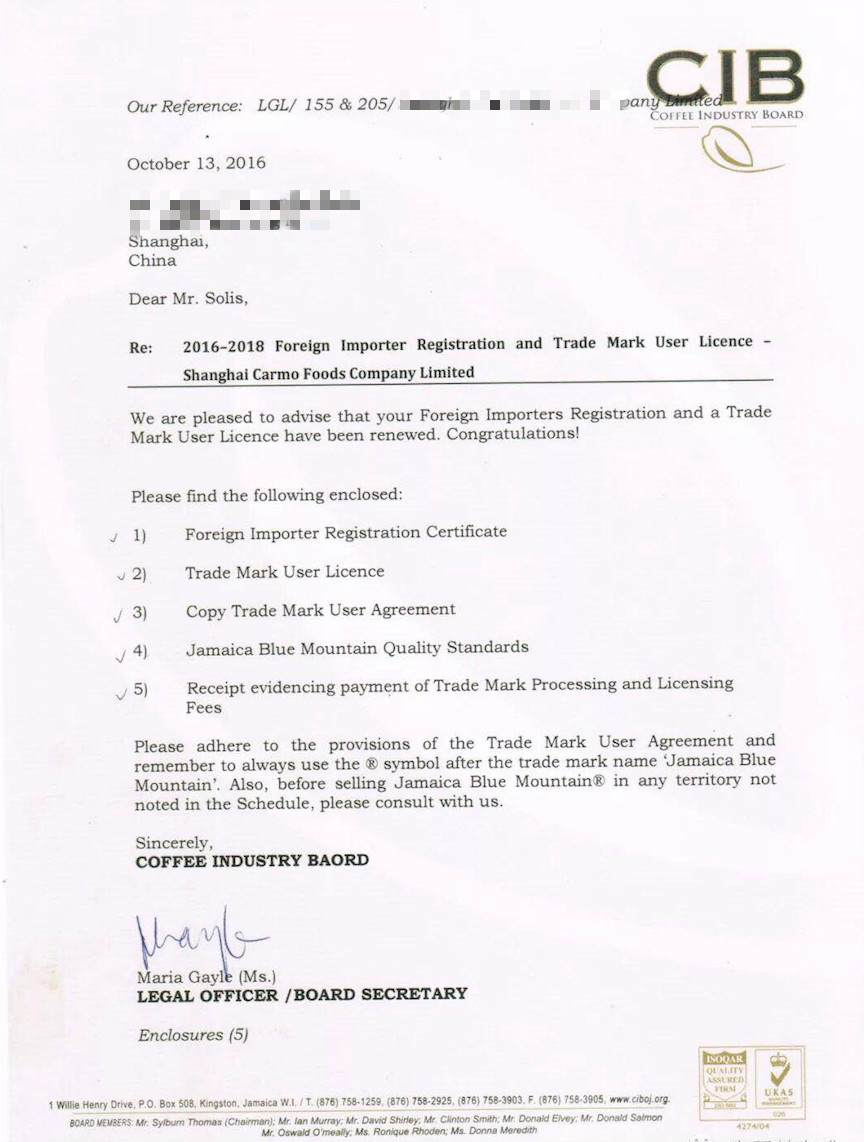
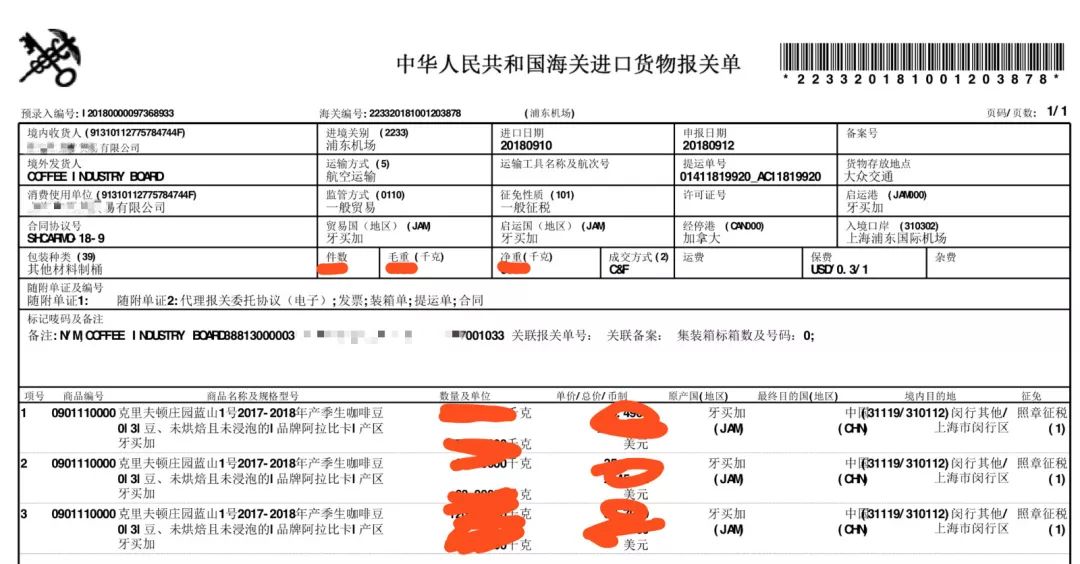
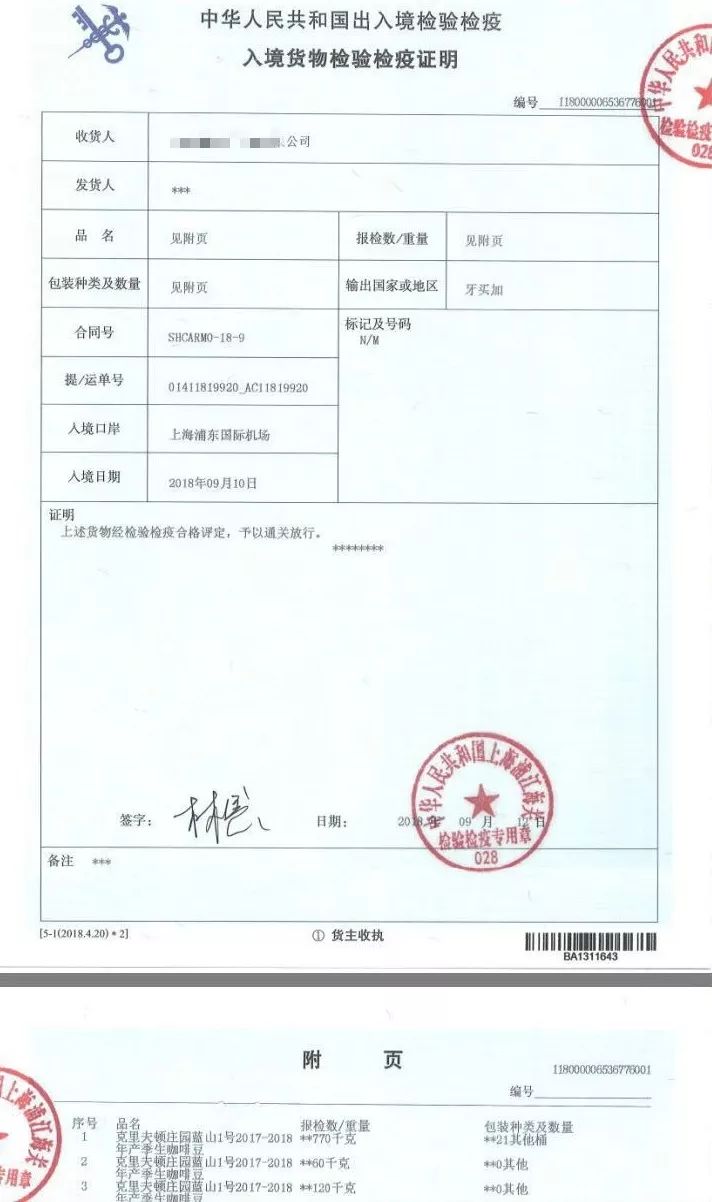
Below is a complete record of the ordering, customs clearance, import, and distribution process for Blue Mountain No. 1 from 2017 to 2018, including CIB authorization documents and customs declaration records, which can serve as reference materials.
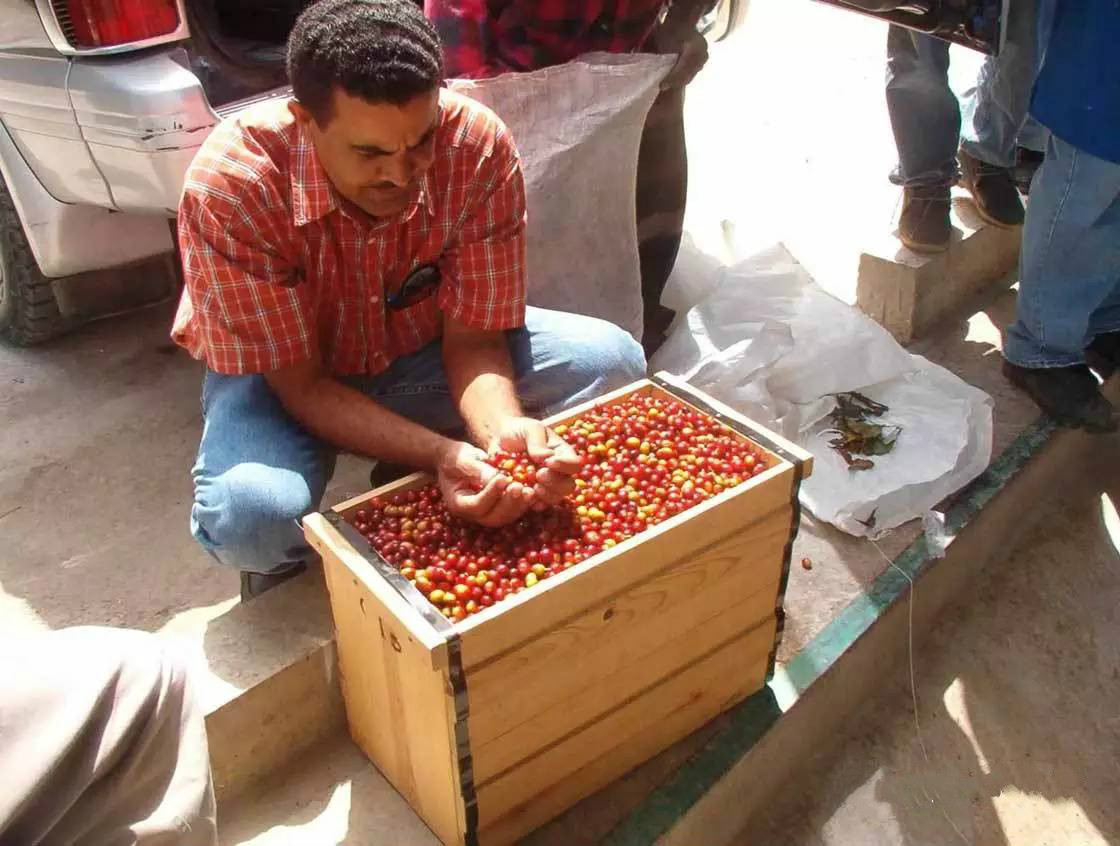
In terms of roasting, the challenge with Blue Mountain No. 1 lies in achieving a “transparent” roast—ensuring the beans are properly developed while showcasing their delicate and balanced flavor characteristics. The caramelization stage is crucial to flavor development. When the green beans reach their first crack at around six to seven minutes, the bean surface turns yellow, grassy notes fade, and moisture evaporates as sugars transform, releasing various aromatic compounds including citric acid, quinic acid, and acetic acid, along with coffee oils, which together form the unique aromatic profile of Blue Mountain.
Recommended roasting profile reference: charge at 170°C, with fan setting at 3; after 1 minute, adjust heat to 140°C, keeping fan unchanged; at 5 minutes 10 seconds, when temperature reaches 153°C and the bean surface turns yellow, reduce heat to 115°C and increase fan to 4; around 8 minutes, when the bean surface shows wrinkles and dark spots and the coffee aroma gradually replaces the bread-like smell, this signals the prelude to first crack. At 8 minutes 12 seconds when first crack begins, adjust heat to 90°C, fan fully open, and finish roasting at 201.3°C.
When cupping Blue Mountain No. 1, you can perceive its bright and delicate acidity, a silky body, and an aroma with penetrating floral and spicy notes accompanied by a distinct citrus tone. Upon tasting, there is a mild cocoa aftertaste. The overall profile is clean, complex, and mild, with a sweet sensation similar to chocolate, strong body, and an excellent balance of sweetness, acidity, and bitterness. The finish lingers with fruity notes and is completely free of harsh bitterness.
Dry aroma includes notes of roasted peanuts, hazelnuts, cantaloupe, and chocolate; wet aroma showcases oolong tea, caramel, honey, dark chocolate, and almond skin notes, with a silky and bright mouthfeel.
To distinguish real from fake Blue Mountain coffee, consider the following four aspects: first, appearance—Blue Mountain green beans are bluish-green, medium to small in size, slightly pointed at both ends, and visibly plumper after roasting; second, hand-grinding feel—high-altitude-grown Blue Mountain beans have loose cell structure, resulting in a crisp and smooth grind; third, aroma—authentic Blue Mountain has a rich and dense fragrance, while counterfeits or blends are noticeably lacking; fourth, taste—Blue Mountain offers balanced flavors and clear layers, with no single note overly dominant, which is also key to authentication. Also, beware of unrealistically low-priced so-called “premium Blue Mountain”—most “Blue Mountain” sold for a few dozen dollars per pound are fakes.
It’s worth mentioning that in the 1950s, Japan secured priority purchasing rights for Blue Mountain coffee by providing loans to help Jamaica improve coffee quality. To this day, a high proportion of Blue Mountain coffee is still exported to Japan. However, statistics show that China’s Blue Mountain consumption accounts for about 15% of the global total, indicating its growing popularity.
Finally, here is a set of practical pour over recommendations for trying Blue Mountain No. 1 at home: use a KONO filter, 15 grams of coffee, water temperature at 88°C, grind size as 75% through a 20-mesh sieve (medium-coarse), coffee-to-water ratio 1:15, with total extraction time controlled around 1 minute and 55 seconds. Use a three-stage pouring method: start with a 30-gram bloom for 30 seconds, then pour to 120 grams and pause, using a slow circular motion with a small stream; next, pour to 210 grams with slightly more water flow and faster circling to avoid channeling. This method fully highlights the richness, sweetness, and delicate finish of Blue Mountain No. 1.
The above content is compiled by CoffeeHunters, a coffee news website.


