







Introduction:An in-depth exploration of the 2020 East African Harvest Taste of Harvest (TOH) Washed Category Champion — the washed coffee beans from Uraga in Ethiopia’s Guji region. This includes an analysis of the growing region’s characteristics, processing methods, and roasting philosophy, along with practical pour over parameters and flavor guidance. From the fruit-forward genetic traits of high-altitude black soil to the clarity achieved through meticulous washed processing, and finally to brewing strategies that highlight floral and citrus notes, this guide will help you fully appreciate the charm of this top-tier coffee.
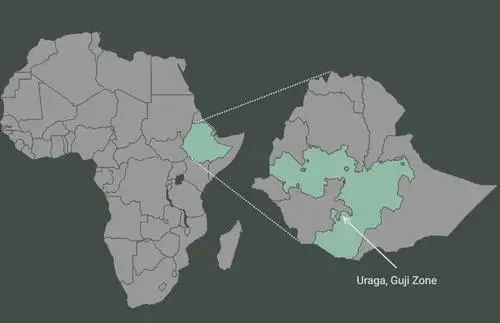
This washed coffee bean from Uraga in Ethiopia’s Guji region won the89.8 scoreand claimed the Washed Category Championship in the 2020 East African Harvest Taste of Harvest (TOH).Uraga town is located at an altitude of approximately2300 meters, boasting fertile black soil (Vertisol) and a microclimate conducive to the development of fruity aromas. Combined with the rigorous washed processing procedures at the Sela Gajaba processing station, it results in a coffee that embodies traditional Ethiopian flavors alongside high clarity —with layers of white flowers, citrus fruitiness, and tea-like notes
 standing out distinctly, while also reducing the common astringent or off-flavor sensations.Many coffee enthusiasts may not be familiar with the name TOH, but it is actually theacronym for “East Africa Taste of Harvest Competition”
, organized by the African Fine Coffees Association (AFCA). It covers 12 major coffee-producing countries in Africa and is considered the East African version of the “Cup of Excellence.” The 2020 Washed Category Champion is precisely this premium bean from Uraga.Uraga belongs to the renowned Guji region, which was originally part of Sidamo but was later designated as a separate zone due to its distinctive flavor profile similar to that of Yirgacheffe. Especially the areas close to Yirgacheffe, at altitudes of around2200 meters and above, produce numerous standout coffees. For example, the famous Huakui series originates from the Hambela zone within Guji. Uraga itself sits at an elevation of2300 meters
, with fertile, nutrient-rich soil and a high-altitude environment that allows coffee cherries to accumulate more aromatic compounds and fruity characteristics.The processing of this championship bean was handled by the Sela Gajaba washed processing station, located about12 kilometersfrom Uraga town. This station primarily uses indoor processing methods to effectively reduce the risk of external contamination. After harvest, the coffee cherries undergo two strict rounds of sorting, with only fully red, defect-free fruits selected. The pulp is then removed, and the mucilage-covered beans are soaked in water for18 to 36 hours of fermentation, after which they are thoroughly washed in flowing water channels to remove any residual mucilage and impurities. The parchment-covered beans are then moderately sun-dried or mechanically dried to bring the moisture content down to around12%
 , before the parchment is finally removed to complete the process.Through this washed processing method, the coffee not only retains the typicalEthiopian floral, citrus, and tea-like notes
, but also significantly enhances overall clarity, making the flavor profile clearer and brighter.The roasters at this coffee shop paid special attention to “maintaining a clean base flavor
” when processing this washed champion bean, while also enhancing its white floral and fruity characteristics. By precisely controlling the duration of the drying phase and the development stage after first crack, they ultimately established the following roasting strategy:180℃Using a Yangjia 800N (300g capacity) roaster, the charge temperature was set at130, with initial flame power at3, and the air damper opened to. The turning point occurred at approximately1 minute and 36 seconds140℃, and when the roaster temperature dropped to4, the air damper was adjusted to151℃, while flame power remained unchanged. When the bean surface turned yellow (around110), and the grassy aroma disappeared, it marked the start of the drying phase. At this point, the flame power was reduced to
.At about8 minutes and 37 seconds, the bean surface began to show wrinkles and black spots, and the coffee aroma transitioned from toasted bread to a distinct coffee fragrance — a sign that first crack was approaching.At59 minutes and 39 seconds, the coffee entered first crack. The air damper was adjusted to, and first crack continued for approximately193.2℃1 minute
, with the final drop occurring at, ensuring a balanced and clear flavor profile.In terms of brewing, the baristas at this coffee shop, through multiple cuppings, summarized the main flavors of this bean as
jasmine, lemon, berries, pomelo, honey, and green tea. To highlight its jasmine floral notes, the fresh tones of pomelo and honey, as well as the green tea-like aftertaste, the following pour over parameters are recommended:Taking15 grams of coffee groundsas an example, the grind size is suggested to beslightly coarser than standard pour over, around 70% passing through a standard #20 sieve, to avoid over-extraction that could lead to tea-like astringency. The brew ratio is set at1:16, which helps fully express the floral and fruity aromas; the water temperature is advised to be controlled at91℃, a level particularly suitable for Ethiopian beans that can effectively bring out citrus and other fruit characteristics.
The brewing steps follow a classic three-stage method:
- First, preheat the pour over kettle and filter cone, then place the coffee grounds into the filter and gently tamp them flat.
- Pour in30 grams of waterfor the bloom, for approximately30 seconds— avoid over-blooming to prevent bitterness.
- The second stage involves pouring120 grams of waterin a circular motion from the center outward, for about1 minute. When the water level nears the coffee bed,
- the final stage involves pouring90 grams of water, also in a circular motion, and removing the filter once all the water has drained into the server. The total extraction time is about2 minutes and 05 seconds.
The final flavor profile presents as follows: the wet aroma carries delicate notes of jasmine and citrus. The entrance highlights a bright citrus juice character, transitioning mid-to-late into a sweet and mellow tone reminiscent of honeyed pomelo tea, with an aftertaste that lingers with the refreshing sweetness of oolong tea. Overall, the cup is well-balanced and layered, making it highly suitable for coffee lovers who enjoy a combination of fruity and tea-like profiles.
The above content is compiled by CoffeeHunters, a coffee news website.


