








Introduction:Jamaica Blue Mountain No. 1 coffee is hailed as the "King of Coffee" due to its unique flavor profile and strict origin regulations. This article delves into its regional distribution and CIB grading system, helping you identify authentic Blue Mountain coffee, and provides practical three-stage pour over and cold brew techniques to help you brew this classic coffee with notes of chocolate, nuts, and caramel at home.
Since the 1970s, Blue Mountain coffee has consistently ranked among the world’s top ten specialty coffees. What exactly earns it such a prestigious status? The answer lies not only in its distinctive flavor but also in its rigorous origin control and quality grading system. This article will start with the origins of Blue Mountain coffee, detailing how the Jamaica Coffee Industry Board (CIB) established grading standards and defined the true scope of Blue Mountain coffee, helping readers discern whether various “Blue Mountains” on the market are truly authentic. Additionally, we’ll share brewing methods for Blue Mountain No. 1 using pour over and cold brew, so you can easily master the optimal extraction parameters and savor its classic layers of chocolate, nuts, and caramel.
 To understand the rise of Blue Mountain coffee, we need to go back to 1948. In fact, the cultivation of Blue Mountain coffee dates back to 1728, when small-scale coffee planting had already begun in the Blue Mountains of Jamaica. However, it wasn’t until 1948, with the official establishment of the Jamaica Coffee Industry Board (abbreviated as CIB), that this government-affiliated institution began to comprehensively regulate the production process, quality control, and brand rebuilding of Blue Mountain coffee, laying the foundation for its status as a world-class coffee.
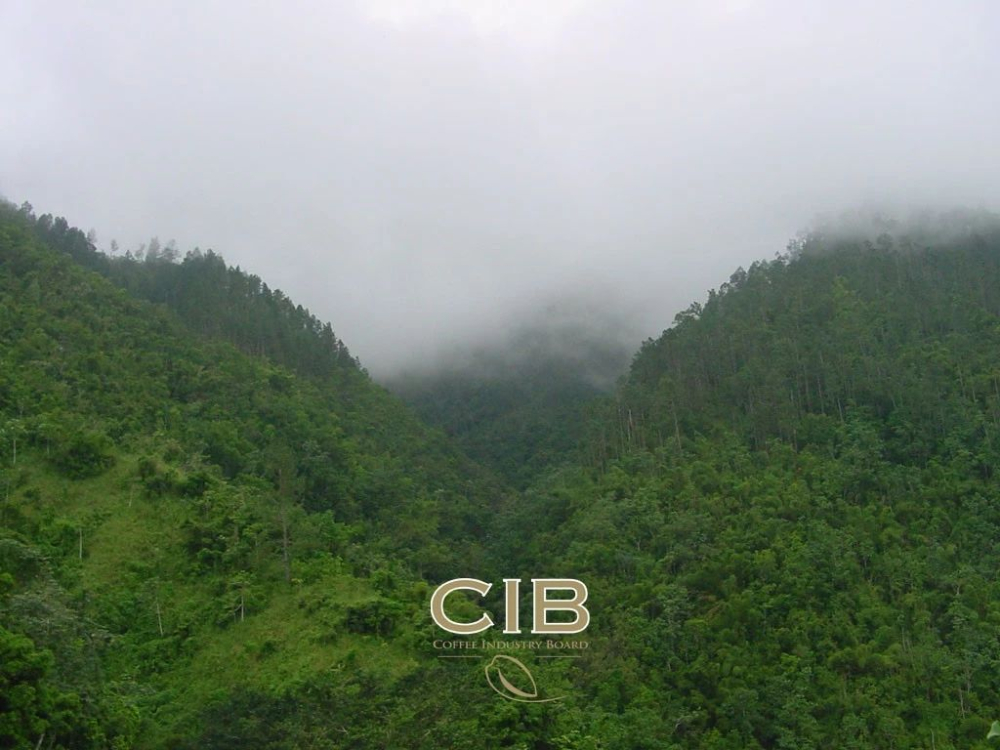
The CIB’s first task after its establishment was to clarify what kind of coffee qualifies as “Blue Mountain coffee.” The Jamaican government officially designated that only coffee grown within specific areas of the Blue Mountain range, at elevations between 1,000 and 1,700 meters, can be called Blue Mountain coffee. The highest peak of the Blue Mountains reaches 2,256 meters, with altitudes above 1,700 meters classified as nature reserves where commercial cultivation is strictly prohibited. According to CIB standards, the authentic Blue Mountain coffee growing regions cover four eastern administrative districts: Saint Andrew, Saint Thomas (St. Thomas), Saint Mary (St. Mary), and Portland. These areas are located at the foothills of the Blue Mountains, covering a total area of approximately 6,100 hectares, and are the only core zones that meet the specific conditions for Blue Mountain cultivation.
It’s worth noting that even within these four administrative districts, if the elevation is only between 500 and 1,000 meters, the coffee can only be classified as “Jamaica High Mountain Coffee”; those below 500 meters are relegated to the more entry-level “Jamaica Prime Coffee.” Furthermore, coffee produced outside the 12,100 hectares of the Blue Mountain range has no right to use the Blue Mountain name at all. Overall, only about 25% of all coffee produced in Jamaica meets the strict definition of Blue Mountain coffee, highlighting its rarity and value.
 Within the Blue Mountain coffee grading system, there are four grades: NO.1, NO.2, NO.3, and PB. Among them, NO.1, widely known as “Blue Mountain No. 1,” requires coffee beans to be 17 mesh or larger, with intact shapes and an extremely low defect rate, representing the highest quality among Blue Mountain coffees. NO.2 requires beans to be 16 mesh or larger, NO.3 requires 15 mesh or larger, while PB refers to specially selected peaberry beans, which often exhibit a richer flavor profile due to their unique growth structure.
It is precisely because of the strict regulations on origin, altitude, and grading standards that Blue Mountain coffee maintains its world-class flavor level and earns the title of “King of Coffee.” However, due to its fame, the market is flooded with imitations. Consumers should pay special attention to product labeling—products often labeled as “Blue Mountain flavor,” “Blue Mountain blend,” “Blue Mountain mix,” or “Blue Mountain premium blend” are usually just coffees blended to mimic similar flavors, rather than genuine Blue Mountain coffee.
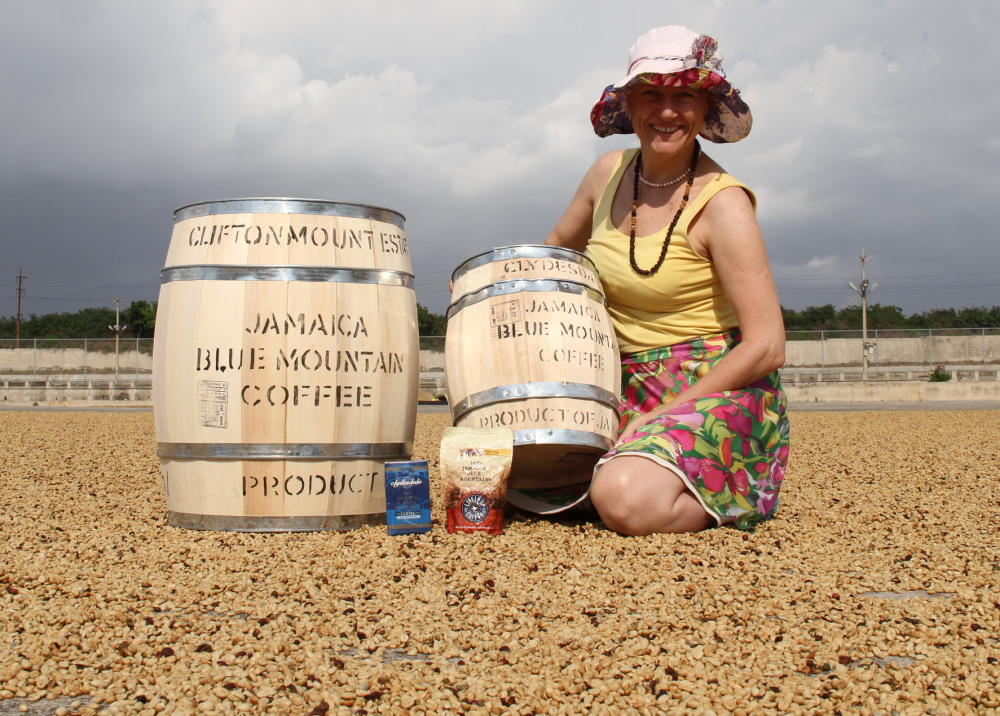
True Blue Mountain coffee must come from areas of the Jamaica Blue Mountain range at elevations above 1,000 meters, and is always exported in wooden barrels. When purchasing, it is recommended to confirm with the seller whether the original wooden barrel is included, and to check for one of the following three certifications: (1) a quality certificate issued by the Jamaica Coffee Board; (2) an authorized sales certificate from a Blue Mountain coffee producer (limited to 4 government-approved processing plants and 16 authorized exporters); (3) a Jamaica Blue Mountain coffee origin certificate. Among these, the quality certificate clearly indicates the time and quantity, and is issued only after passing random official inspections, making it the most direct form of certification.
 As for how to brew Blue Mountain No. 1 to bring out its best flavors, it is recommended to use freshly roasted coffee beans to fully showcase its rich aroma and layered complexity. Generally, coffee beans roasted within 5 days are in their optimal state, with a resting period of about 4 to 7 days allowing the flavors to reach their peak. It is recommended to use 15 grams of coffee, a water temperature of 86°C, a coffee-to-water ratio of 1:15, and choose a medium grind (approximately 75% extraction through a 20-mesh sieve).
In terms of filter choice, V60, Kalita Wave, and Kono are all suitable. However, since Blue Mountain coffee is often dark roasted, too high a water temperature or too fast a flow rate can lead to over-extraction. Therefore, it is recommended to use the Kono filter, which has fewer and shorter ribs, extending the contact time between water and coffee grounds and providing an immersion effect to effectively prevent under-extraction. In practice, it is recommended to use a three-stage pouring method: start with 30 grams of water for a 30-second bloom, then pour in a small circular motion up to 125 grams and pause, wait until the liquid surface is about to expose the coffee bed, then pour up to 225 grams to complete the extraction, with the total time controlled around 2 minutes. This method can fully highlight the chocolate, nut, and caramel aromas of Blue Mountain coffee, achieving a balanced harmony of acidity, sweetness, and bitterness, with a smooth and comfortable mouthfeel.
Is Blue Mountain coffee suitable for cold brew? The answer is yes. Although cold brew coffee typically emphasizes low acidity and a light body, for those who prefer dark roast flavors, Blue Mountain No. 1 can still showcase its unique charm even when dark roasted. By mastering the correct parameters, you can also brew a richly flavored cold brew Blue Mountain. It is recommended to use 20 grams of Blue Mountain No. 1 coffee beans, with a coffee-to-water ratio of 1:12, and a slightly coarser grind than usual pour over to avoid over-extraction. Mix the coffee grounds with 240 milliliters of cold water, then place in the refrigerator for 8 to 10 hours, or preferably refrigerate for 13 hours to allow the coffee flavors to fully develop. Finally, filter through a cloth or paper filter to enjoy a smooth and mellow cold brew Blue Mountain with notes of dark chocolate and nuts, almost free of bitterness—an excellent choice for summer or those who prefer low-acidity flavors.
The above content is compiled by CoffeeHunters, a coffee news website.


