







Introduction:Delve into the development journey of Yunnan, China as an emerging specialty coffee origin—from its century-long cultivation roots to today’s international recognition. This article details the characteristics of six major production areas, the genetic profiles of Typica coffee varieties, and the unique flavor expressions of Baoshan and Lincang regions. It also provides practical pour over recommendations to help coffee enthusiasts fully showcase the balanced profile of Yunnan beans.
When global famous coffee origins are mentioned, people often think of Brazil, Colombia, or Ethiopia first. However, in recent years, Yunnan, China has gradually joined the ranks of important specialty coffee regions thanks to its exceptional geographical conditions and continuously improving cultivation techniques. This article will give you a comprehensive understanding of the Arabica Typica coffee grown in Yunnan's highland areas—from historical background, main production area distribution, variety traits, to flavor profiles and optimal brewing methods. Whether you're new to Yunnan beans or a enthusiast eager to learn more about domestic specialty coffee, you’ll find useful insights here.
 The story of Yunnan coffee began in the early 20th century. In 1904, French missionary Térence Descombes planted the first coffee tree in Zhugula Village, Binchuan County. This tree symbolized the beginning of Yunnan’s relationship with coffee and has now been around for over a century. However, it was not until the early 1950s that commercial-scale cultivation truly began. At that time, botanist Professor Qin Renchang discovered red coffee cherries in the yard of a Dai ethnic family in Luxi County, Dehong Prefecture. After identification, these were confirmed to be high-quality Typica coffee. Following his suggestion, relevant departments conducted trial plantings in Mangshi Forest Farm and Ludian, Baoshan, officially marking the beginning of the new China’s coffee industry.
In the late 1980s, with the establishment of Nestlé's branch in China, Yunnan coffee began to enter the international spotlight. Nestlé introduced the disease-resistant and high-yield Catimor variety and promised to purchase it at the then-current U.S. futures price. This move attracted brands such as Starbucks and Maxwell House to set up factories and begin procurement in Yunnan. However, in the early stages, due to insufficient planting and post-harvest processing techniques among farmers, coupled with relatively basic processing methods, most Yunnan green beans could only be used as raw materials for instant coffee, and their prices were also subject to fluctuations in the international market. To break the status quo, a shift toward specialization became an inevitable trend.
With the rise of China’s domestic coffee consumption market and the global emphasis on sustainable agriculture and fair trade, more and more international coffee experts and roasters have traveled to Yunnan. They provide professional advice and technical support on everything from varietal selection, shade management, soil and water conservation, to fresh fruit harvesting and post-processing. These efforts have gradually improved the overall quality of Yunnan coffee, and the name “Yunnan Typica Coffee” has gained increasing attention in the international specialty coffee community. Compared to earlier years, many consumers now actively inquire about Yunnan options when purchasing coffee, clearly showing its steadily rising market position.
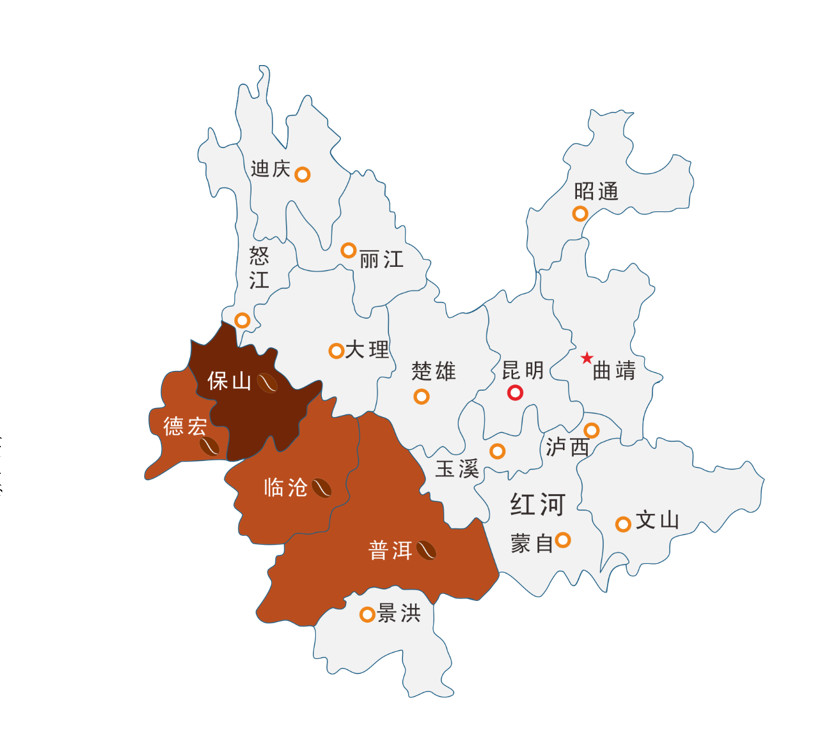
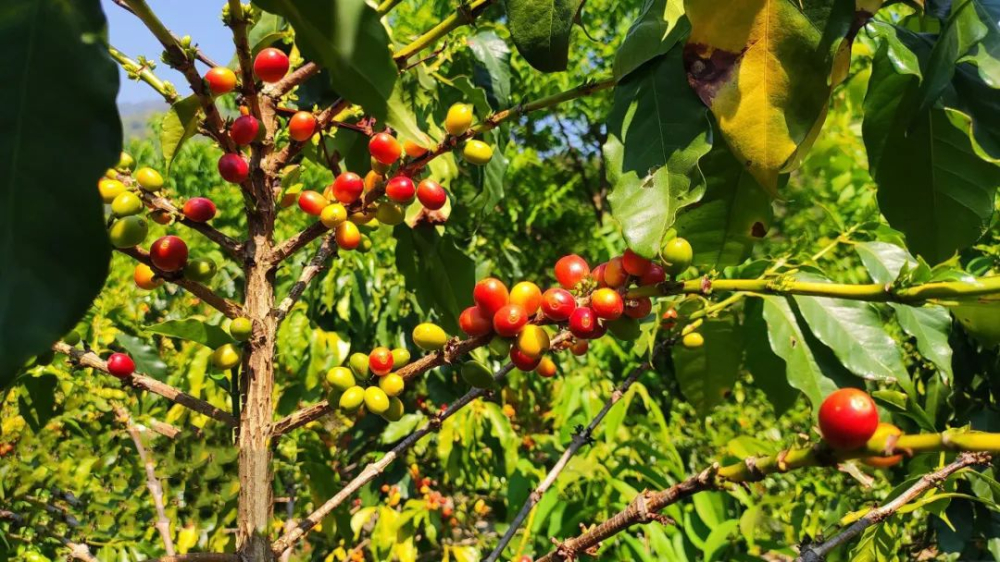 Currently, Yunnan’s main coffee-growing regions span eight areas: Pu'er, Baoshan, Dehong, Lincang, Nujiang, and Xishuangbanna, with the first six being core producing regions. These areas generally benefit from natural advantages such as low latitude, high altitude, and significant day-night temperature differences, providing an ideal environment for growing high-quality Arabica coffee. Especially, five geographical indication products—"Baoshan Typica Coffee," "Zhukula Coffee," "Dehong Typica Coffee," "Pu'er Typica Coffee," and "Simao Coffee"—further highlight the regional characteristics and quality assurance of Yunnan coffee. The sample beans in this article are selected from the Baoshan Typica Coffee production area.
The Ludian Basin in Baoshan is known for its unique three-dimensional climate. Located on a low-latitude plateau with complex terrain, it forms a microclimate environment where “one mountain has four seasons, and the weather changes every ten miles.” The annual temperature variation is small, but the daily temperature difference is large, with an average annual temperature of about 14 to 17°C. The rainy and dry seasons are distinct, with annual rainfall ranging from about 700 to 2100 millimeters, and the precipitation distribution is moderate, which helps coffee cherries ripen slowly and accumulate richer flavor compounds, resulting in its unique aftertaste and mellow mouthfeel.
Beyond traditional producing areas, a certain coffee brand also operates its own plantation in Lincang and has launched a "2013" coffee bean using the ancient Typica variety and processed via the natural (sun-dried) method. Since 2013, the brand has personally controlled every step—from site selection, seedling cultivation, growing, harvesting, processing to roasting—accumulating valuable hands-on experience. As one of the most original Arabica varieties, Typica itself boasts bright acidity and delicate floral notes. Paired with the natural processing method, it gives the coffee a soft, mellow finish and rich layers, making it popular among many pour over enthusiasts.
In terms of flavor expression, Yunnan Typica coffee falls between the vibrant acidity of African beans and the bold body of Indonesian beans, showcasing a balanced and harmonious character. It has a well-rounded taste with sweet, sour, and bitter notes, but none are overly intense, making medium roast an ideal choice. This roast level highlights mild aromas like chocolate, nuts, and caramel, while preserving moderate fruit acidity highlights. In actual cuppings, washed Yunnan everyday beans often feature layers of herbal, nutty, caramel, brown sugar, and plum acidity, with an overall round and harmonious mouthfeel.
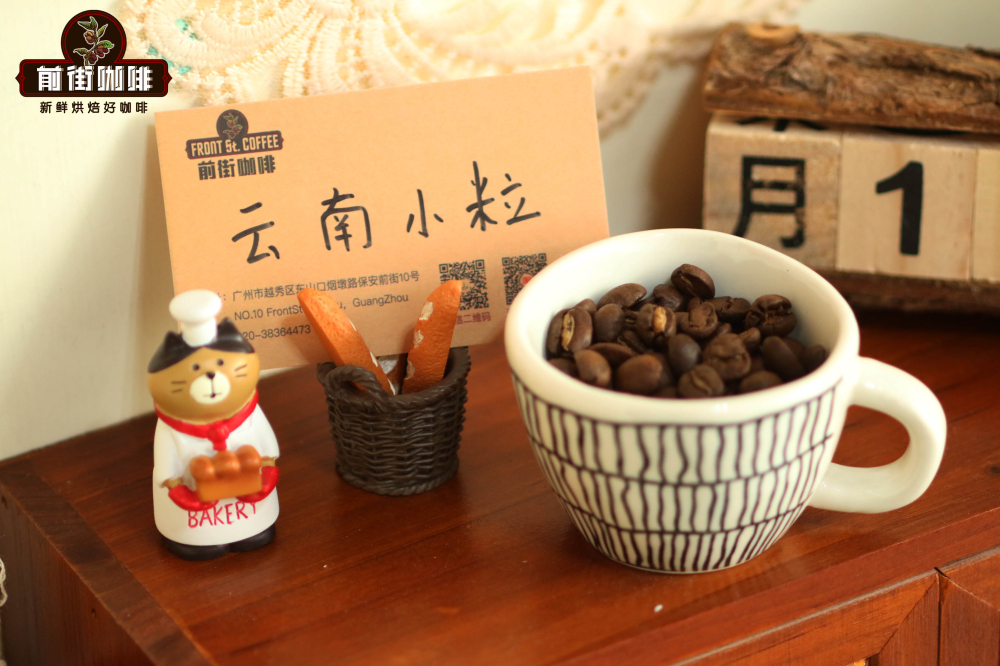 To fully realize the potential of Yunnan coffee, freshness is crucial. It is generally recommended to use coffee beans within 5 days of roasting, as coffee aroma gradually dissipates over time, affecting the final extraction performance. Therefore, whether you’re a café or brewing at home, pay attention to the coffee beans’ shelf life and ensure you enjoy them at their best.
Regarding pour over parameters, a team conducted multiple experiments and recommends the following settings to balance Yunnan beans’ neutral profile: Use a Hario V60 filter cone, 15 grams of coffee, water temperature controlled at 90°C, and a grind size of approximately 70% through a Chinese standard No. 20 sieve (or Ek43s setting at 10.5). The coffee-to-water ratio is suggested at 1:15, using a three-stage pouring method—first, pour double the coffee weight (about 30 grams) of water for a 30-second bloom, then pour steadily with a small stream in circular motions up to 125 grams with a brief pause, wait for the bed to drop, then continue pouring up to 225 grams. The total extraction time is about 2 minutes. This method helps achieve even flavor release and avoids over- or under-extraction.
The above content is compiled by CoffeeHunters, a coffee news website.


